A Church history tour of Plymouth, Massachusetts
Walking map of Plymouth locations
A tour of our nation’s church history necessarily begins in Plymouth. Tangible reminders should lead us to learn more of our history and praise God that we are products of the Pilgrims faithfulness to seek freedom to worship Him.
“having determined their appointed times and the boundaries of their habitation” Acts 17:26
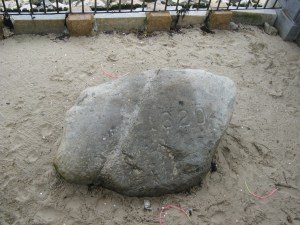
1620
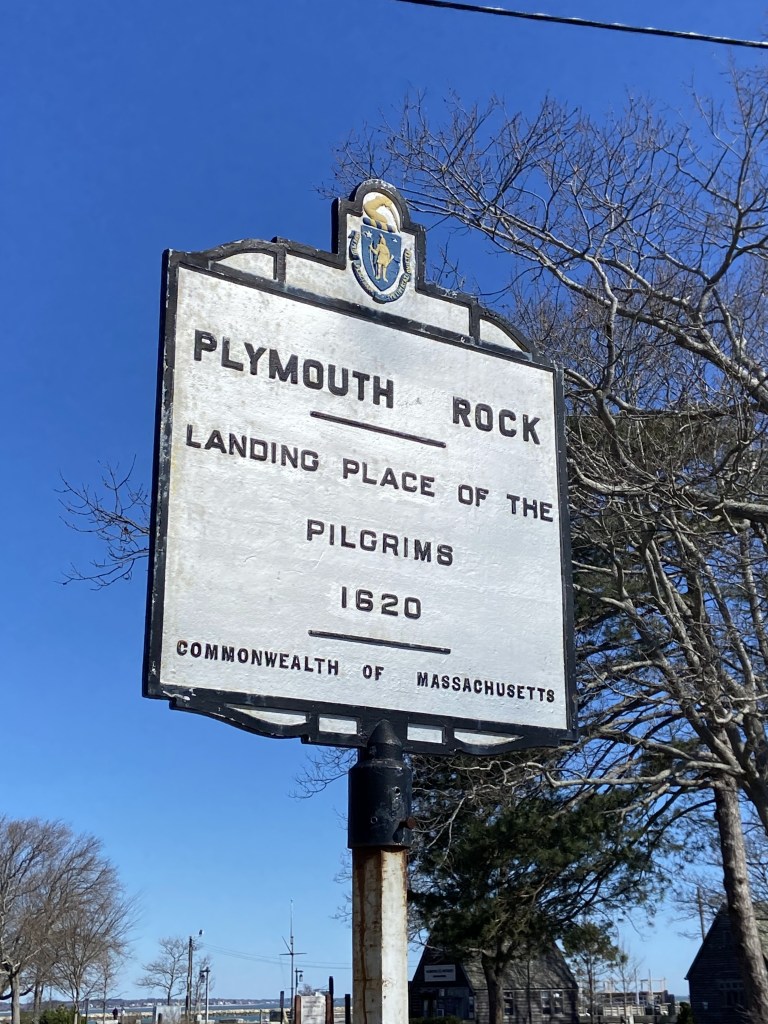
Visit: 79 Water Street
Two ships set sail for a transatlantic voyage, the Speedwell and the Mayflower. The Speedwell had many challenges, and eventually it returned, but the Mayflower did not. It set sail. The Mayflower left Plymouth, England, on September 1620. It had 102 passengers; among them were William Bradford and Edmund Winslow.
Ligonier’s 5 Minutes in Church History
The Puritans’ primary focus was to establish “pure” churches. All the best elements of the Reformation – sound doctrine, biblical preaching, church purity, education, the priesthood of all believers – were the sought after elements. For a short season, the New England Puritans attained what they were striving for.”
Read: Reviving New England, Nate Pickowicz
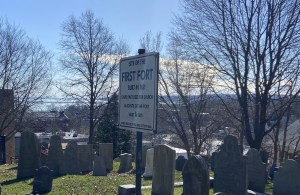
1621 First Fort/Plymouth Burial Hill
Visit: School St.
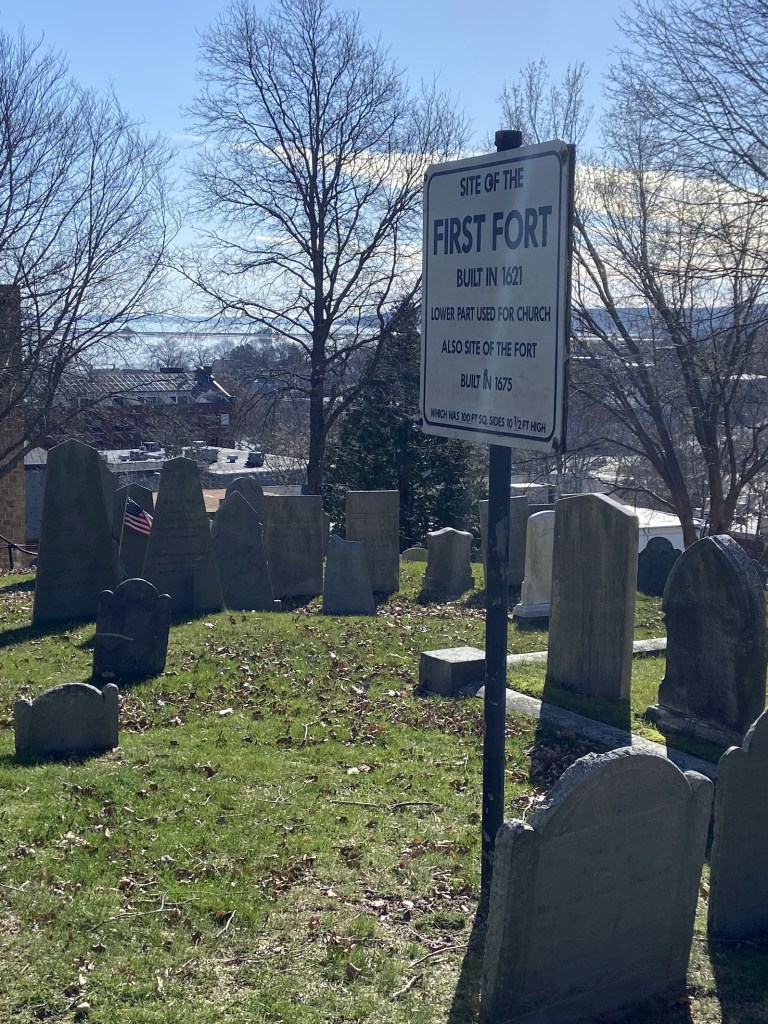
“Site of the First Fort built in 1621 lower part used for church also site of the fort built in 1675 which was 100 ft sq sides to 10 ½ ft high”
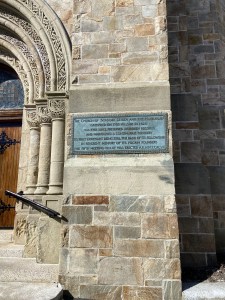
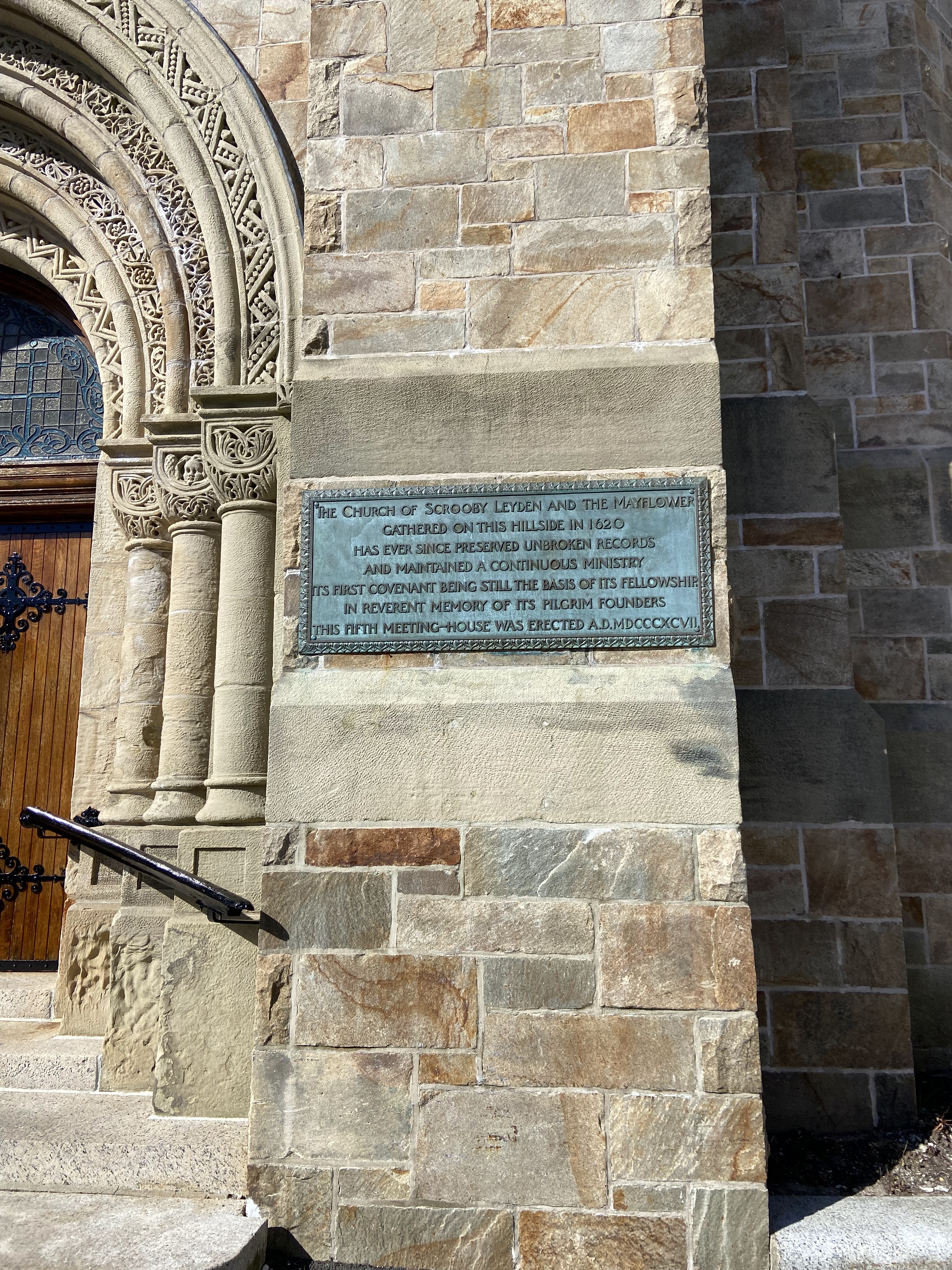
Located at the bottom of Burial Hill, the plaque on the church below reads,
“The Church of Scrooby Leyden and the Mayflower gathered on this hillside in 1620 has ever since preserved unbroken records and maintained a continuous ministry. Its first covenant being still the basis of its fellowship in reverent memory of its Pilgrim founders this fifth meeting house was erected A.D. MDCCCXCVII”
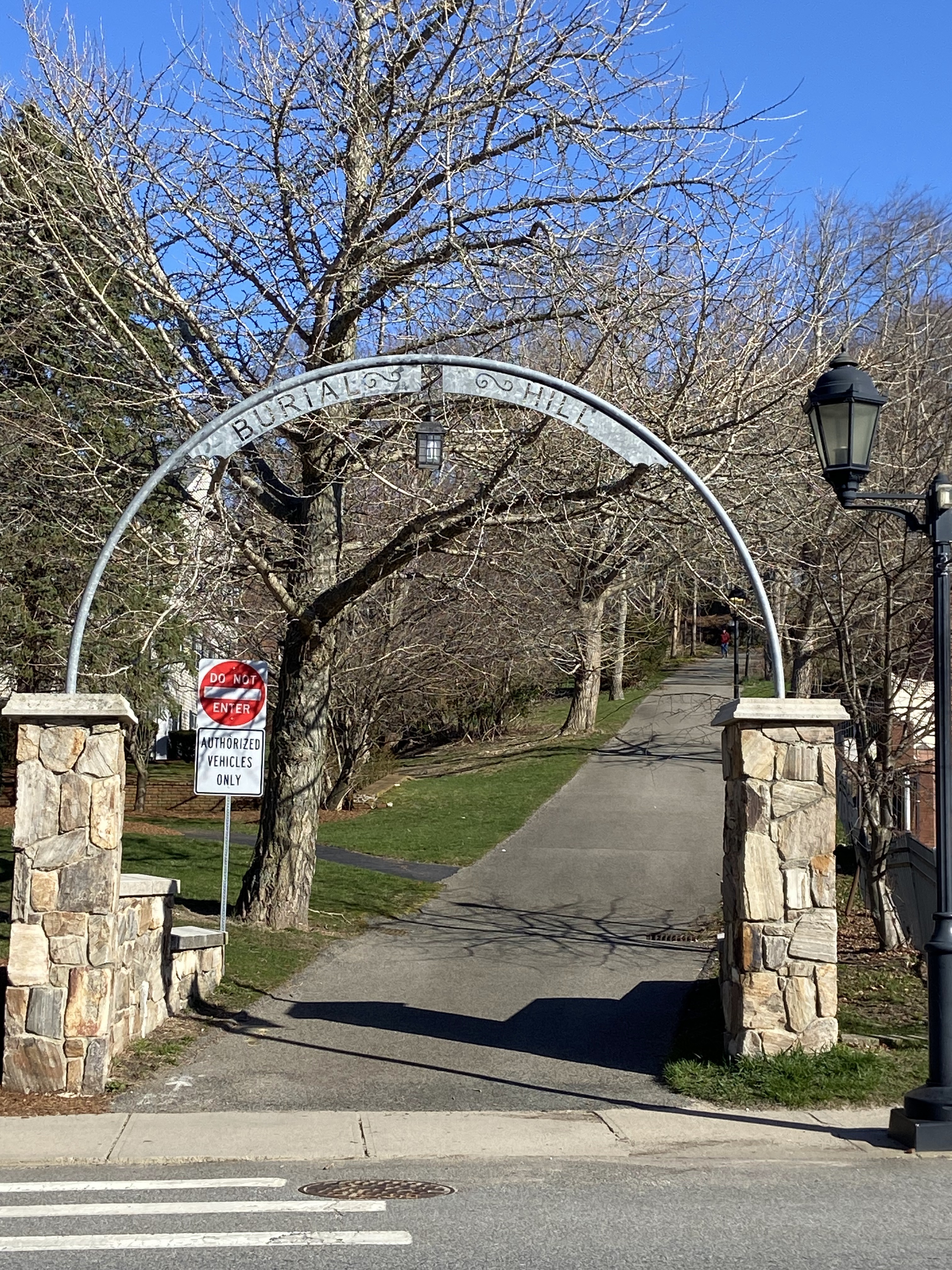
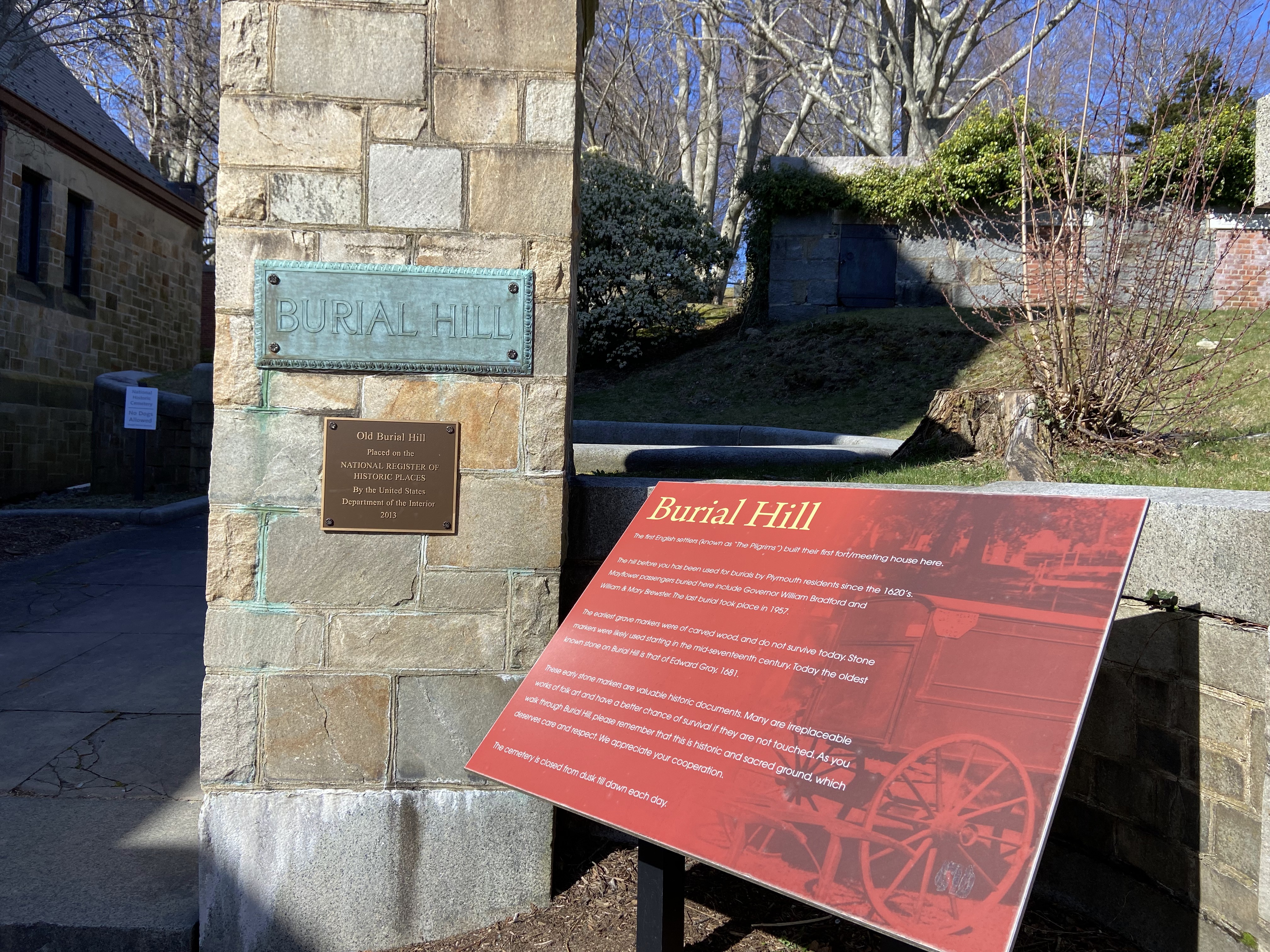
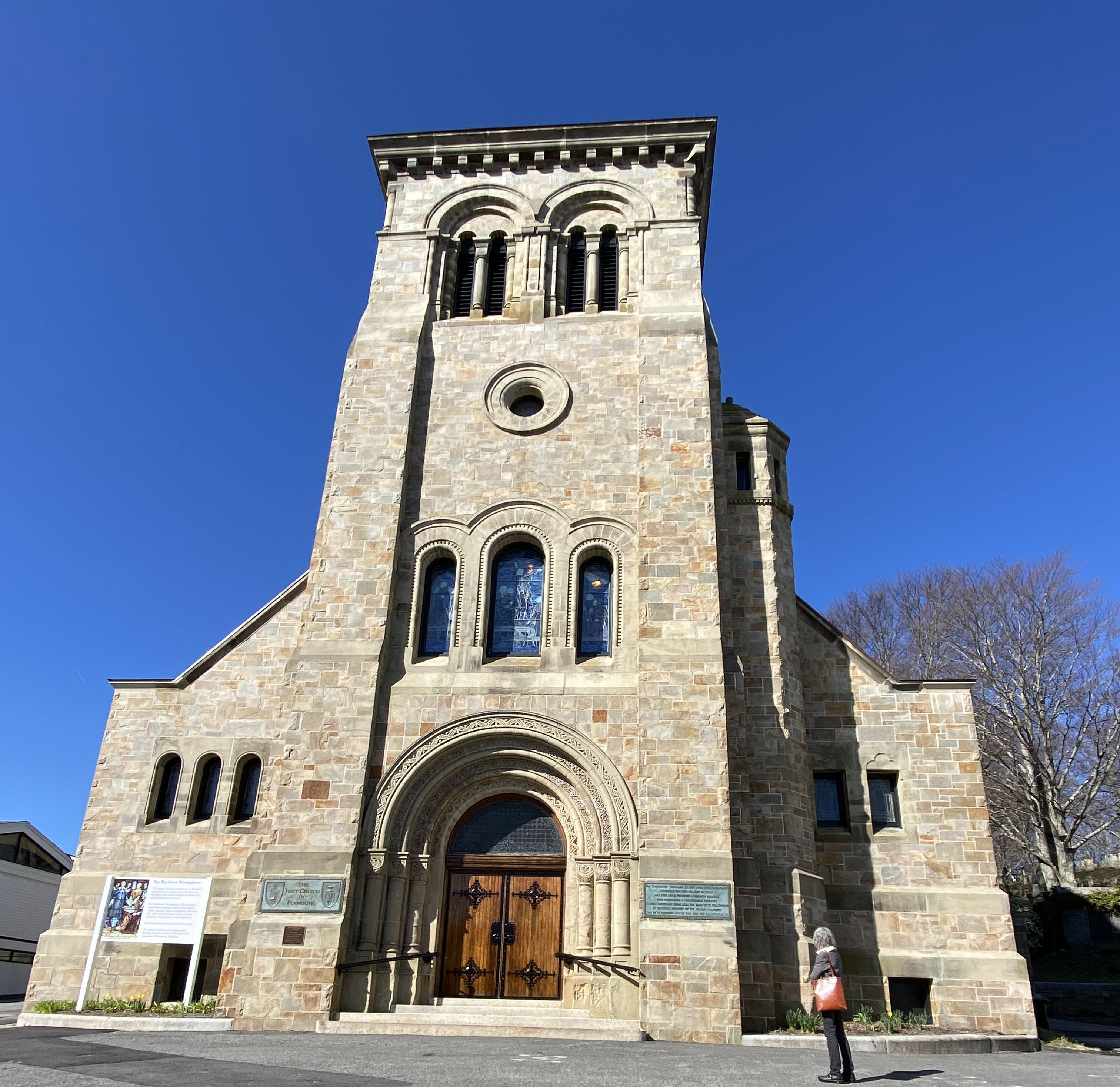
The first English settlers (known as “The Pilgrims”) built their first fort/meeting house here.
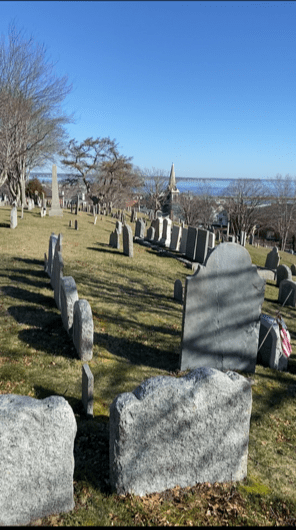
Here, Mayflower passengers are buried including Governor William Bradford and William and Mary Brewster. The last burial took place in 1957. The earliest grave markers were of carved wood, and do not survive today. Stone Markers were likely used starting in the mid-seventeenth century. Today, the oldest known stone on Burial Hill is that of Edward Gray, 1681.
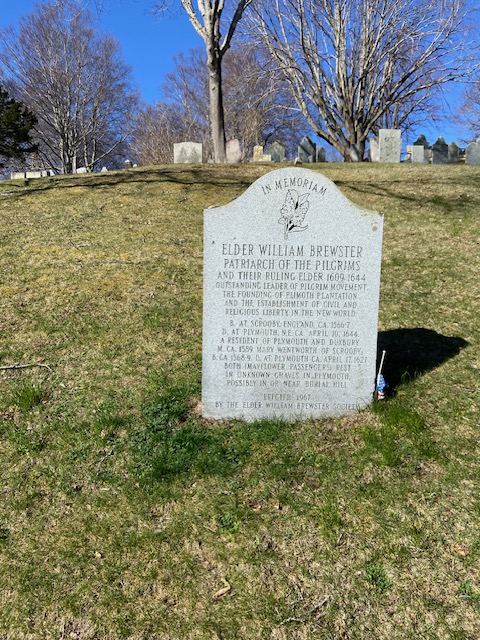
“In Memorium Elder William Brewster Patriarch of the Pilgrims and their ruling elder 1609-1644
Outstanding leader of Pilgrim movement, the founding of Plimouth Plantation and the establishment of civil and religious liberty in the New World.
Born at Scrooby, England ca 1566-7 Died at Plymouth April 10, 1644
A resident of Plymouth and Duxbury
Married ca 1558-9 Mary Wentworth of Scooby born ca 1568-9 died at Plymouth ca April 17, 1627″
Both Mayflower passengers rest in unknown graves in Plymouth possibly in or near Burial Hill”
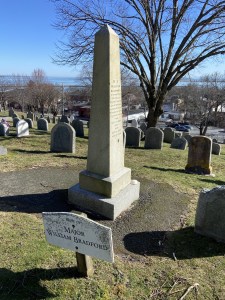
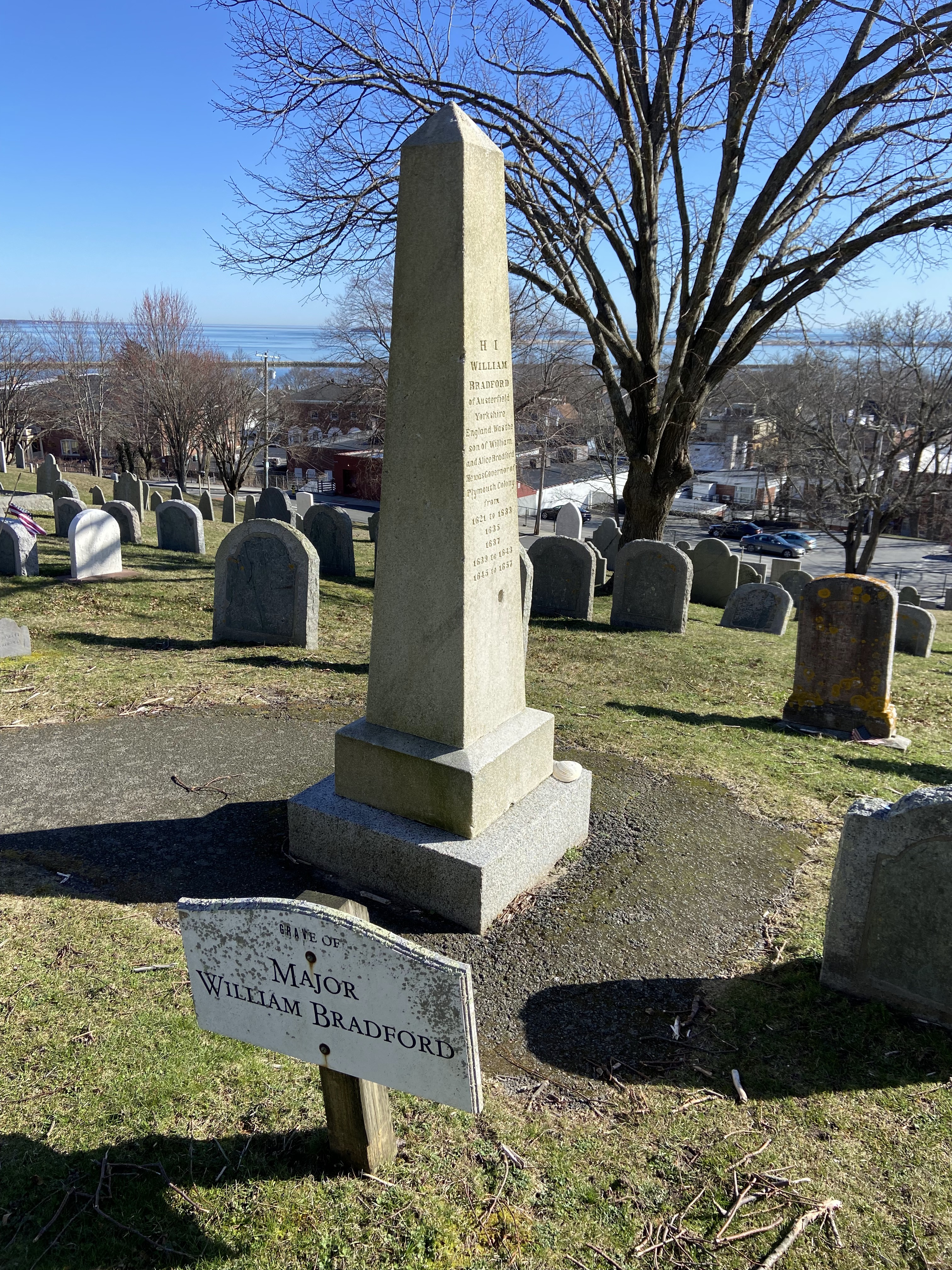
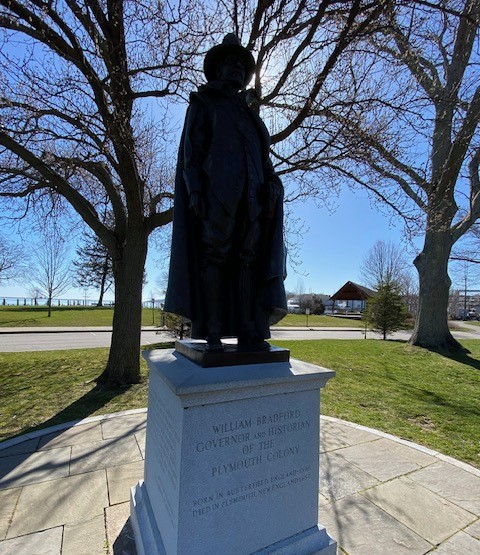
William Bradford 1590-1657
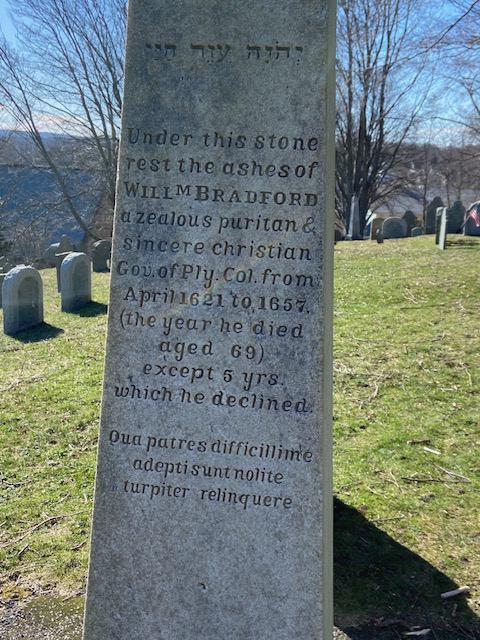
Tombstone below states,
"Under this stone rest the ashes of William Bradford a zealous puritan and sincere Christian Gov of Pl. Col. from April 1621-1657 (the year he died aged 69) except 5 years which he declined."

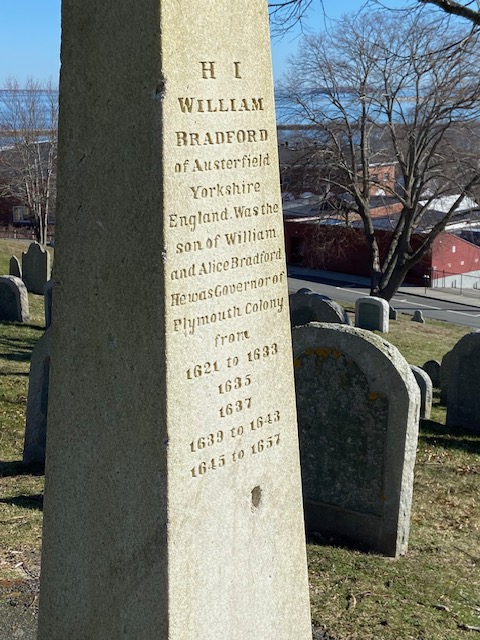
William Bradford of Austerfield Yorkshire England. Was the son of William and Alice Bradford. He was Governor of Plymouth Colony from 1621-1633, 1635, 1639 to 1643, 1645-1657
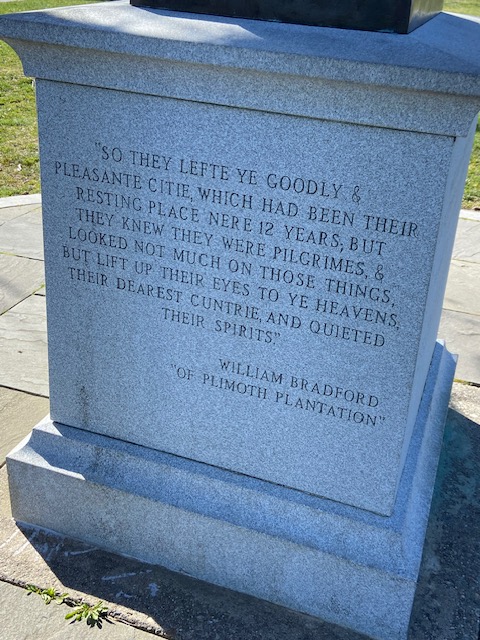
“So they lefte ye goodly & pleasante citie, which had been their resting place nere 12 years, but they knew they were pilgrimes, & looked not much on those things, but lift up their eyes to ye heavens, their dearest cuntrie, and quieted their spirits.”
William Bradford, Of Plimoth Plantation
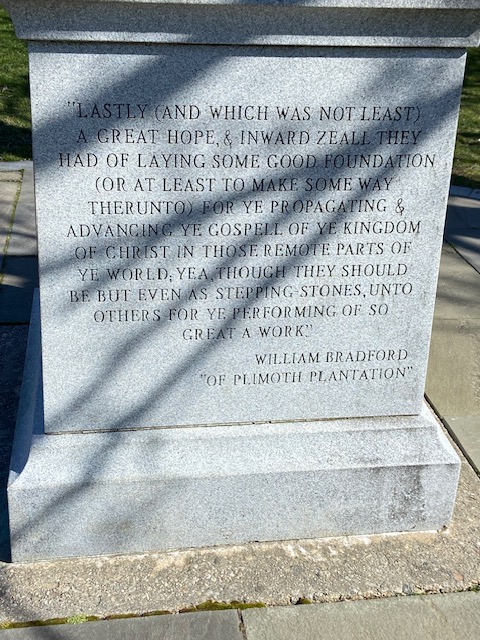
“Lastly (and which was not least) a great hope, & inward zeal they had of laying some good foundation (or at least to make some way thereunto) for ye propagating & advancing the Gospell of ye Kingdom of Christ in those remote parts of Ye world, yea, though they should be but even as stepping stones, unto others for ye performing of so great a work.”
William Bradford, “Of Plimoth Plantation
Read: Of Plymouth Plantation
This was a tombstone we found while wandering the cemetery. The Lord blessed him with an unusual long life compared to the rest of those who came over.
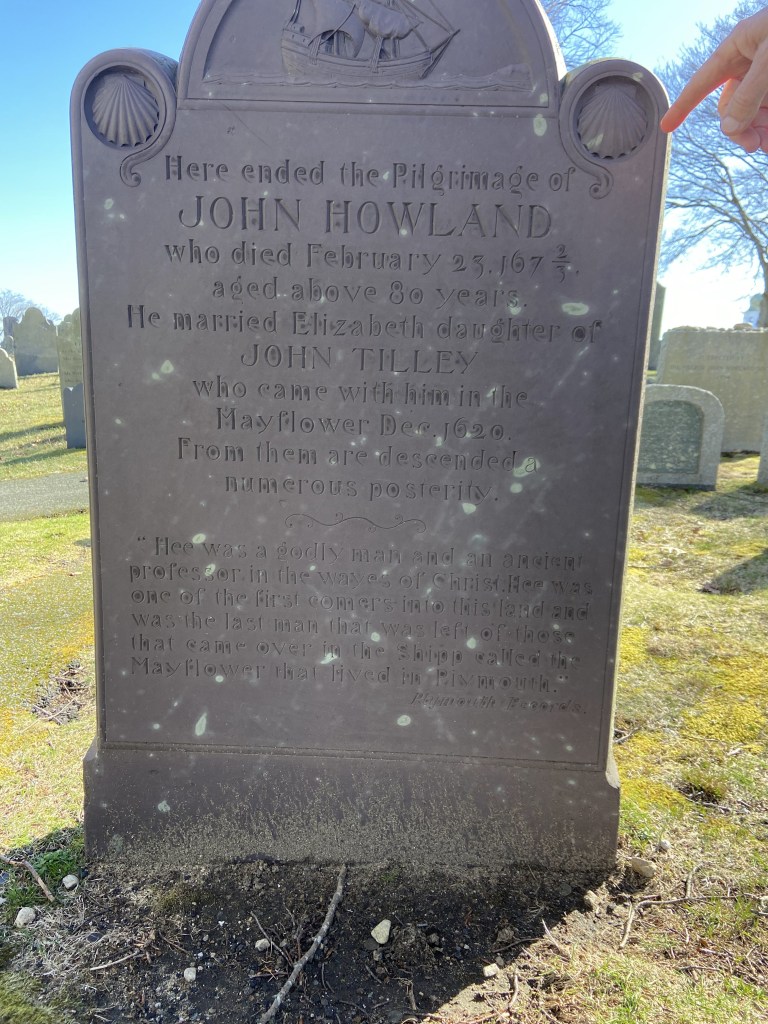
“Here ended the pilgrimage of John Howland who died February 25, 1673 aged above 80 years. He married Elizabeth, daughter of John Tilley who came with him in the Mayflower Dec 1620. From them are descended a numerous posterity. Hee was a godly man and an ancient professor in the wayes of Christ. Hee was one of the first comers into this land and was the last man that was left of those that came over in the Shipp called Mayflower that lived in Plymouth”
1629
The Massachusetts Bay Colony charter of 1629 was a royal document that gave the Massachusetts Bay Company permission by the English crown to establish a colony in New England. The charter was granted by King Charles I on March 4, 1629. source
Visit: Carver St.
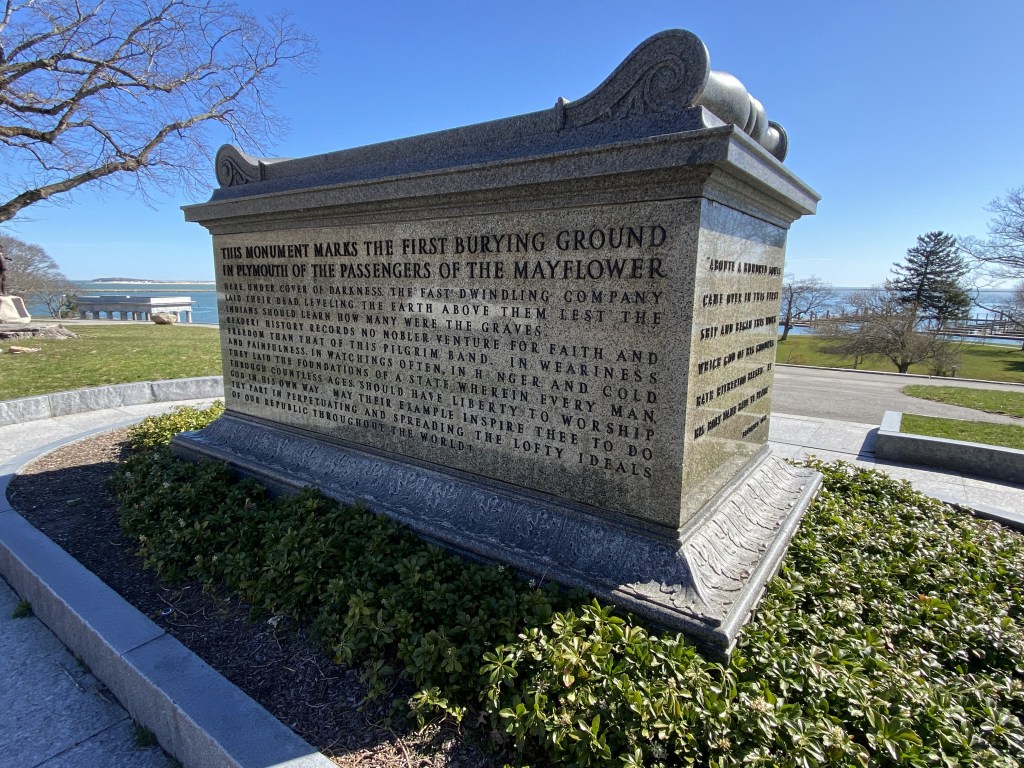
“This monument marks the first burying ground in Plymouth
of the passengers of the Mayflower.
Here, under cover of darkness the fast dwindling company laid their dead, leveling the earth above them
lest the Indians should learn how many were the graves.
Reader! History records no nobler venture for faith and freedom
than that of this pilgrim band.
In weariness and painfulness,
in watchings, often in hunger and cold
they laid the foundations of a state wherein every man,
though countless ages should have liberty to worship God in his own way.
May their example inspire thee to do thy part in perpetuating and spreading the loft ideals of our republic throughout the world.”
Plymouth Hall Museum
Visit: 75 Court St
$8-15 admission
This one is on my bucket list next time I am in Massachusetts. It contains original furniture and other items from the earliest days of Plymouth Colony, including William Bradford’s 1592 edition of the Geneva Bible, Myles Standish’s sword, the cradle of New England’s first-born, and the great chair of William Brewster.
Website
Resources:
This YouTube series was an excellent visual companion to William Bradford’s Of Plymouth Plantation.
 Beside Old Hearthstones - An American Evangelical Church History Tour
Leave a comment