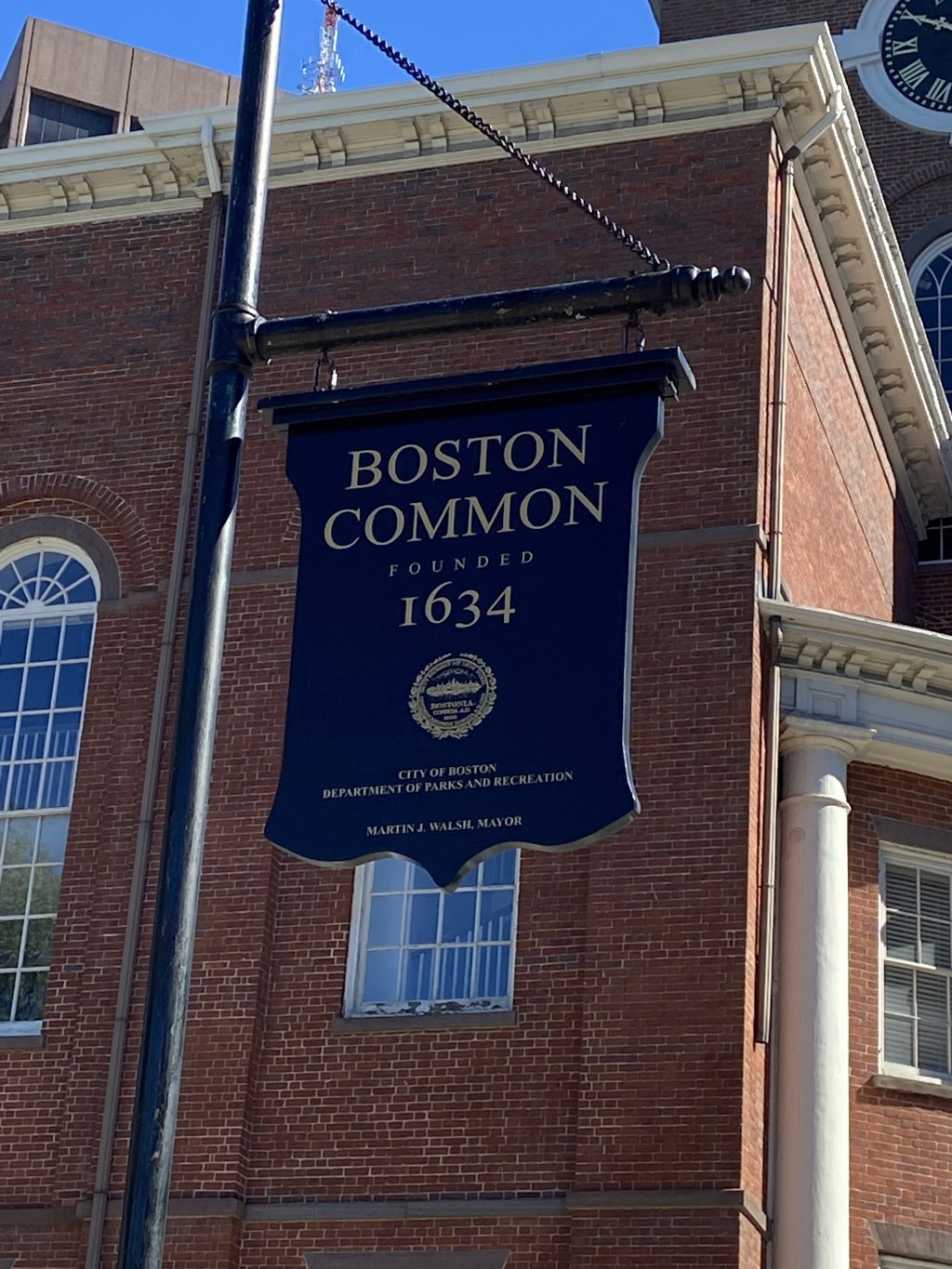
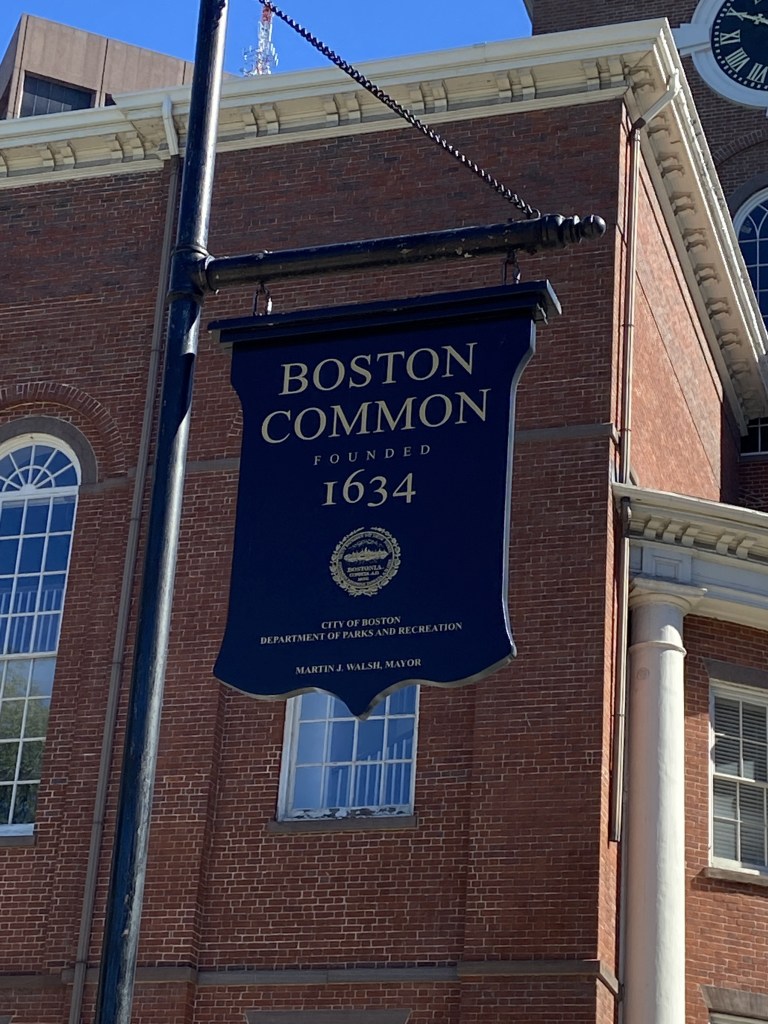
While many tourists follow the Freedom Trail to trace American History, it is also rich in church history. We begin in Boston Commons and follow along the route of the brick path.
1634-Boston Common
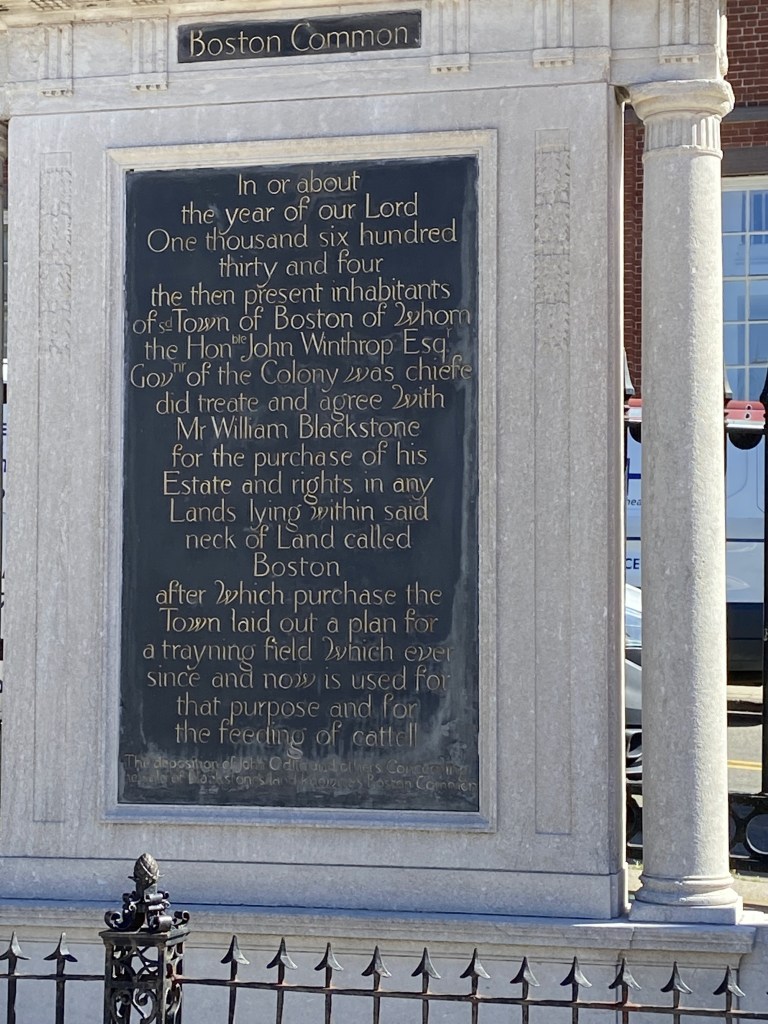
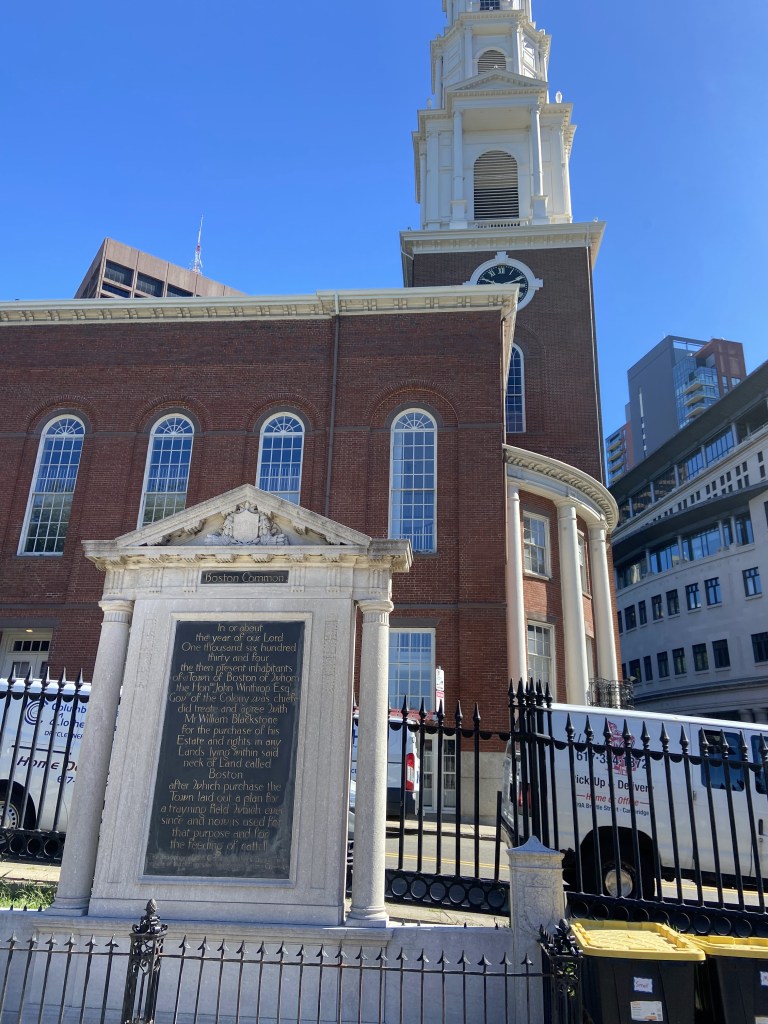
Boston Common plaque reads. “In or about the year of our Lord One thousand six hundred thirty and four the then present inhabitants of said Town of Boston of Whom the Honorable John Winthrop Esq Governor of the Colony was chiefe did treate and agree with Mr William Blackstone for the purchase of his Estate and rights in any Lands lying within said neck of Land called Boston after which purchase the Town laid out a plan for a trayning field which ever since and now is used for that purpose and for the feeding of cattell.”
1740-Boston Common & George Whitefield
“..a congregation had gathered at New South Church and was waiting for George Whitefield to arrive, someone broke a board to form a makeshift seat, and a cry went up that the gallery was falling. Immediately the place was in a panic as people rushed to get to the doors, and many fell and were trampled upon. Some even threw themselves out of the windows. Five were killed and several seriously injured. Whitefield was severely disturbed by the tragedy, but looking to God for help he led the congregation to the Boston Common…As Whitefield went to his farewell service – a great open air meeting on the Boston Common – the governor (Jonathan Belcher) drove him in his carriage.
The congregation, estimated in a newspaper as twenty-three thousand , was larger than the entire population of the city, and was undoubtedly the largest crowd ever assembled in America till that time. When his ministry was concluded Whitefield declared, “I hope a glorious work is now begun, and that God will raise up some faithful labourer to carry it on.”
Read: George Whitefield by Arnold Dallimore
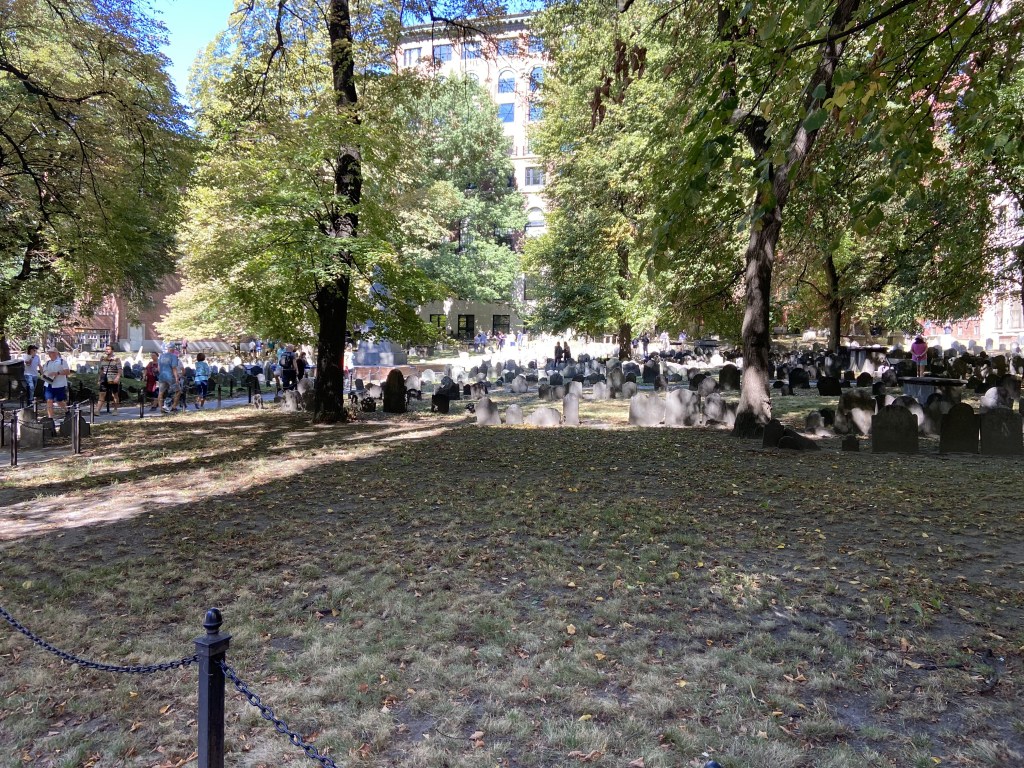
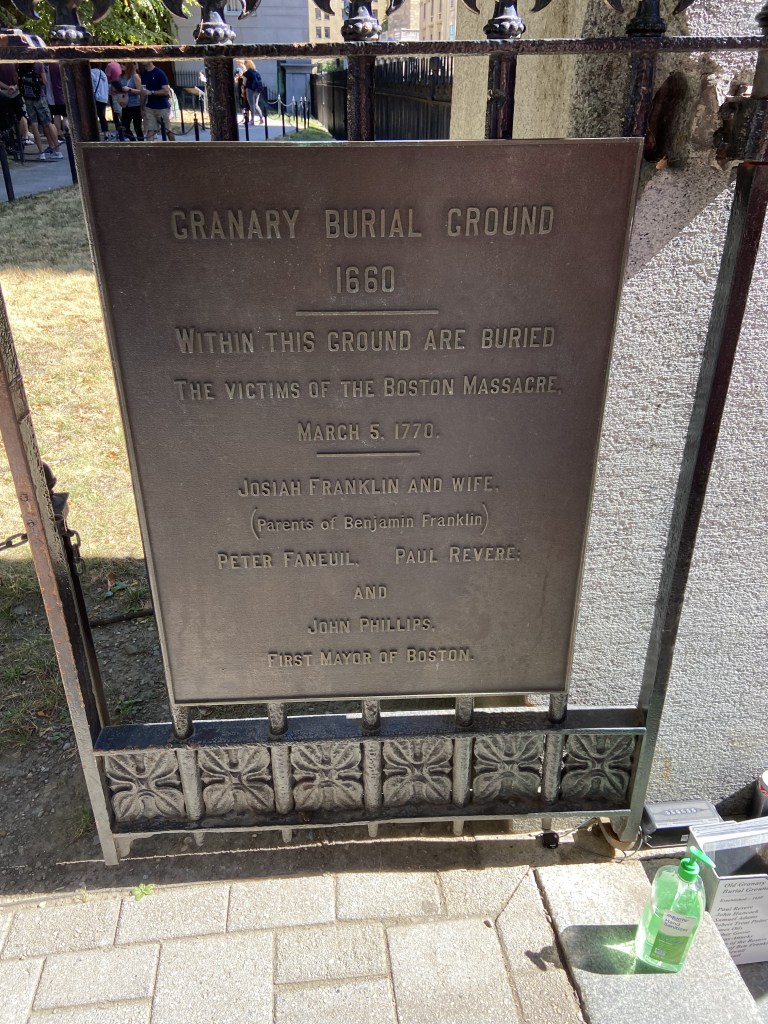
1660 – Granary Burying Ground
Tremont St, Boston, MA 02108
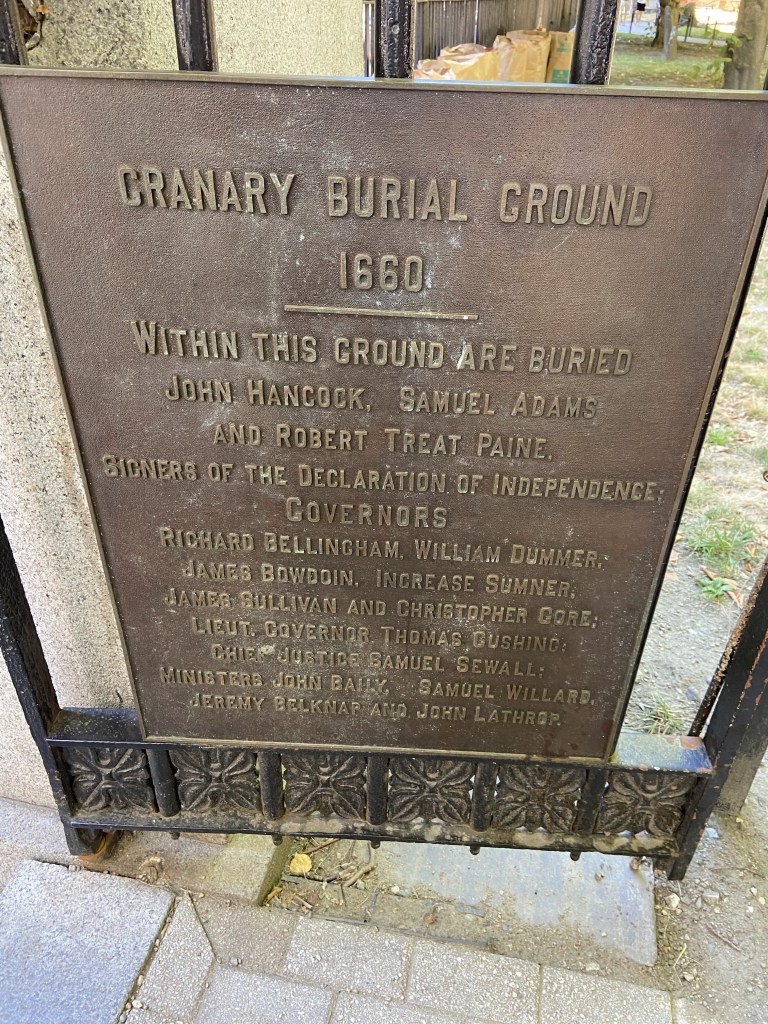
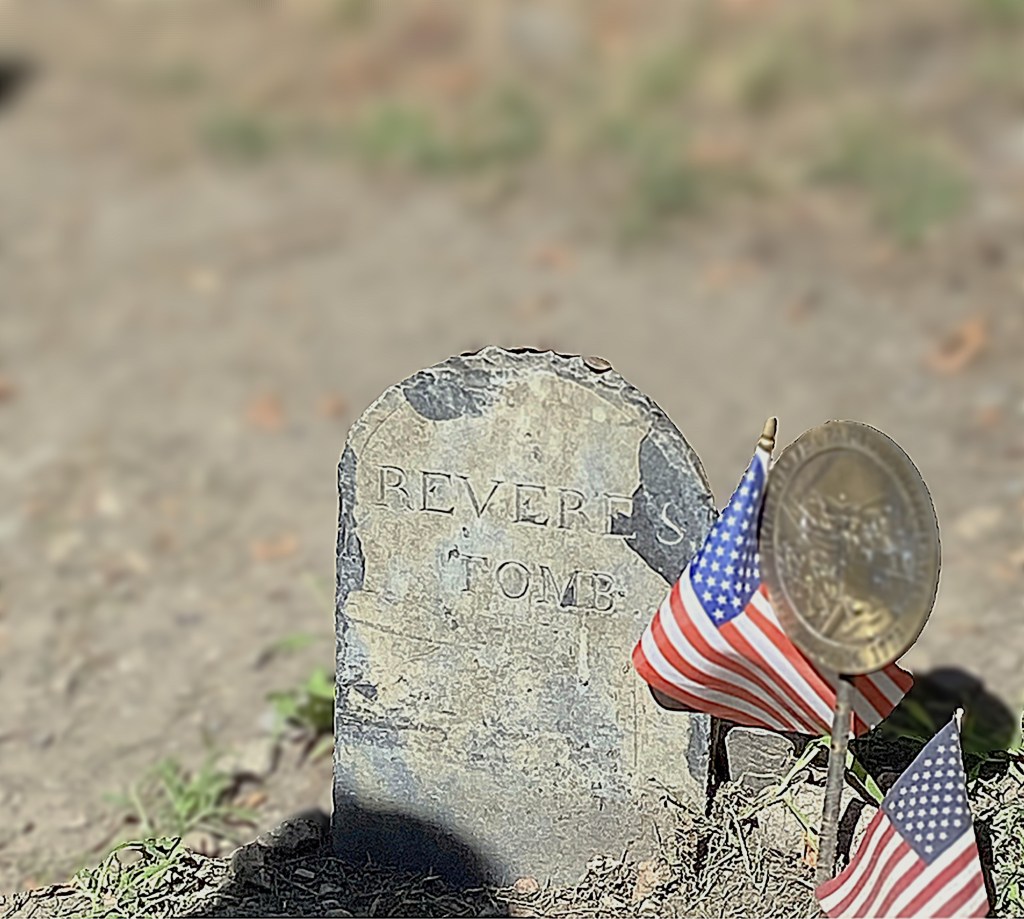
Rev Thomas Prince is buried here along with the remains of Paul Revere, the 5 Boston Massacre victims, Samuel Adams, John Hancock. Worth a quick stop.
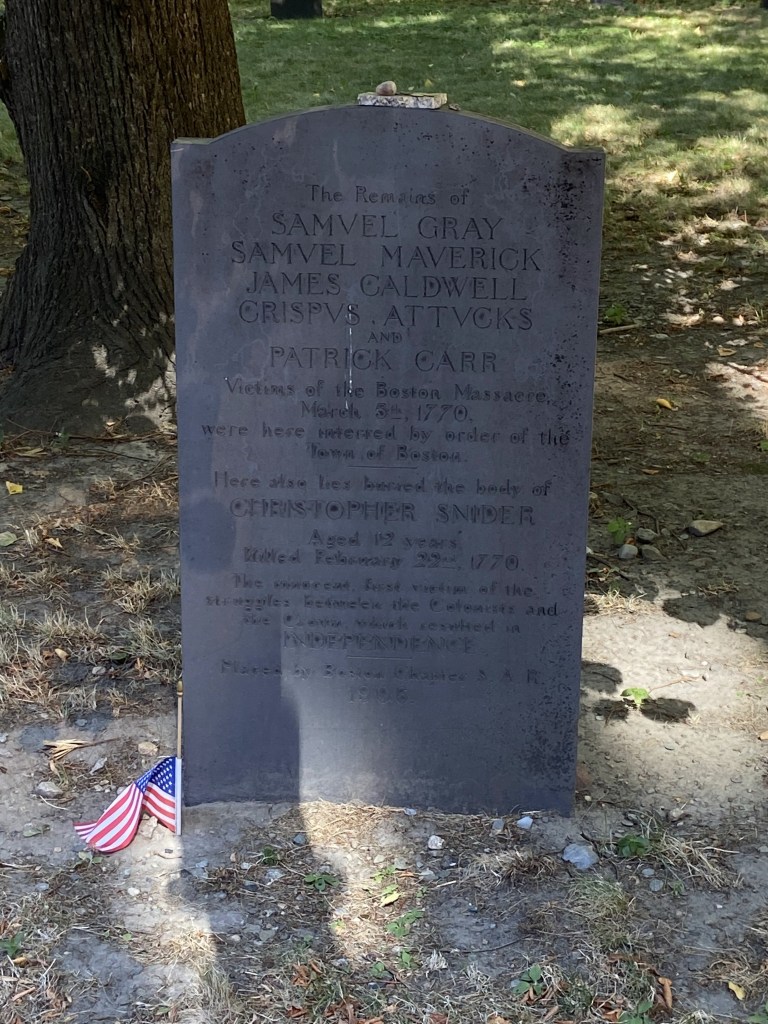
Victims of the Boston Massacre
March 5th, 1770
were here interred by order of the Town of Boston. Here also lies buried the body of Christopher Snider. Aged 12 years. Killed February 222nd, 1770. The innocent first victim of the struggles between the Colonies and the Crown which resulted in INDEPENDENCE.
Paul Revere’s grave
1652-Kings Chapel Burying Ground
40 Tremont St, Boston, MA 02108
John Cotton’s grave is here along with John Winthrop, the colony’s first governor as well as Mary Chilton a passenger on the Mayflower. (read more about Cotton and Winthrop here)
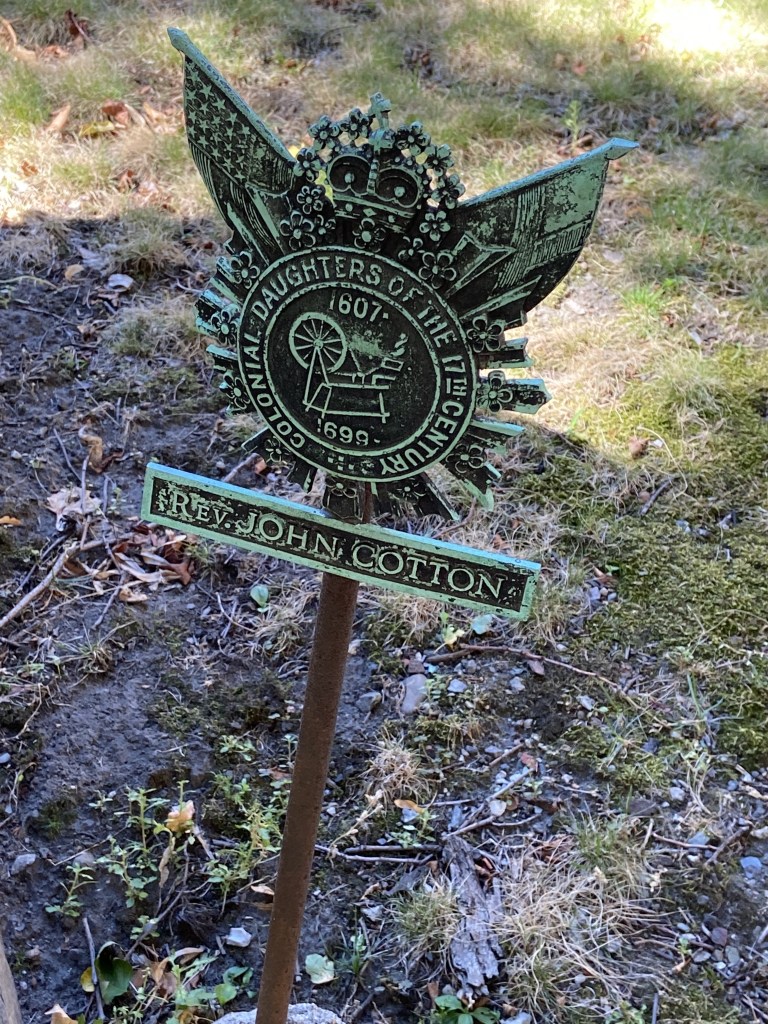
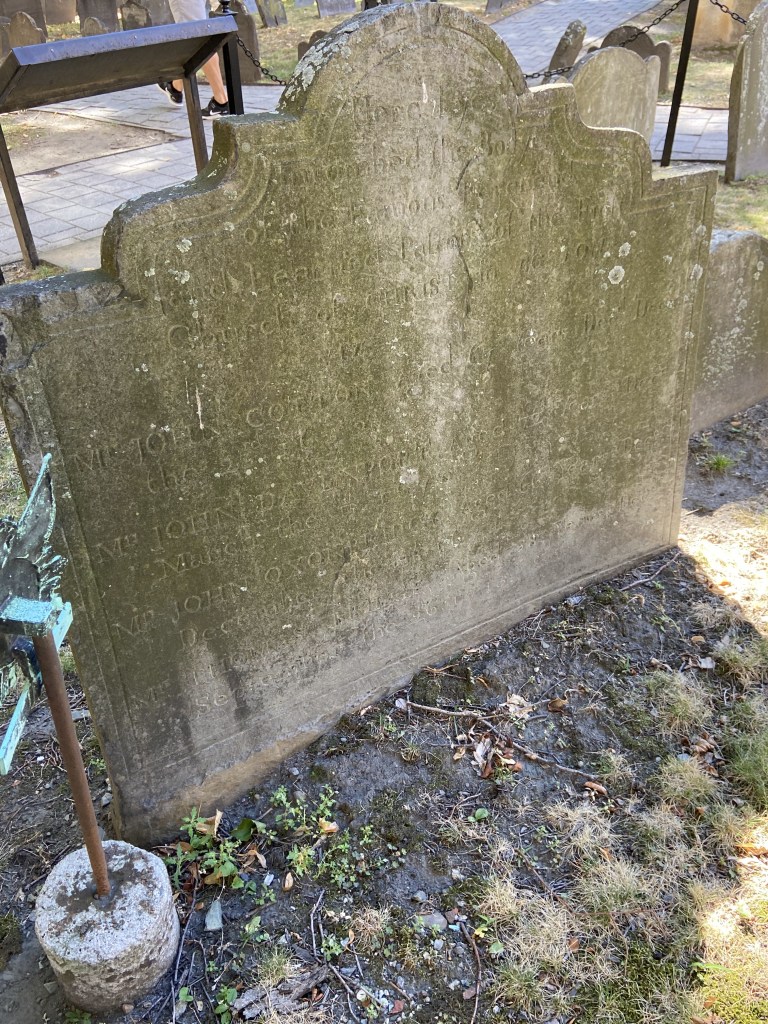
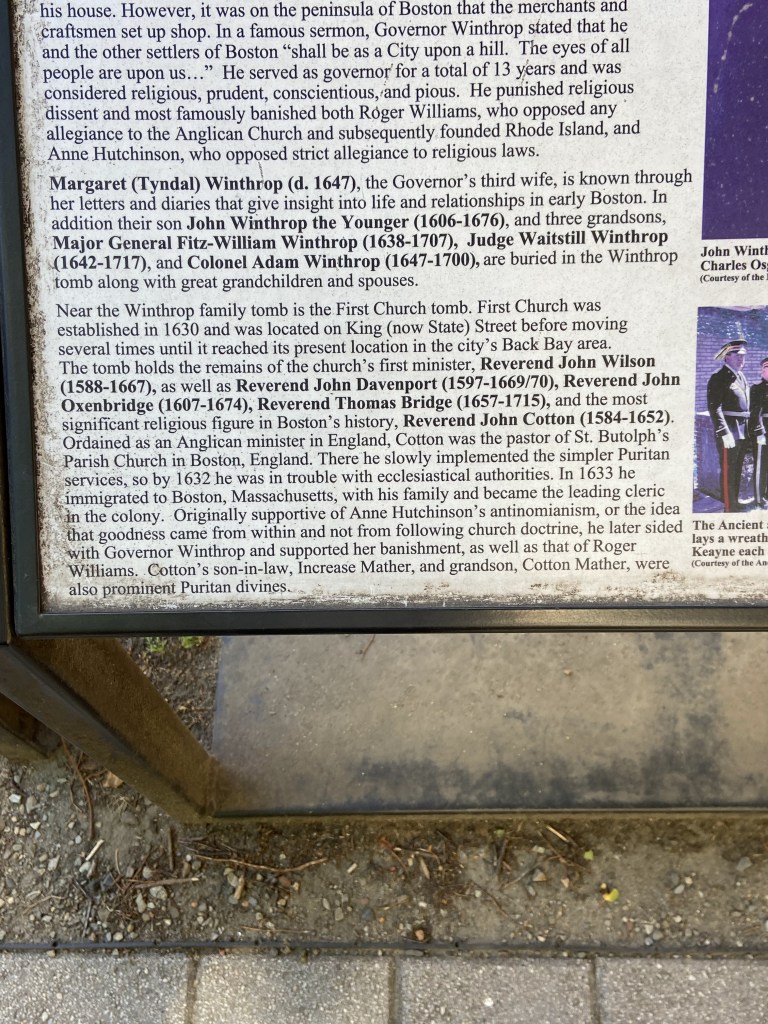
Plaque near John Cotton’s tomb reads, “First Church was established in 1630 and was located on KIng (now State) Street…The tomb holds the remains of…the most significant religous figure in Boston’s history, Reverend John Cotton (1584-1652). Ordained as an Anglican minister in England, Cotton was the pastor of St. Butolph’s Parish Church in Boston, England. There he slowly implemented the simpler Puritan services, so by 1632 he was in trouble with the ecclesiastical authorities. In 1633 he immigrated to Boston, Massachusetts, with his family and became the leading cleric in the colony. Originally supportive of Anne Hutchinson’s antinomianism, or the idea that goodness came from within and not from following church doctrine, he later sided with Governor Winthrop and supported her banishment, as well as that of Roger Williams. Cotton’s son-in-law, Increase Mather, and grandson , Cotton Mather, were also prominent Puritan divines.”
1729-Old South Meeting House
310 Washington St, Boston, MA
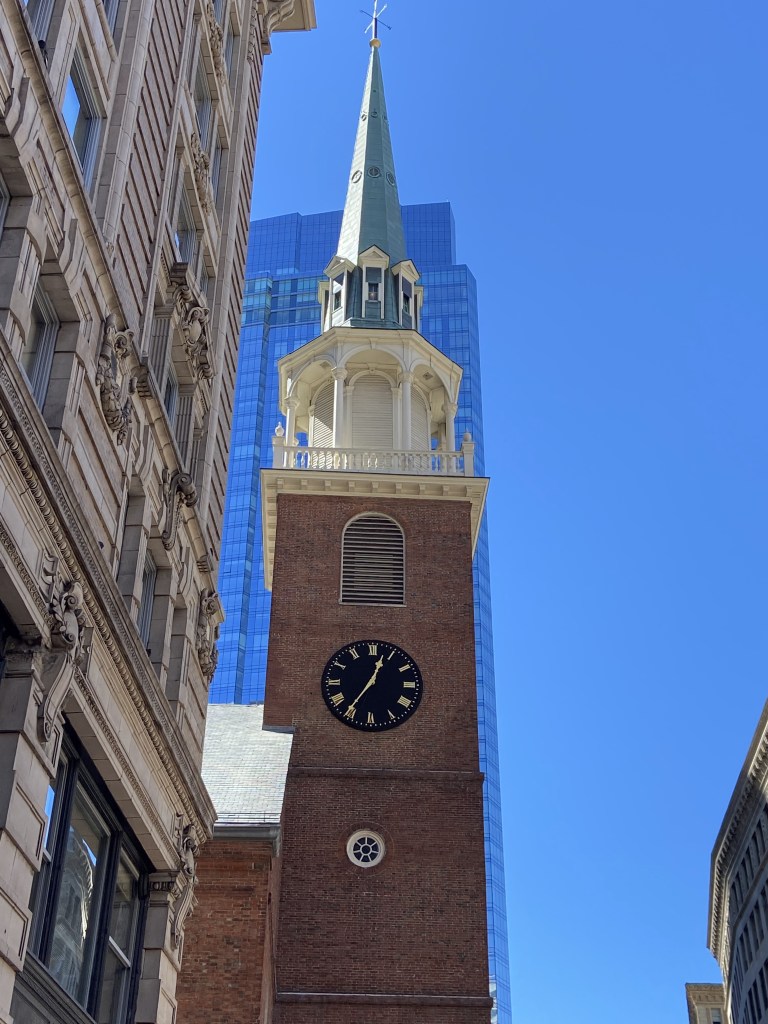
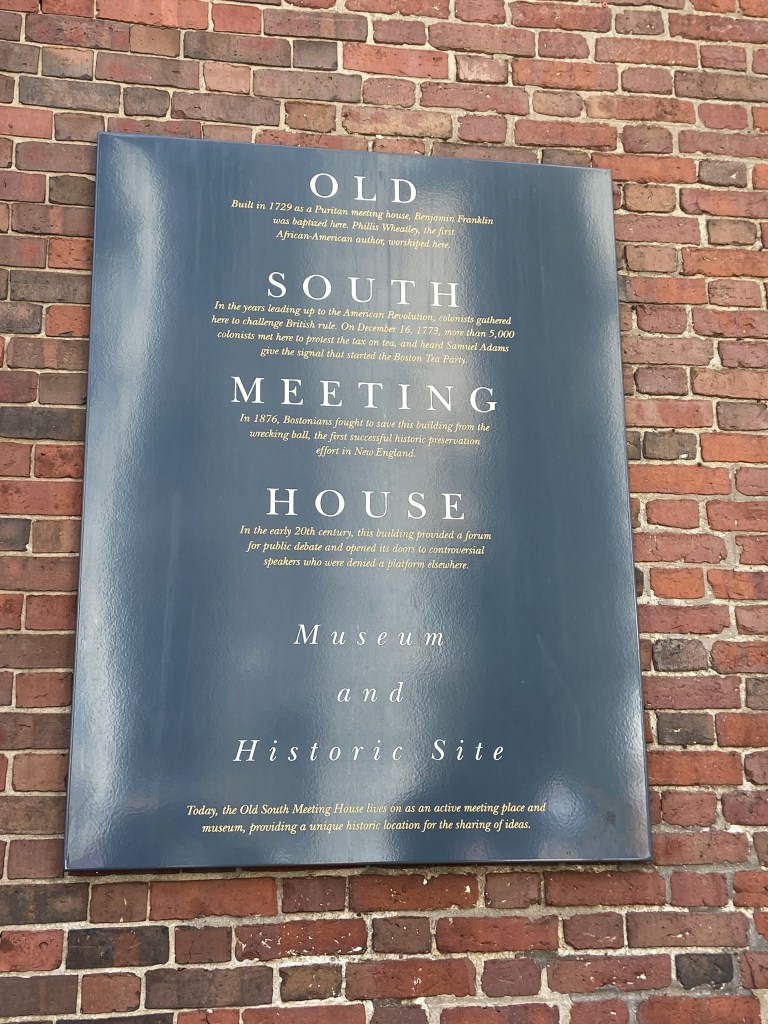
Built in 1729. Most notable pastor was Rev. Thomas Prince. He pastored from 1718-1758. According to the sign posted outside the church Benjamin Franklin was baptized here when he was young.
The church’s website states, “The Reverend Thomas Prince enjoyed a long, productive pastorate at the Old South Church. Called to Old South as our fifth senior minister… While studying at Harvard, Thomas Prince began collecting books on early American history. His extensive collection came to be known as the Prince Collection and is housed at the Boston Public Library. Through his reading and research, Thomas Prince sought to document the history of New England, and in 1728, he began writing A Chronological History of New England in the form of Annals. Thomas Prince’s scholarship and extensive collection have provided historians with critical historical information about early New England. As a pastor, Thomas Prince became a strong proponent of the Great Awakening, a period of religious revival in New England in the 1730s & 1740s.”
Prince invited George Whitefield to Boston in 1740 and remarked, “And thus successfully did this divine work go on in town without any lisp of separation, either in this town or province, for above a year and a half after Mr. Whitefield left us.” Dallimore, George Whitefield
Rev. Prince is buried in the Granary Burying Ground just past Boston Commons.
1632 Site of First Meeting House in Boston
Second Brazer Building, Boston
John Cotton was called to teach alongside Pastor John Wilson “Here his ministry had much the same quality as in the home land. The same indefatigable labor in preaching and in the exposition of Scripture, the same affectionate reverence from his congregation, the same capacity to mold strong men to his way of thinking, that had marked his career in old Boston, were his in added degree.” The American Puritans, pg 64
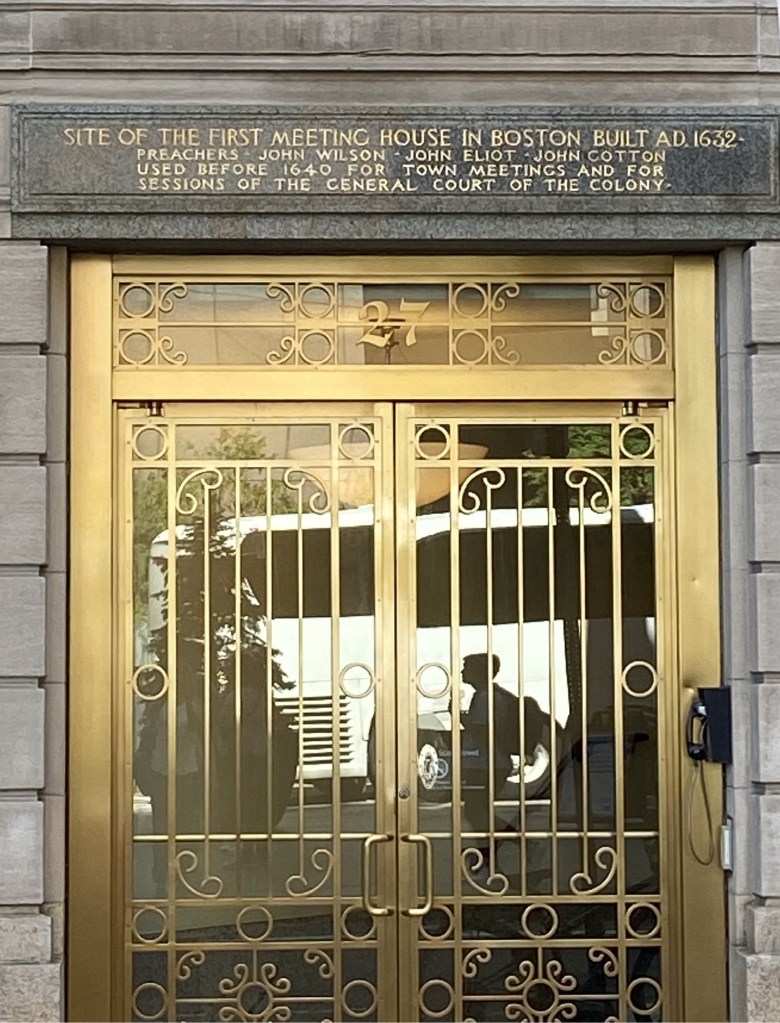
Plaque reads,
“Site of the First Meeting House in Boston Built AD 1632
Preachers John Wilson John Eliot John Cotton
Used before 1640 for town meetings
and for sessions of the general court of the colony.”

“It stood on State Street (now) Congress Street. Its roof was thatched, its walls were mud. Such was the humble Temple in which the Pilgrim Fathers worshipped. It had no elegance of the modern churches. No rich and splendid drapery hung around its pulpit. No velvet cushions covered its seats. No deep-toned organ to assist in singing praises to God. It was such a house as fitted their humble circumstances. Previous to this structure, Mr. Wilson preached out in open air, under the trees. In 1639 this house because too small. Some wanted a new church built on the green, where now the Old South stands. Mr. Cotton influenced them to build nearer the market, where the inhabitants had settled.” source
1630- Governor John Winthrop Home site
53 State Street, Boston
Just past the Boston Massacre site is a plaque on the side of the building marking the site of Governor John Winthrop’s home.
In 1630 the first Puritan settlers, led by John Winthrop, built their earliest houses along what is today “State Street.” By 1636 the thoroughfare was known as Market Street. source
Rev. Thomas Prince also lived in this home. “Called to Old South in 1718, Prince stayed there 40 years, living in a charming house that had been Governor Winthrop’s. The Edwardses often visited in this house, which unhappily was destroyed and used for firewood by the British during the winter of 1775.”
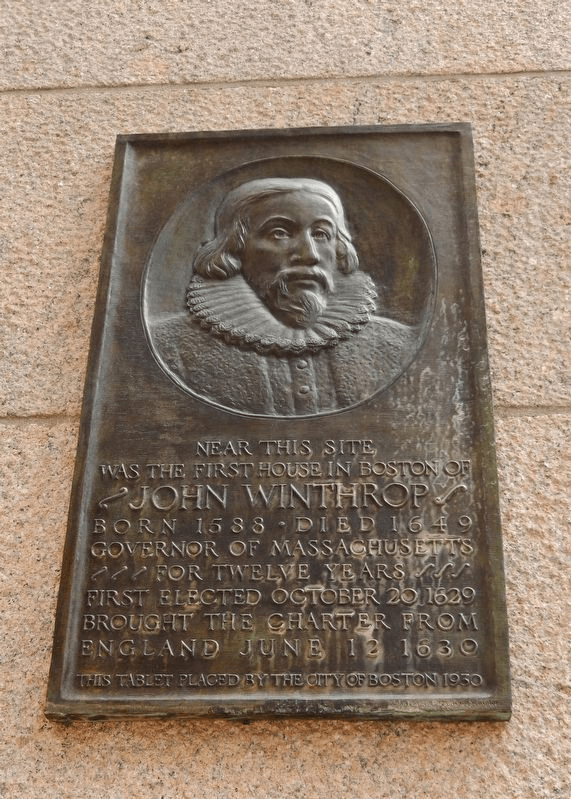
John Winthrop
Born 1588 – Died 1649
Governor of Massachusetts
for twelve years
First elected October 20, 1629
Brought the charter from
England June 12, 1630
Winthrop built this house after moving across the Charles River to what is now downtown Boston
“Although not a pastor, Winthrop held a firm belief, like most Puritans, that it was the duty of the civil government to safeguard and nurture the Puritan churches formed in New England.” The American Puritans, pg 50
1670 – Increase Mather and Paul Revere home
19 North Square, Boston
The Mather family originally lived at the site of the historic Paul Revere home. The home was built about 1680 on the site of the former parsonage of the Second Church of Boston. Increase Mather, the Minister of the Second Church, (minister 1664–1723) and his family, including his son, Cotton Mather occupied this parsonage from 1670 until it was destroyed in the Great Fire of 1676. A large and fashionable new home was built at the same location about four years later. It is estimated that about 90% of the structure is original to 1680. (read more about Cotton Mather here)
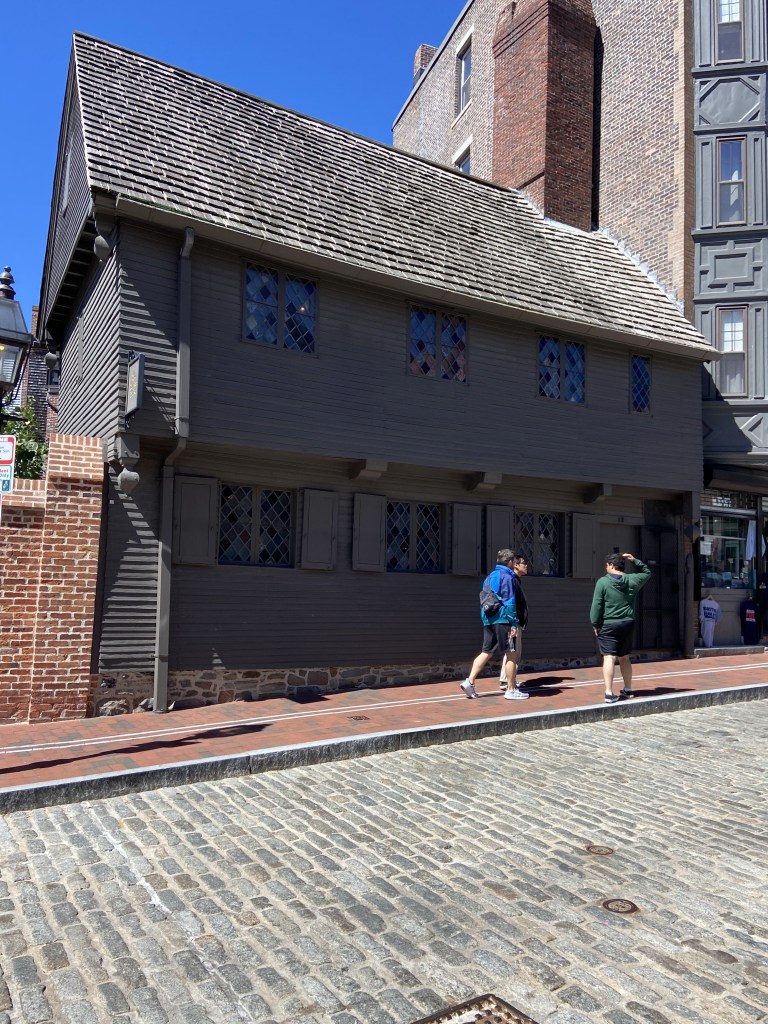
1649 North Square and Second Church
North Square, Boston
The North Church was founded 1664. Known as “Church of the Mathers”. Increase and Cotton Mather both were pastors here.
The original building was destroyed by the same fire that destroyed the North End and their home in 1676.
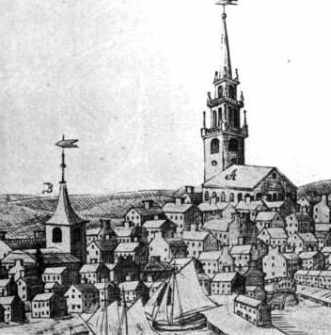
The second church building (seen on the left) was torn down by the British on January 16, 1776.
“The taller, grander steeple to the right is Christ Church, which inherited the “Old North” nickname after the war and is now commonly called Old North Church.” source
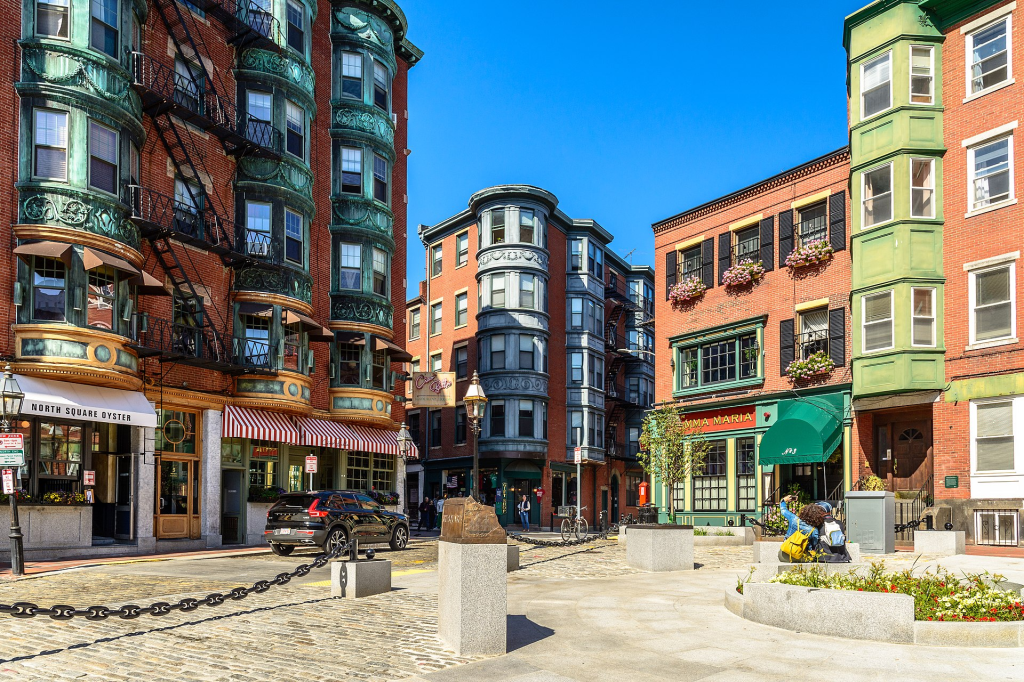
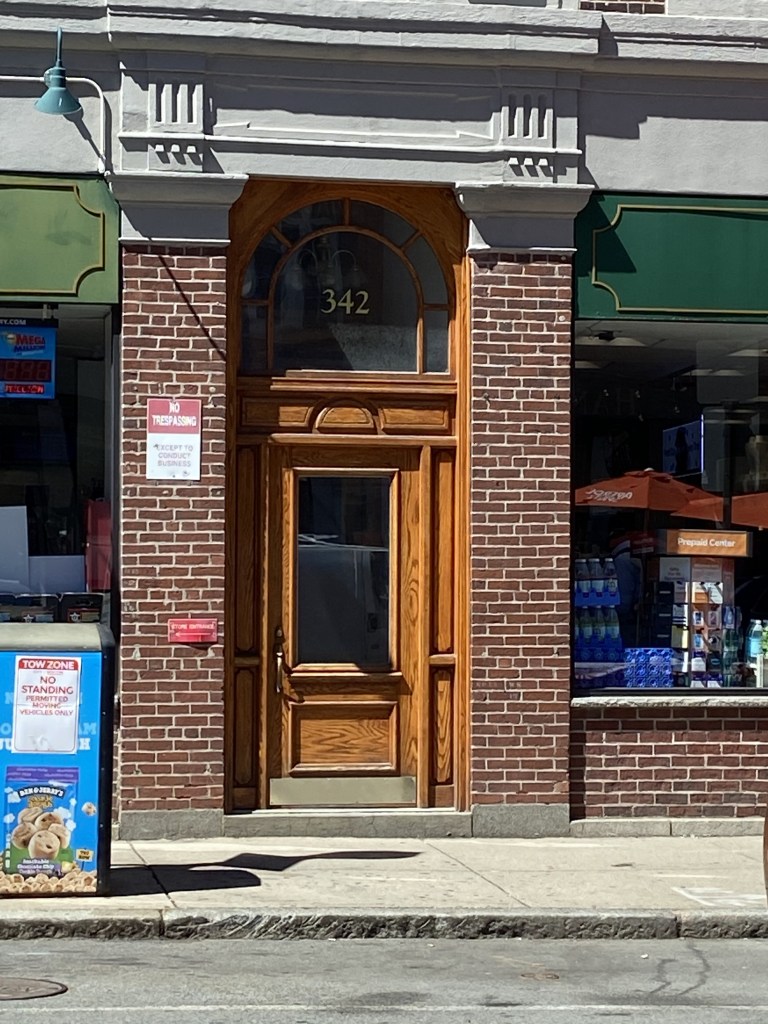
1677 Mather Home
342 Hanover St, Boston

“The house at 342 Hanover Street was built in 1677 by noted Puritan minister Increase Mather, after his previous house was destroyed in the fire of 1676. His son, Cotton Mather, grew up here, and later went on to be a prominent minister as well. The Mathers only lived here for 11 years, but later on the house was owned by two other famous ministers, Andrew and John Eliot. The house was still standing in 1899, but was demolished by 1908.” The doorway remains. Lost New England
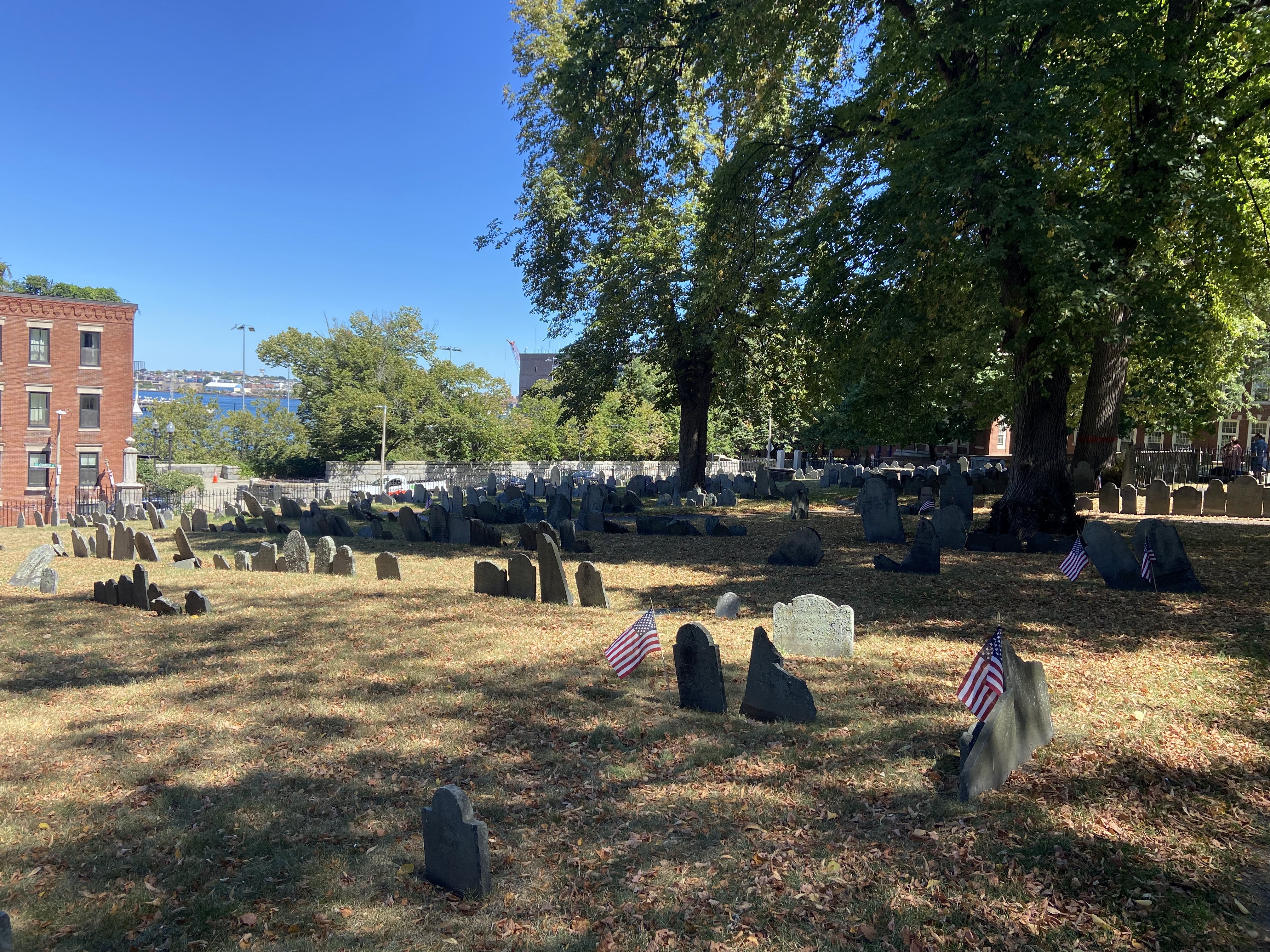
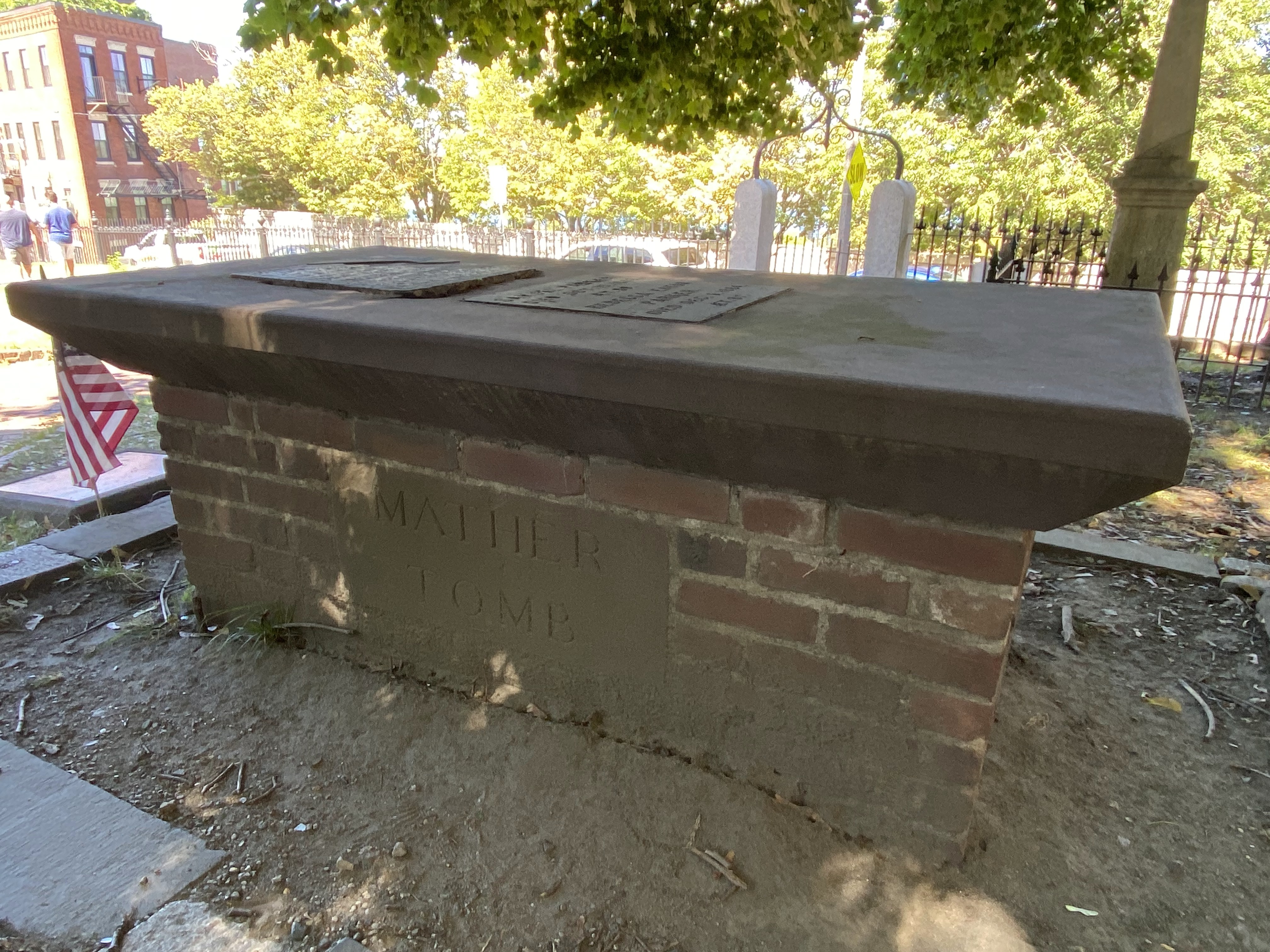
1659 Copp’s Hill Burying Ground
45 Hull St, Boston, MA
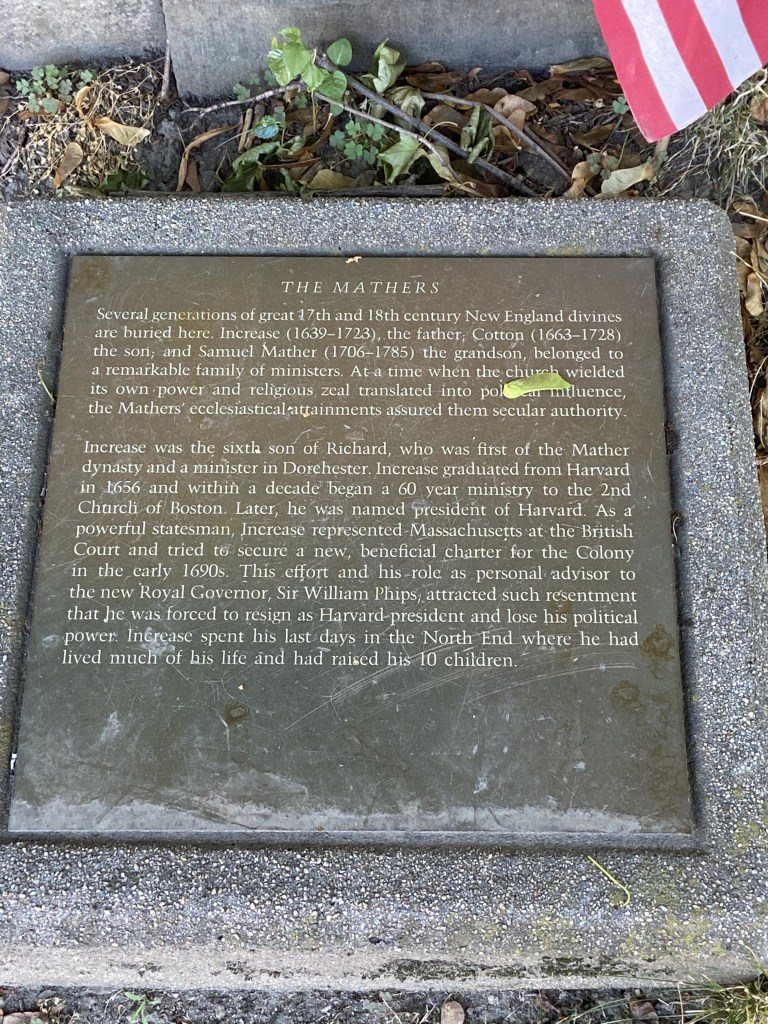
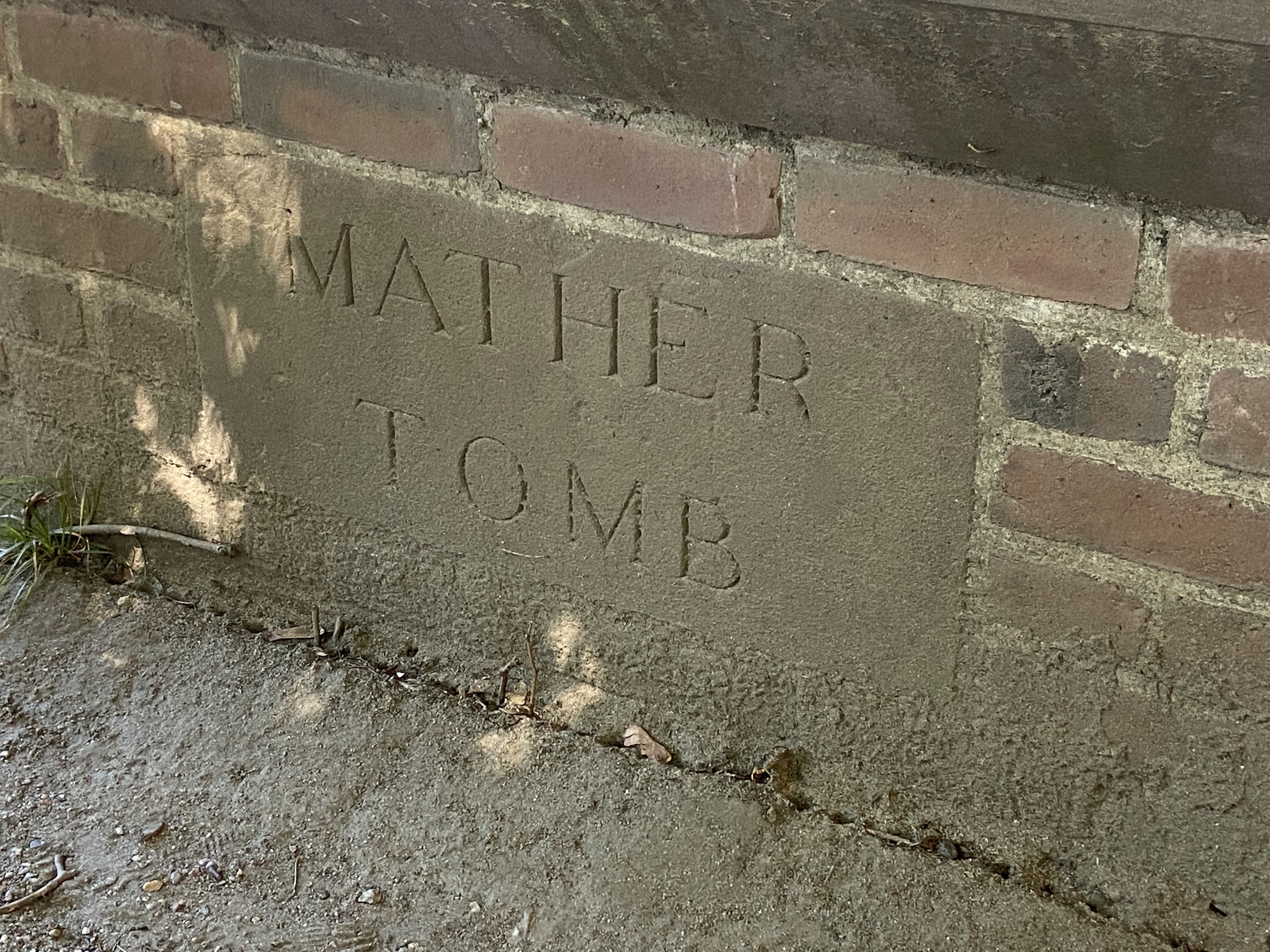
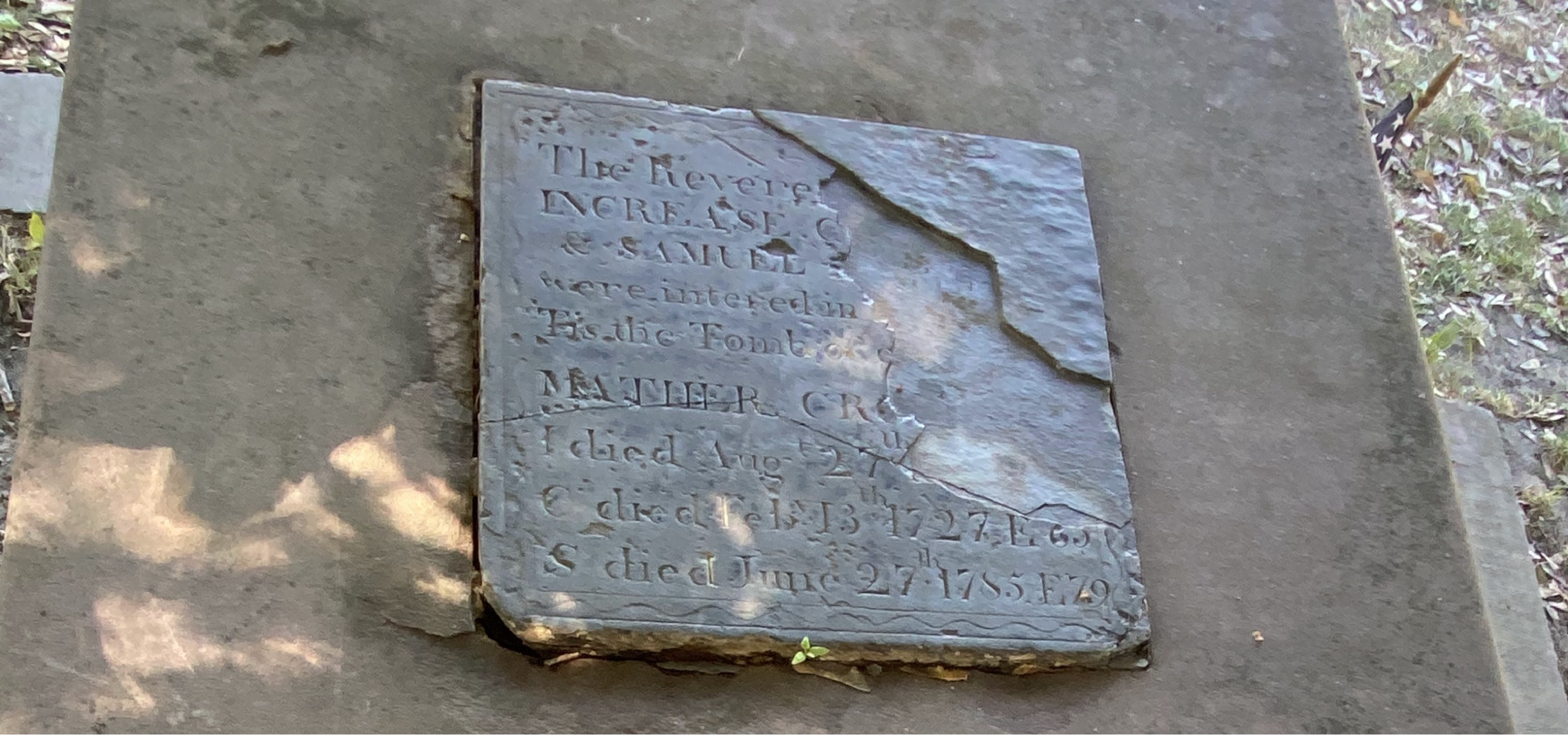
Plaque reads, ”Several generations of the great 17th and 18th century New England divines are buried here. Increase (1639-1723), the father of Cotton (1663-1728) the son and Samuel Mather (1706-1785) the grandson, belonged to a remarkable family of ministers. At a time when the church wielded its own power and religious zeal translated into political influence, the Mathers’ ecclesiastical attainments assured them secular authority.
Increase was the sixth son of Richard, who was the first of the Mather dynasty and a minster in Dorchester. Increase graduated from Harvard in 1656 and within a decade began a 60 year ministry to the 2nd Church of Boston. Later, he was named president of Harvard. As a powerful statesman, Increase represented Massachusetts at the British Court and tried to secure a new, beneficial charter for the Colony in the early 1690’s. This effort and his role as personal advisor to the new Royal Governor, Sir William Phips, attracted such resentment that he was forced to resign as Harvard president and lose his political power. Increase spent his last days in the North End where he had lived much of his life and had raised his 10 children.”
Posts with these tags have more sites to visit in and around Boston, Cambridge and the Freedom Trail.
 Beside Old Hearthstones - An American Evangelical Church History Tour
Leave a comment