A tour of New Haven, Connecticut
walking map of New Haven locations
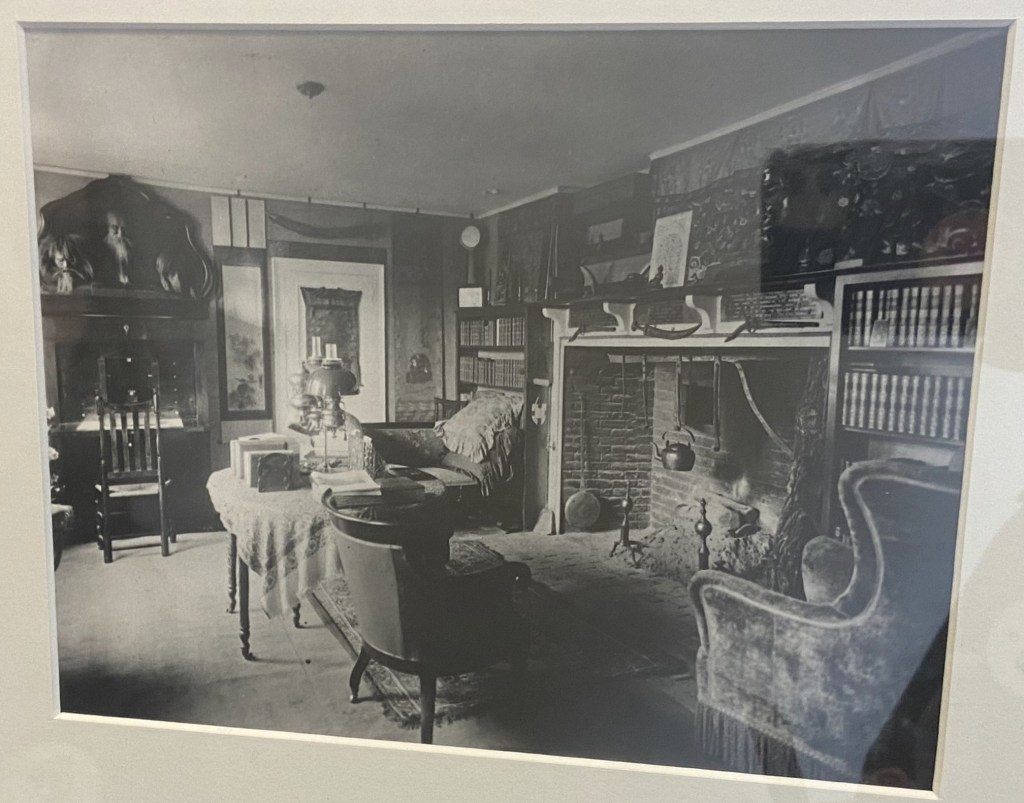
The Rev. James Pierrepont was Sarah Edwards’s father. He was pastor of the church in New Haven and one of the founders of Yale College. His first two wives died very young. His third wife, Mary Hooker was the granddaughter of Thomas Hooker (founder of the Connecticut colony) and Sarah’s mother. James died in 1714 when Sarah was 4 and before Jonathan came to Yale. Jonathan and Sarah courted here in New Haven while he was a student at Yale in the early 1720’s.
Rev. James Pierrepont, son of John, was born January 4, 1659 ; graduated at Harvard College in 1681. and was ordained a minister. July 2. 1685, over the first church at New Haven. His home has long been known as the Pierrepont mansion. Two elms that he planted in 1686 are still standing in front of the north side of the village green. He was minister of this church for thirty years.
New England families, genealogical and memorial; a record of the achievements of her people in the making of commonwealths and the founding of a nation 1913
“Sarah was raised in a house that had been built for her father by his congregation in 1686…These houses enclosed a common green where cattle grazed…One of the parishioners, a modest farmer name William Cooper, wanted to make a contribution. He had little else to donate, so he dug up two elm saplings and installed the tiny trees on the lawn of the new house…. the trees thrived and were the first of the noble elms for which New Have calls itself “The Elm City”. source
1686/1767 Pierrepont Property
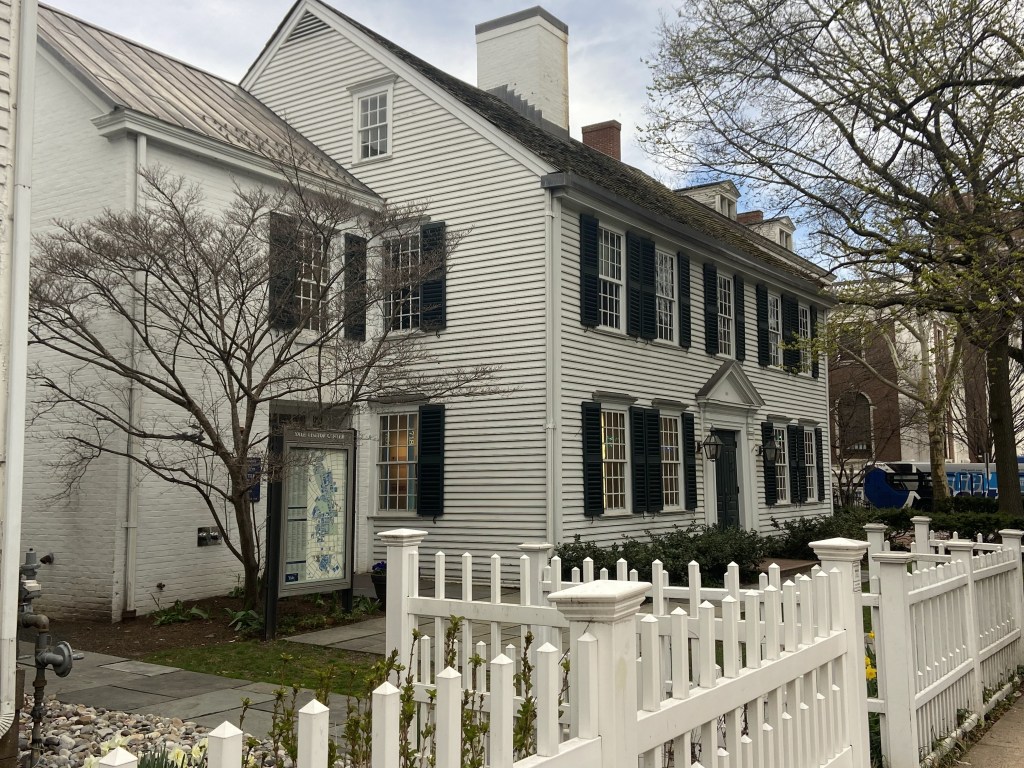
149 Elm St, New Haven, CT 06511
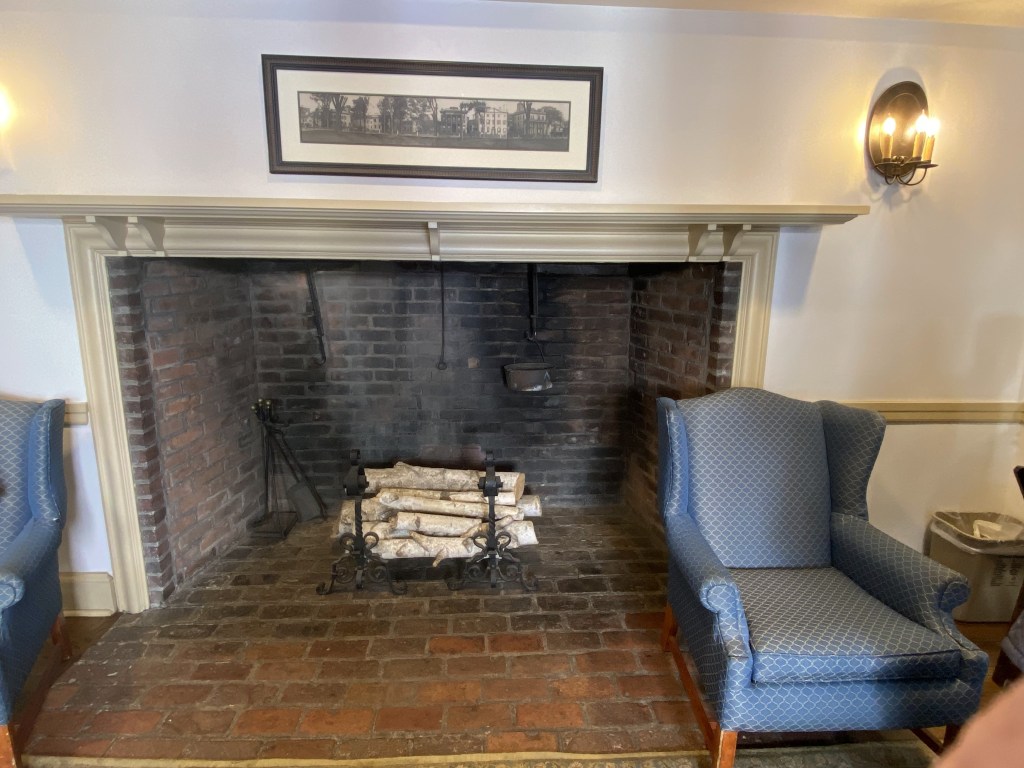
The original house is gone, but the grandson of James Pierrepont built the house currently standing on the family’s property. It is currently used as Yale’s visitor center. Tours are free and begin inside the home.
“This house was built in 1767 as the home of John Pierpont and his newlywed wife, Sarah Beers. However, the property itself had been in the family for nearly a century, having been acquired in 1685 by Pierpont’s grandfather, James Pierpont.” Lost New England
They say there is a young lady in New Haven who is beloved of that Great Being, who made and rules the world…She has a strange sweetness in her mind and singular purity in her affections.”
Jonathan Edwards on Sarah written in the front page of his Greek grammar book
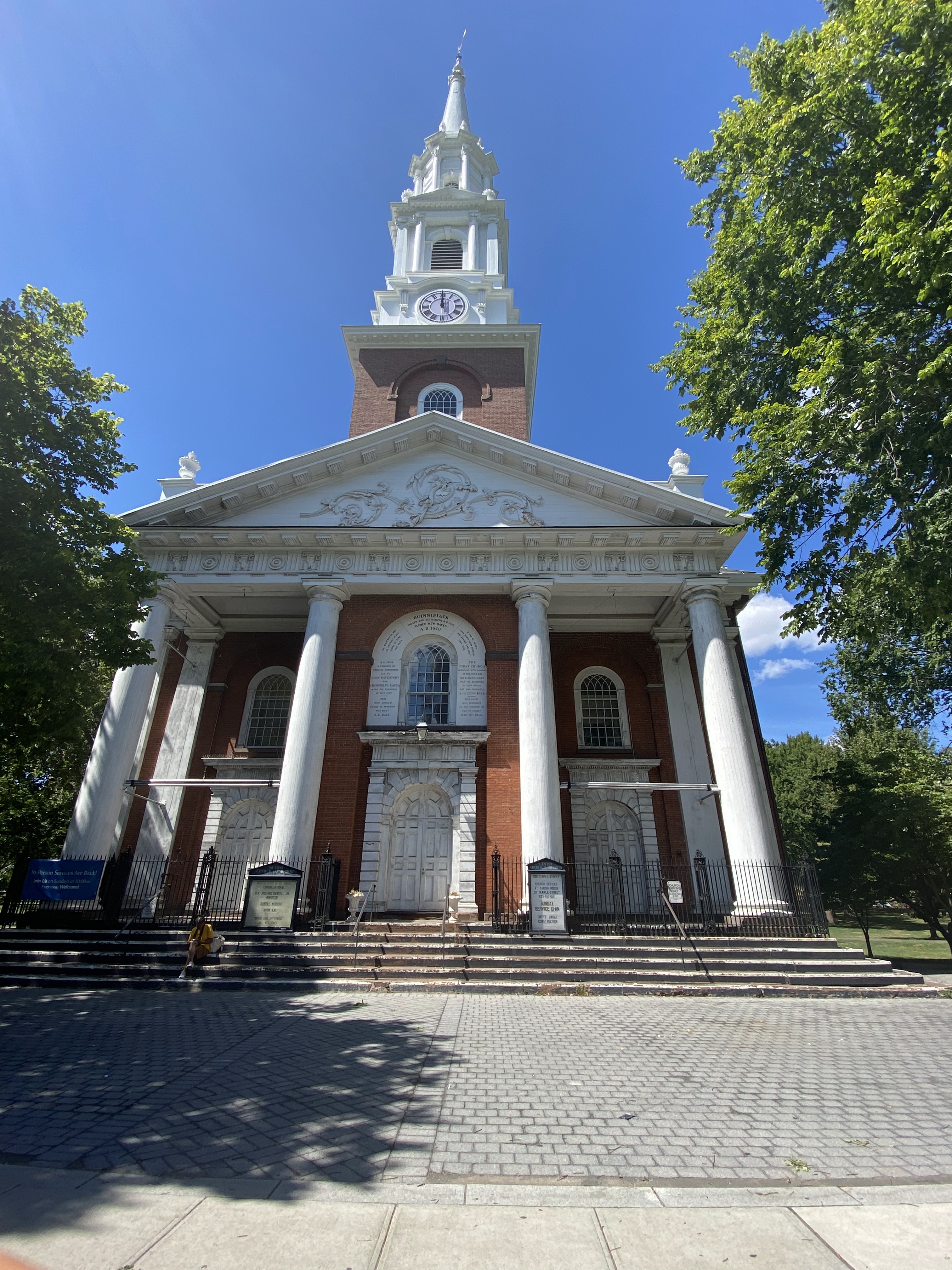
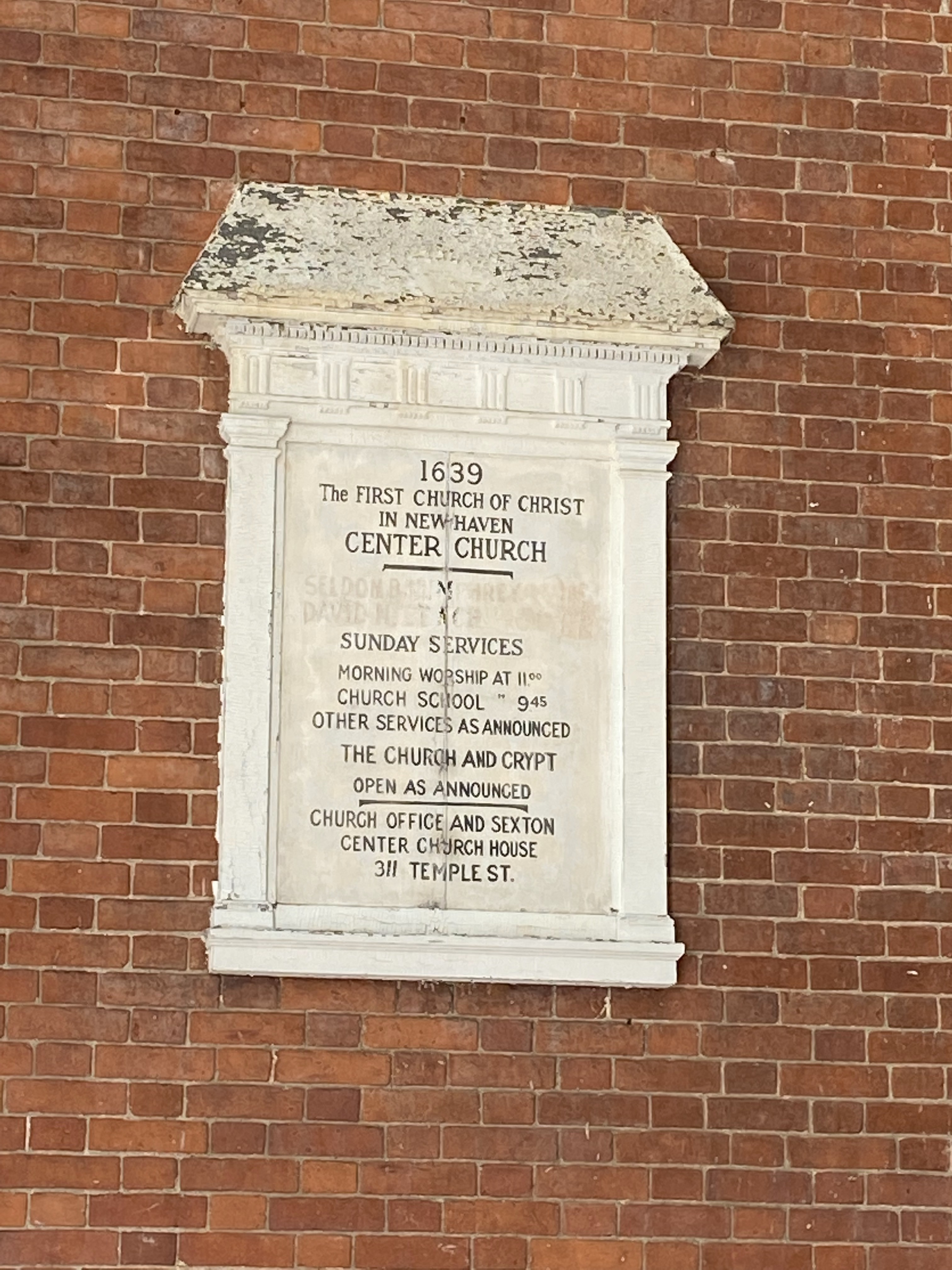
Center Church on the Green
250 Temple St, New Haven
George Whitefield came to preach in 1746. The local clergy weren’t happy. However, “James Pierrepont constructed at his own expense a platform on New Haven green, where a vast assembly heard Whitefield deliver on of his most celebrated speeches” (Dodd, Marriage to a Difficult Man pg 108)
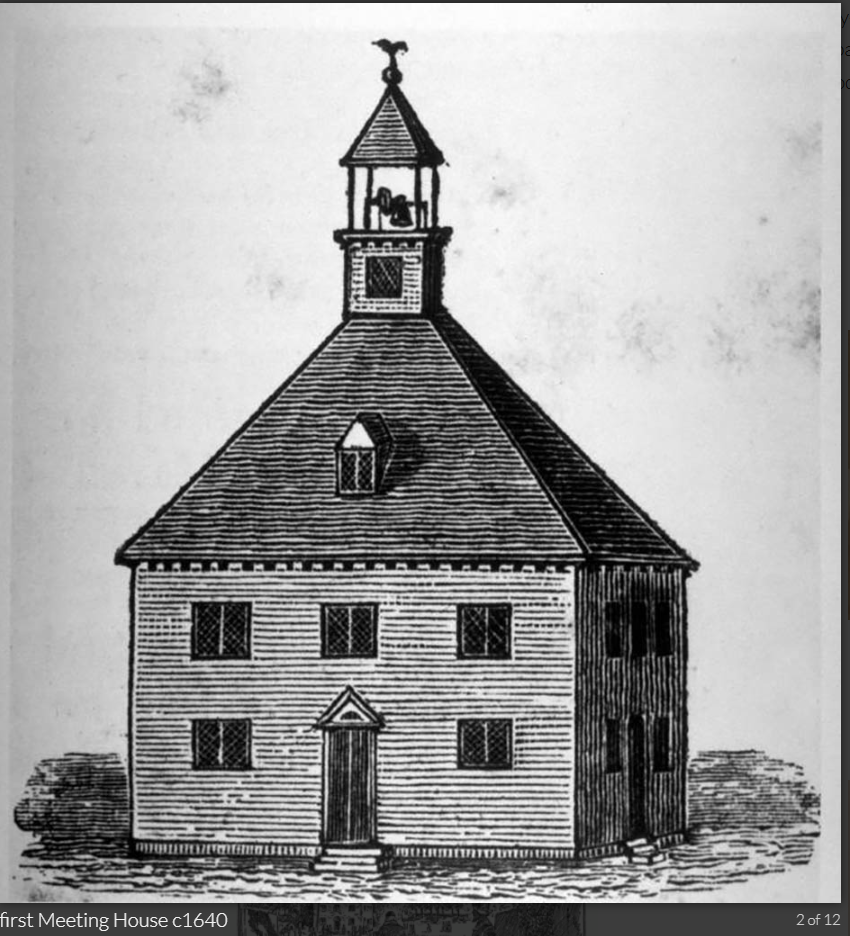
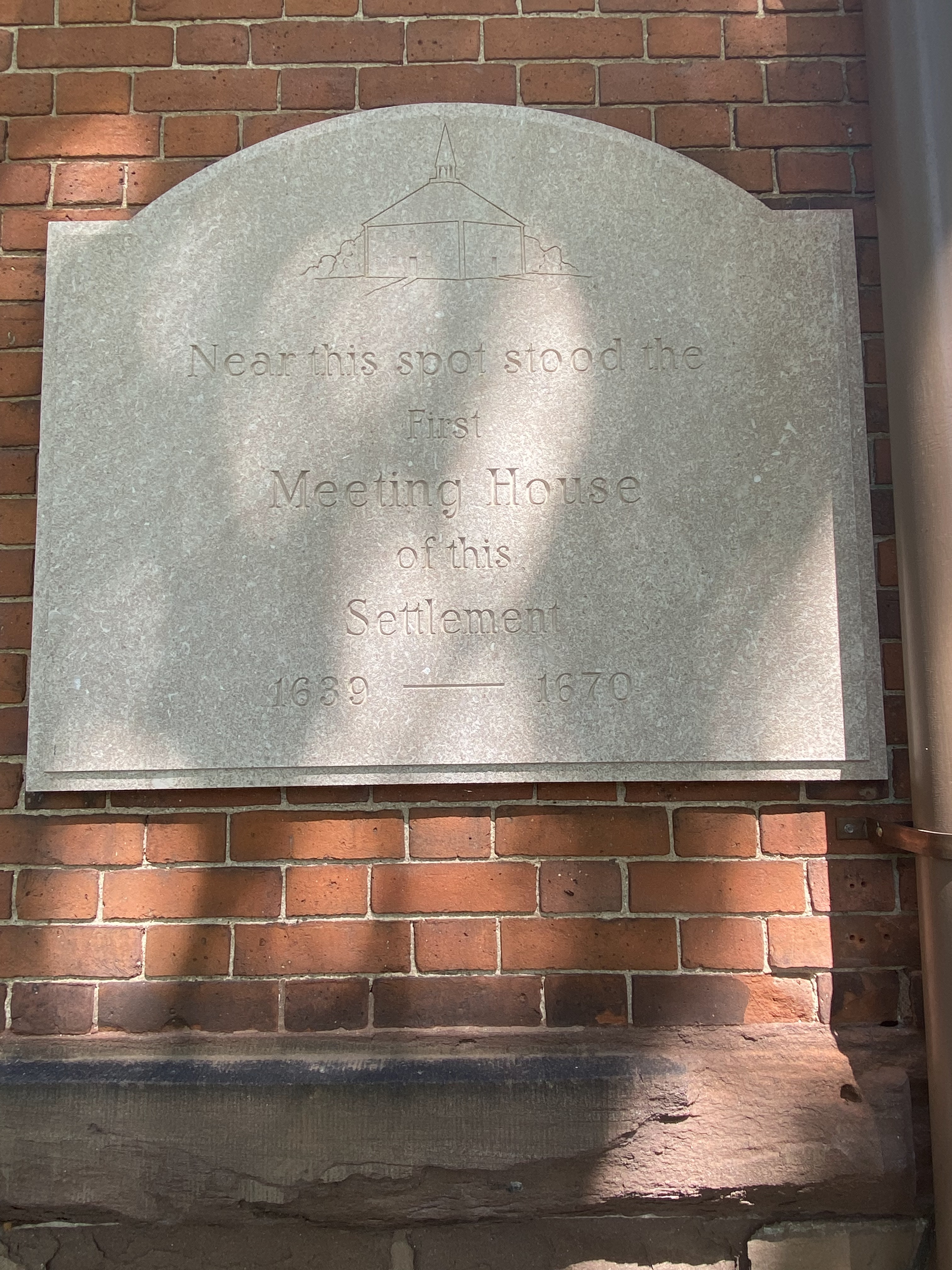
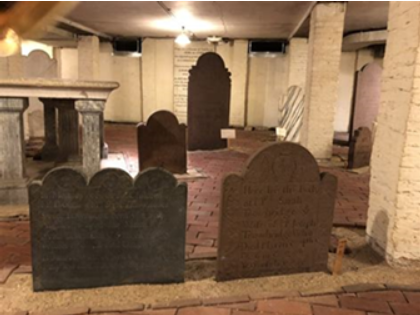
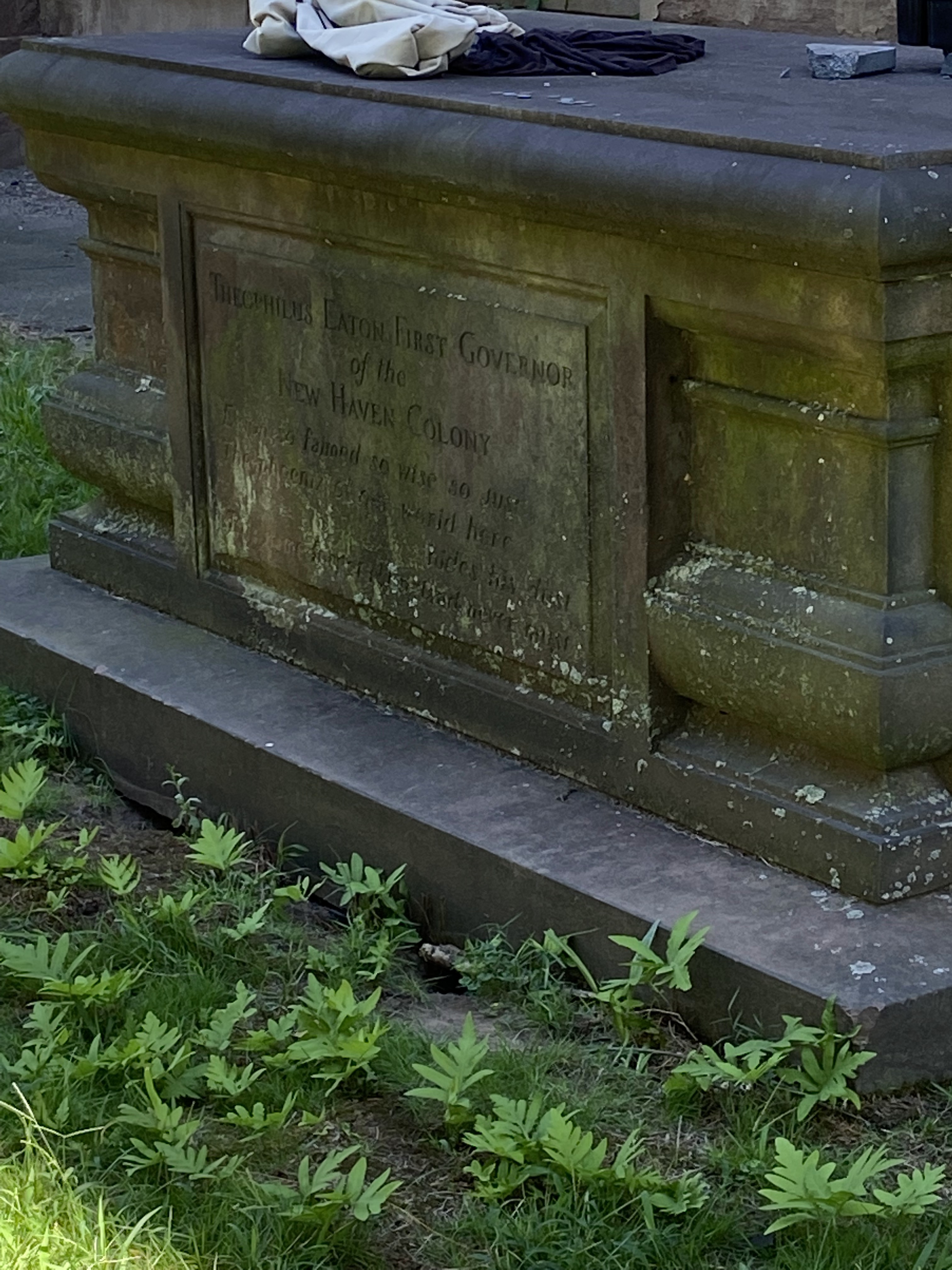
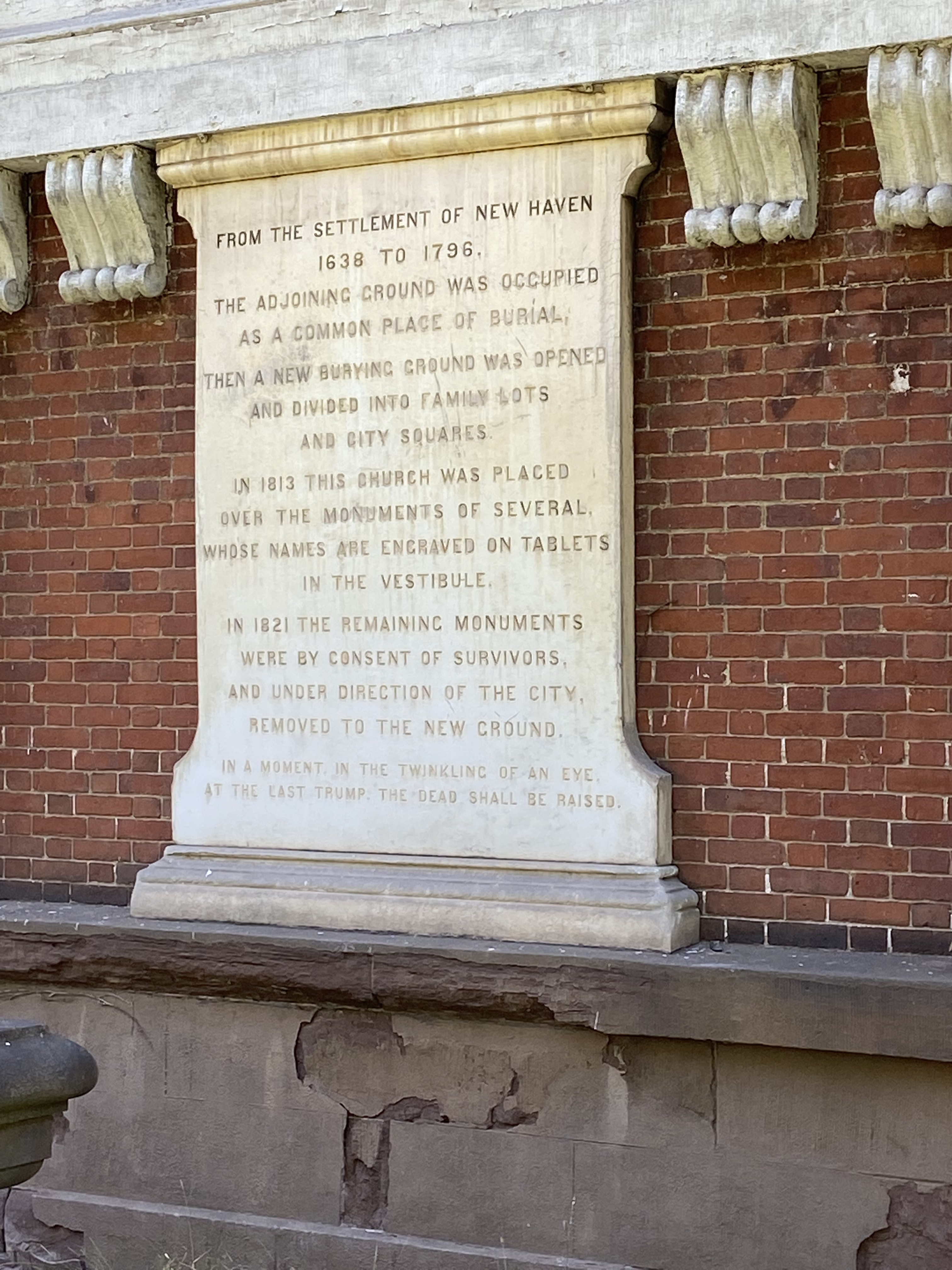
The present Meeting House, built 1812-1814, is the fourth meeting house of the congregation. The edifice was built over the colony’s ancient burial grounds on the Green, and thus the basement with numerous burial stones is referred to as the Crypt. source
The Crypt hold the grave of Rev. James Pierrepont, his 3 wives and other interesting figures. Tours are available. The pictures online here are interesting to see as the tombstones are in the church basement.
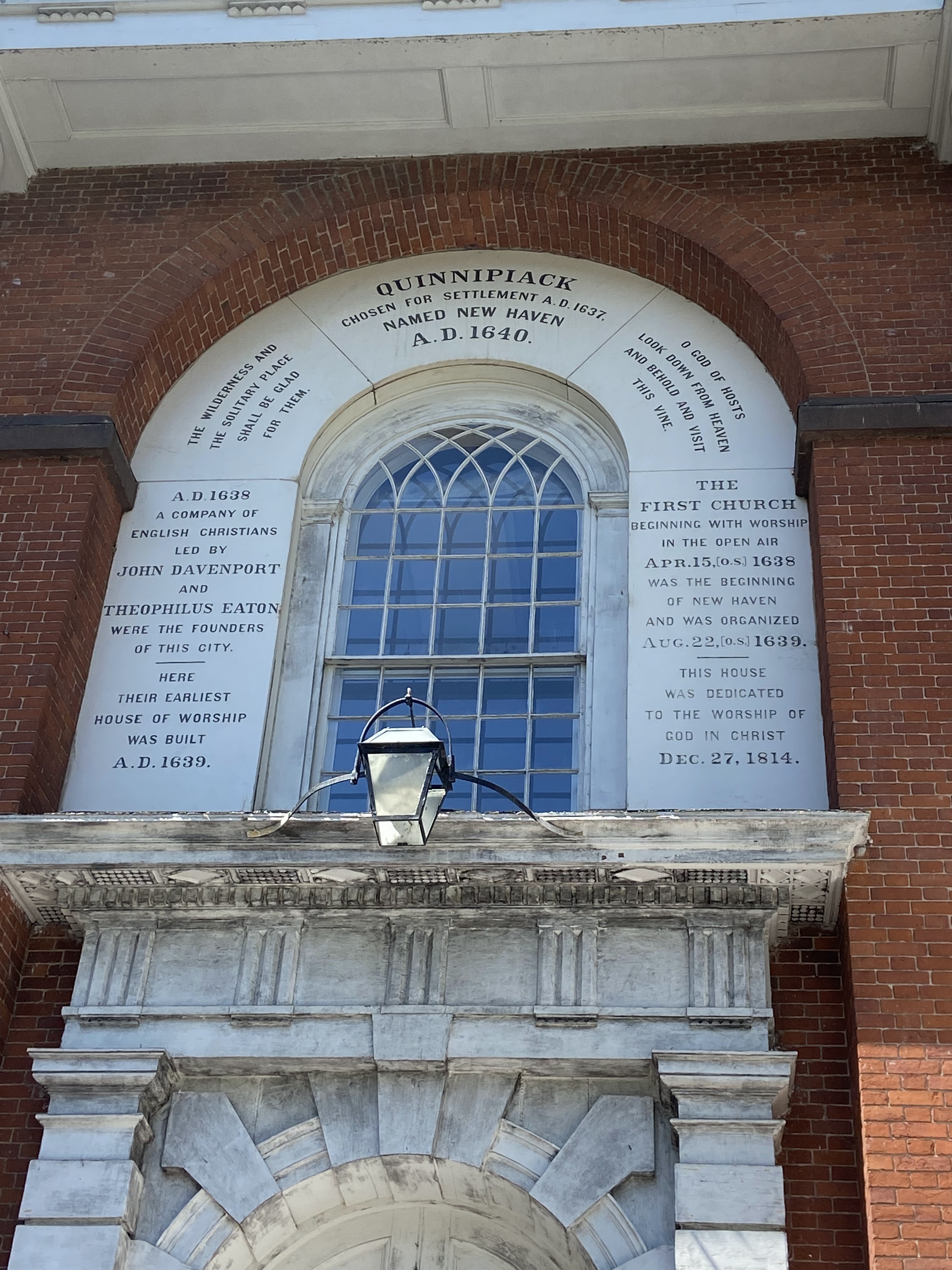
The wording around the arched window says, ” AD 1638 A company of English Christians led by John Davenport and Theophilus Eaton were the founders of this city. Here their earliest house of worship was built AD 1639. The first church beginning with worship in the open-air April 15, 1638, was the beginning of New Haven and was organized Aug 22, 1639. This (current) house was dedicated to the worship of God in Christ. Dec 27, 1814″
This has unfortunately become another unfaithful church.
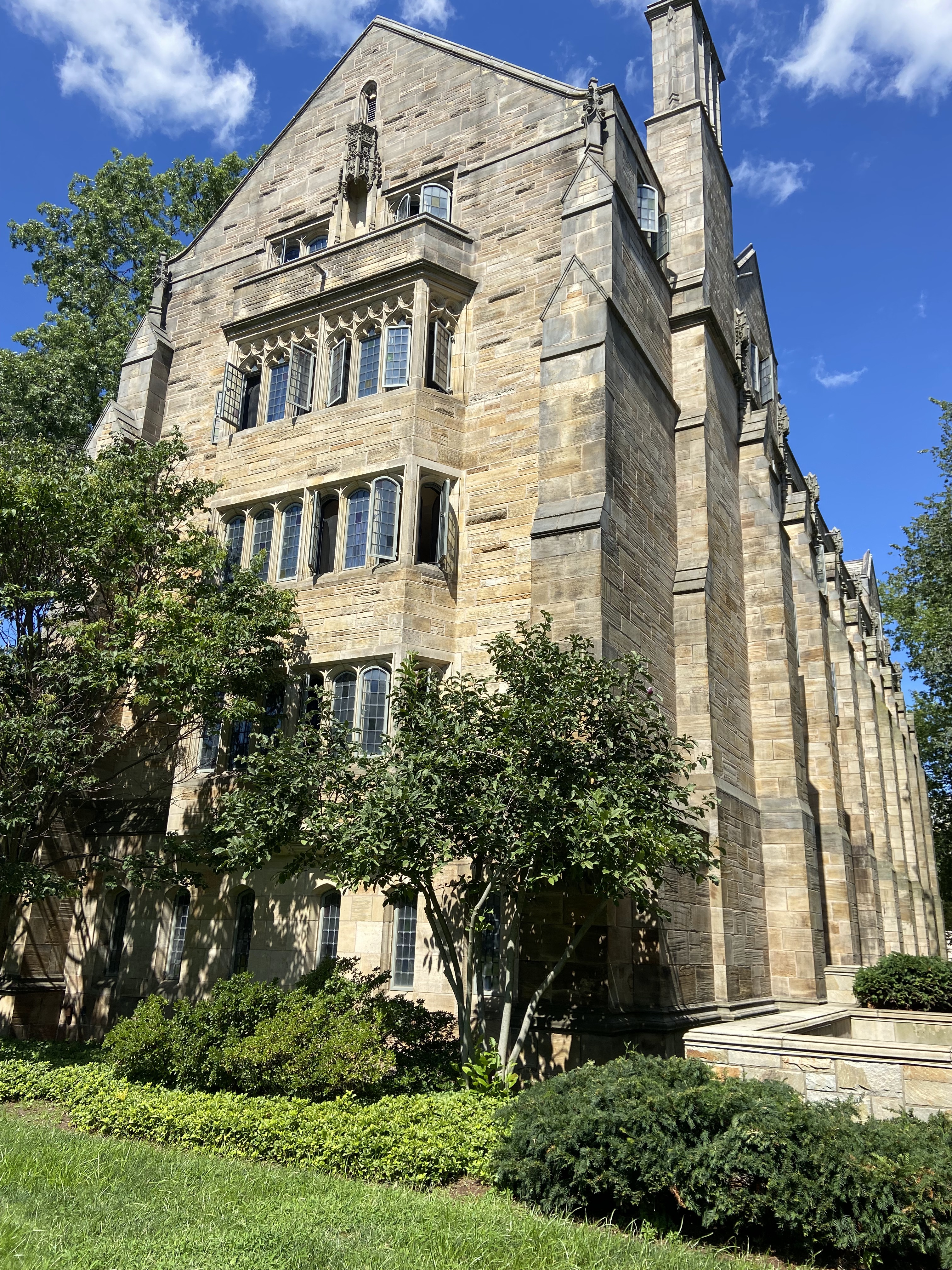
Yale University and Jonathan Edwards College
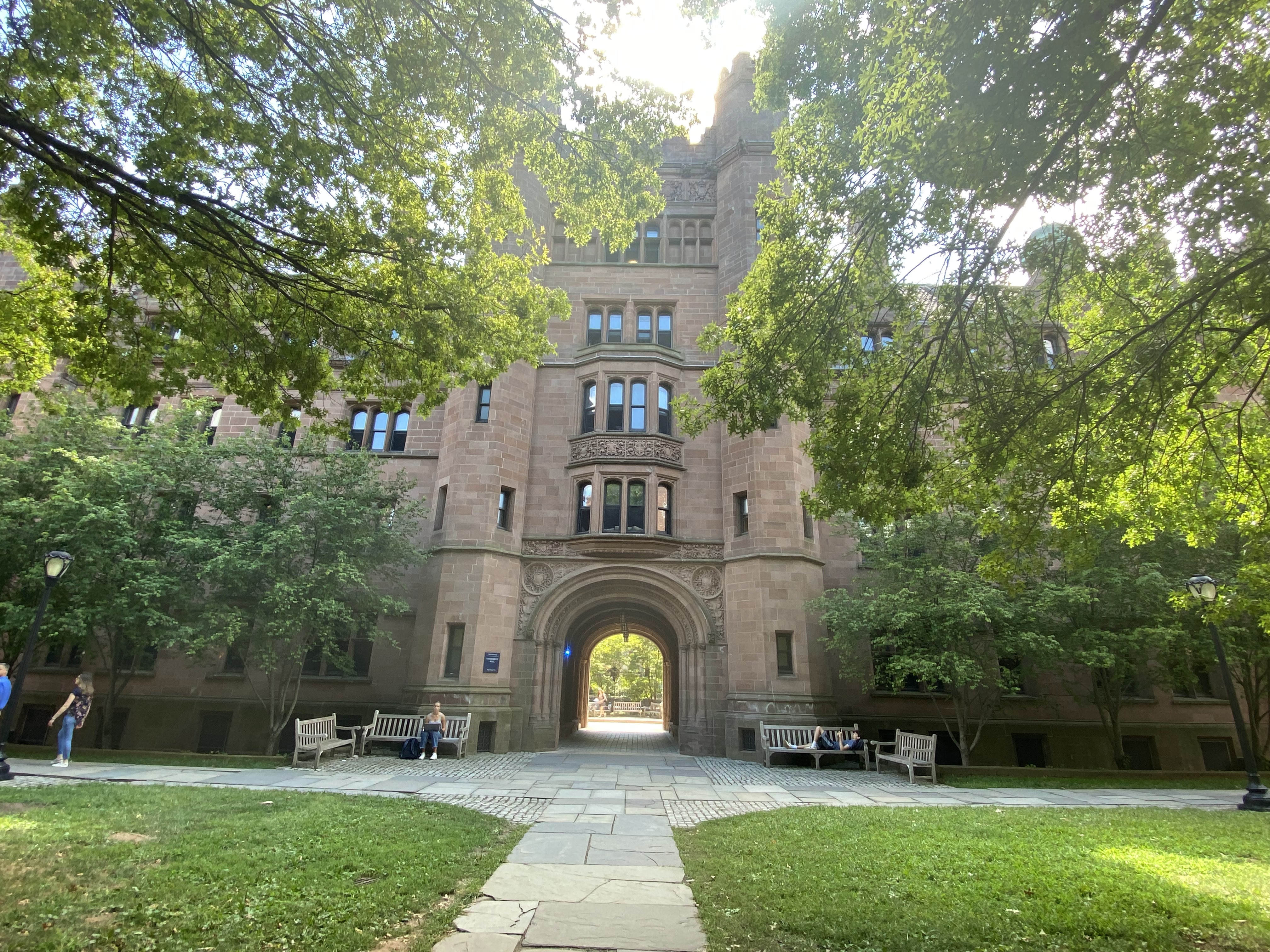
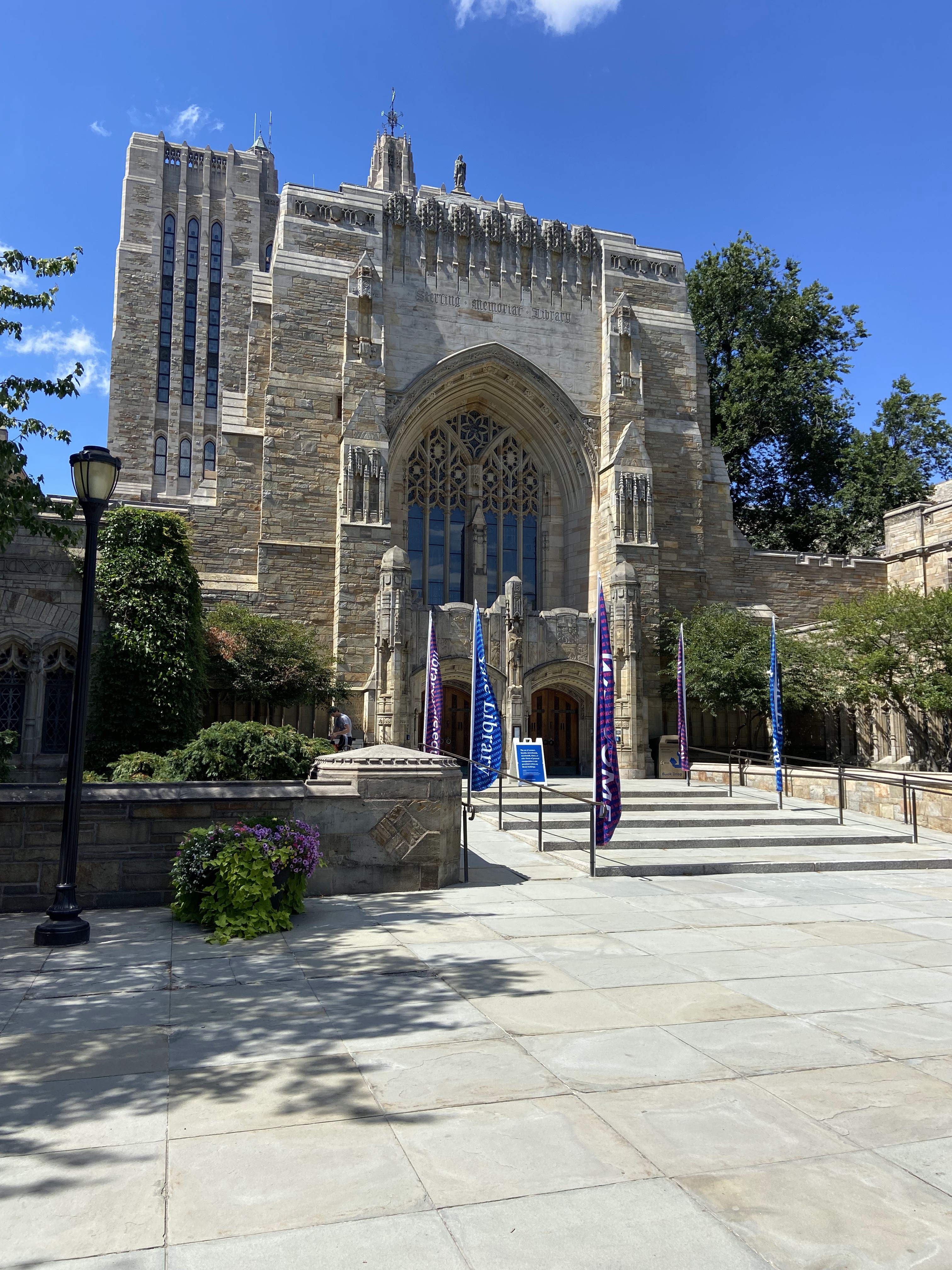
Tours depart from the Visitor Center (149 Elm Street 06511), cover the central campus area, and last approximately 1 hour (free, registration is required). We did this and it was an interesting hour and gave us our bearings.
Chartered by the Connecticut Colony, the Collegiate School was established in 1701 by clergy to educate Congregational ministers before moving to New Haven in 1716. Originally restricted to theology and sacred languages, the curriculum began to incorporate humanities and sciences by the time of the American Revolution. (source)
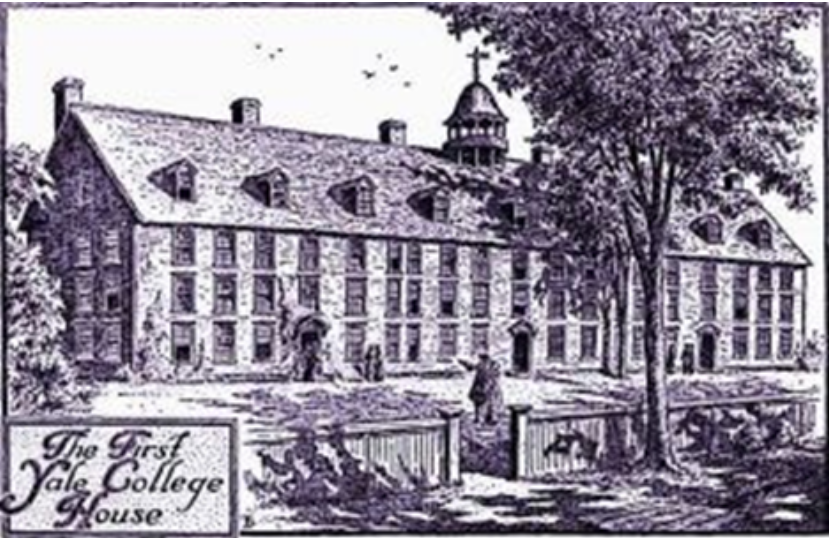
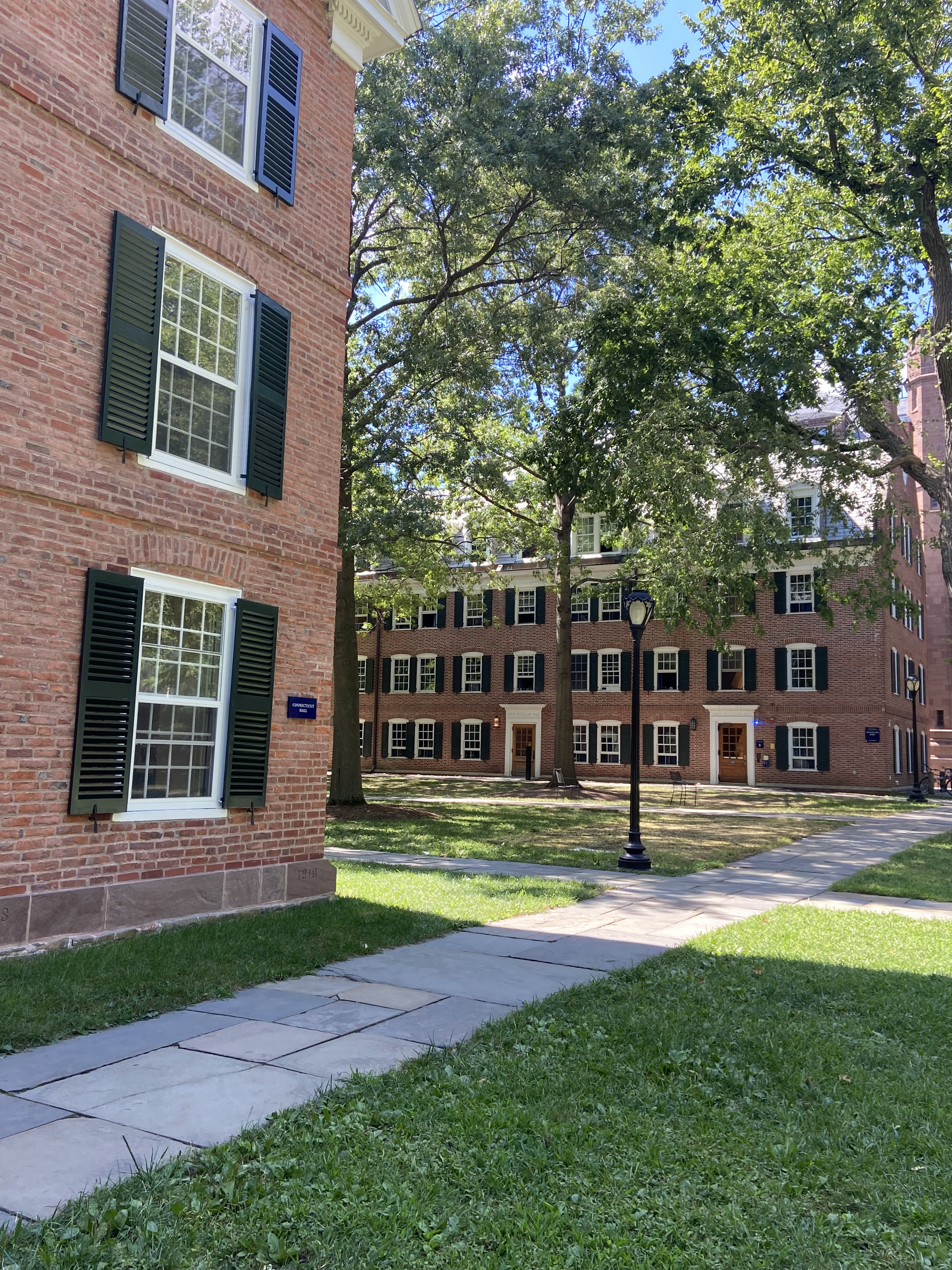
Yale’s first building in New Haven, the College House, was erected in 1718 on the Old Campus’ southeast corner, fulfilling the city founders’ wish to have a college near New Haven’s Congregational church (James Pierrepont). It was joined by Connecticut Hall in 1750, a student dormitory and Yale’s only surviving building from the colonial era… When Yale College moved to New Haven in 1718, the town constructed its first building, the “College House,” at the corner of College and Chapel Streets, where Bingham Hall now stands. The wood-framed structure contained all the functions of the college: student rooms, a library, and a combined chapel and dining hall. Falling into disrepair, this building was torn down in stages from 1775 to 1782. source
A plaque on the side of Connecticut Hall also mentions that Nathan Hale, class of 1773 and famous Revolutionary War spy was a resident. He would be hung by the British just 3 years later in Sept 1776.
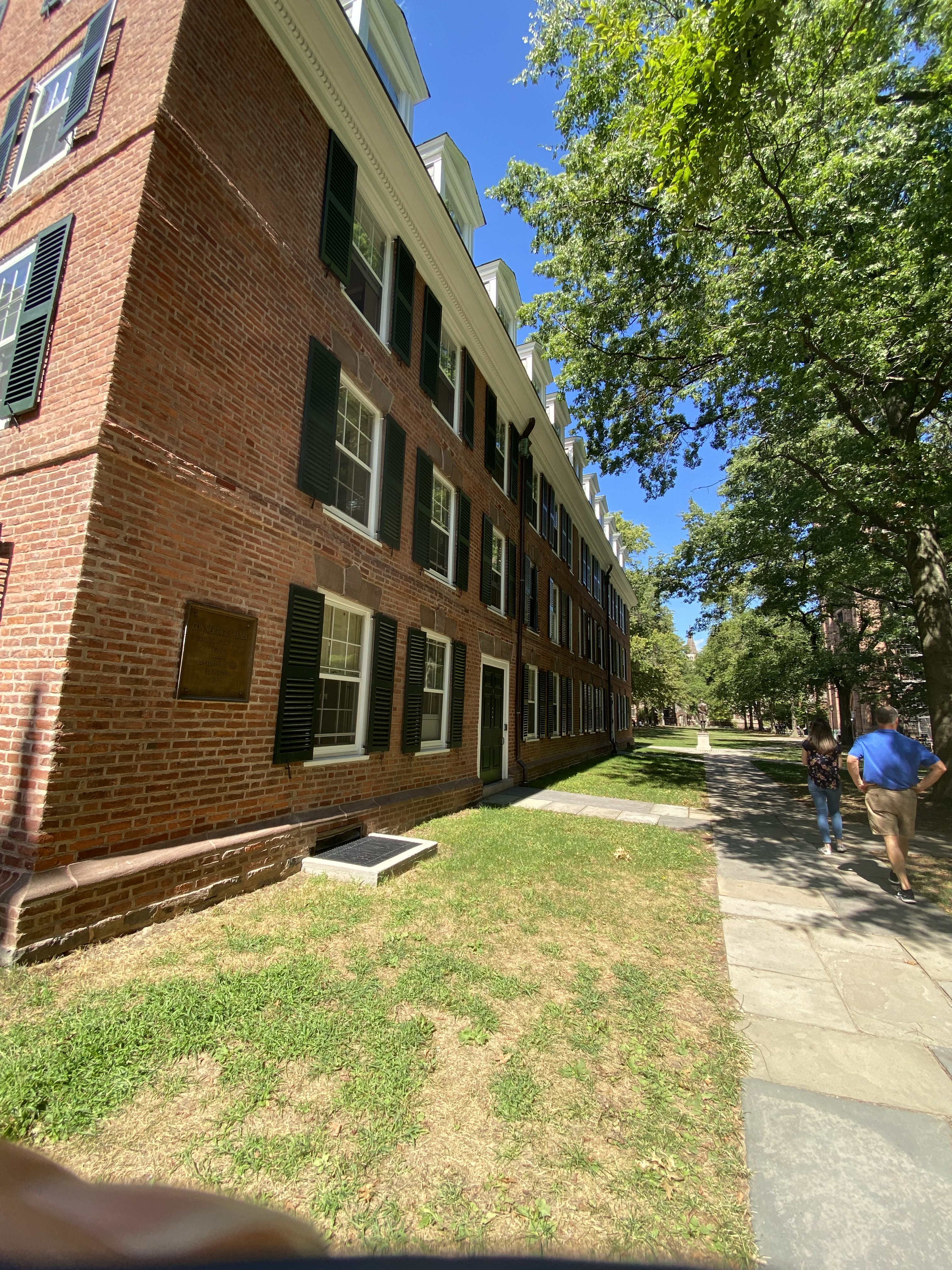
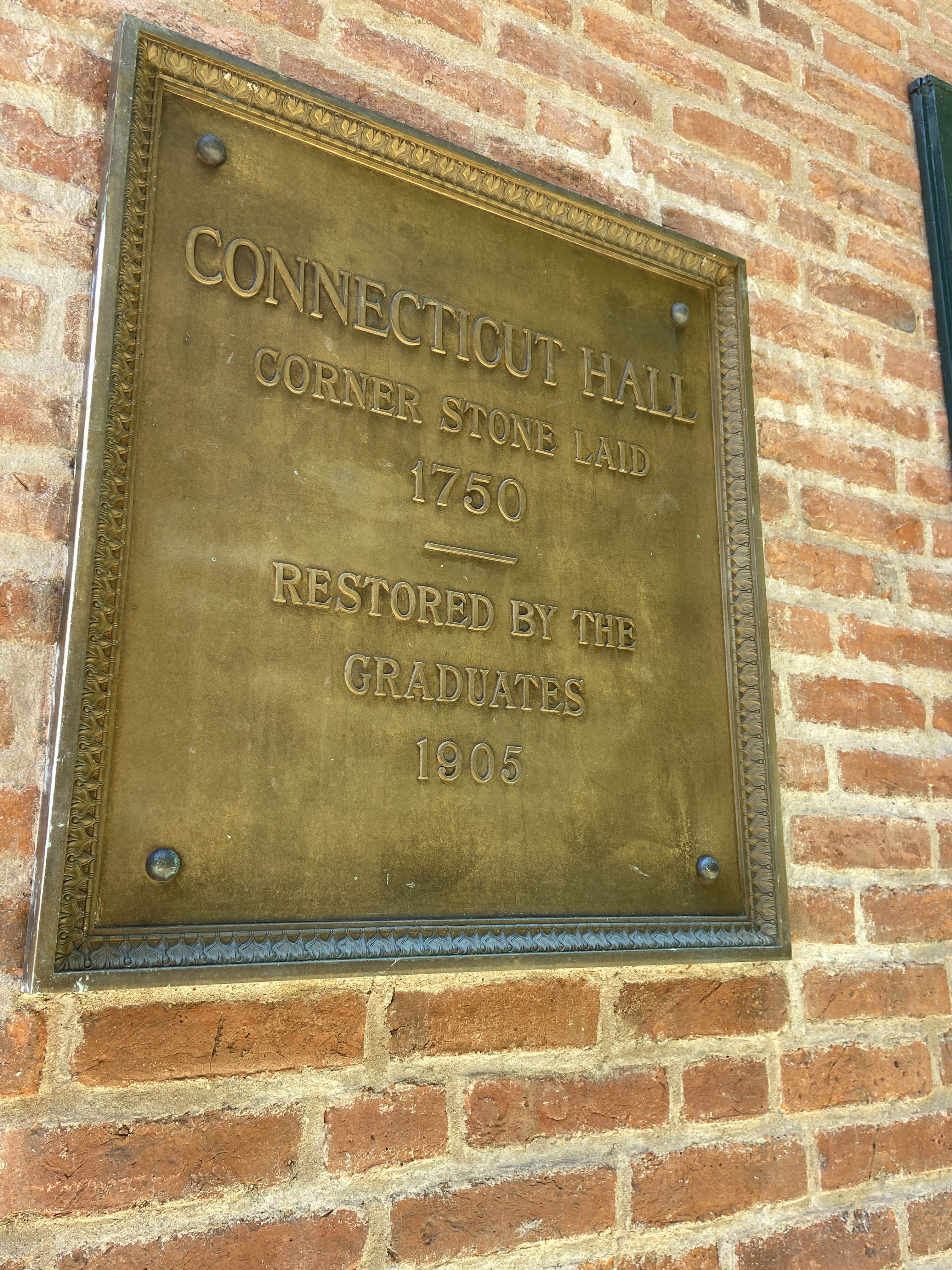
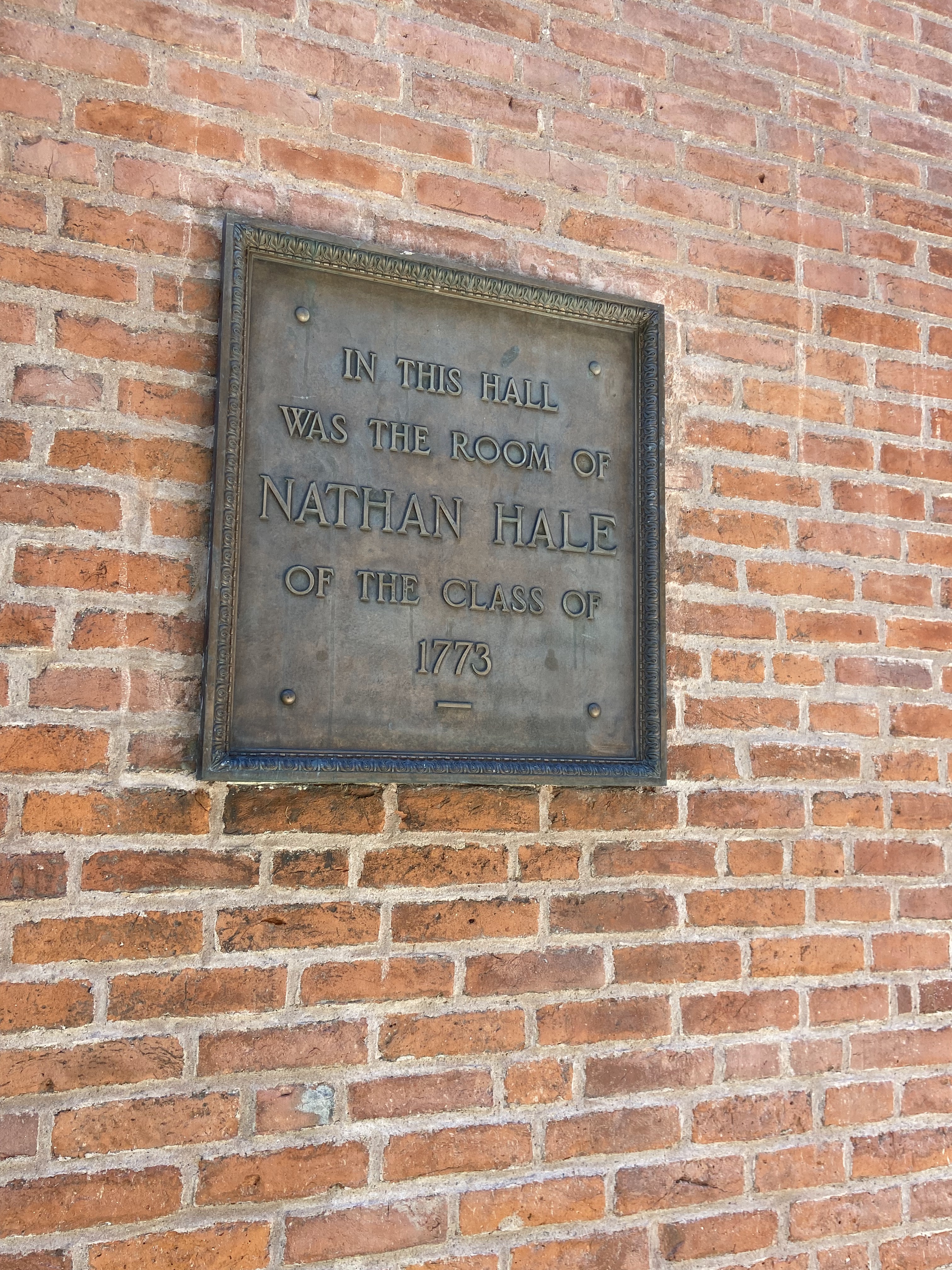
Notable Graduates:
Jonathan Edwards (1722 graduate) matriculated at Yale College in 1716 near his 13th birthday. Four years later, he graduated as valedictorian of his class of about twenty. This was at a time when entrance into either Harvard or Yale required ability in Latin, Greek, and Hebrew. Edwards received his Masters of Arts from Yale in 1722. In 1724, he returned to the college as a tutor respected for his theological orthodoxy, anti-Arminianism, and devotion to Yale. Source
Gilbert Tennent received his MA from Yale College (1725) and came back to preach a few years later.
“Agitations at Yale had begun with Whitefield’s visit the previous fall. The grand itinerant found the college spiritually torpid…Whitefield was followed in March 1741 by Gilbert Tennant…Preaching in the New Haven area 17 times within one week, Tennent brought what Whitefield had started to a fever pitch. As in Boston the same spring, Tennant’s visit led to more apparent conversions than Whitefield’s in the fall.” Jonathan Edwards: A Life, Marsden
David Brainerd in 1739 at age 21, enrolled at Yale. In his second year at Yale, he was sent home because he was suffering from a serious illness that caused him to spit blood due to tuberculosis. When he returned in November 1740, tensions were beginning to emerge at Yale between the faculty staff and the students as the staff considered the spiritual enthusiasm of the students, which had been prompted by visiting preachers such as George Whitefield, Gilbert Tennent, Ebenezer Pemberton and James Davenport, to be excessive. Brainerd was expelled because of comments about the impious staff. Source
David met Jonathan Edwards in New Haven at Yale’s commencement in 1743. What should have been his commencement has he not been kicked out. “Sept 14- This day I ought to have taken my degree, but God sees fit to deny it me.” Sept 15 – Had some satisfaction in hearing the ministers (Edwards among them) discourse” Brainerd journal. Edwards notes on the entries from this period, “I was witness to the very Christian spirit that Mr. Brainerd showed at that time, being then at New Haven…This was the first time that ever I had an opportunity of personal acquaintance with him” They would meet again in his home at his death in 1747.
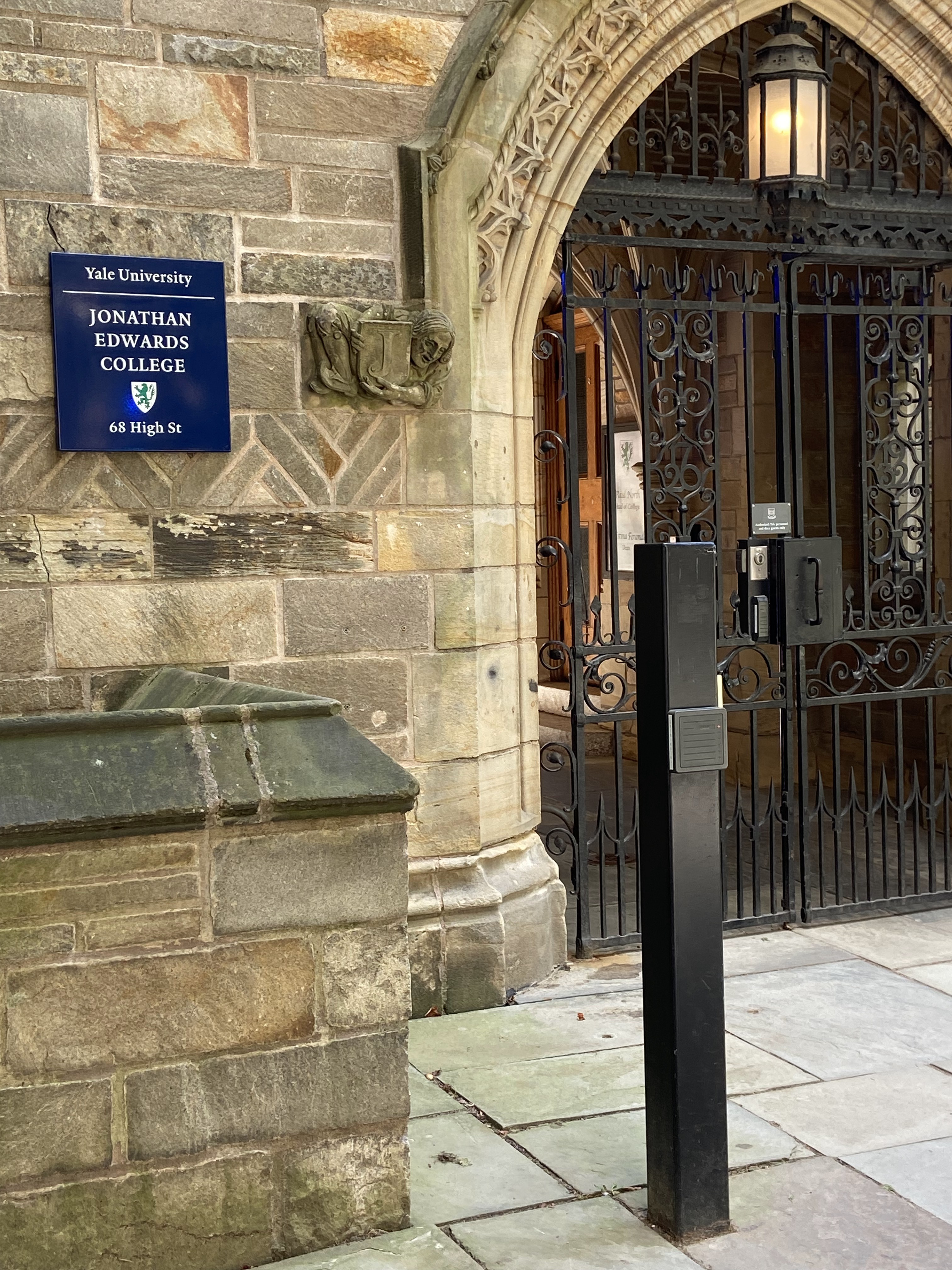
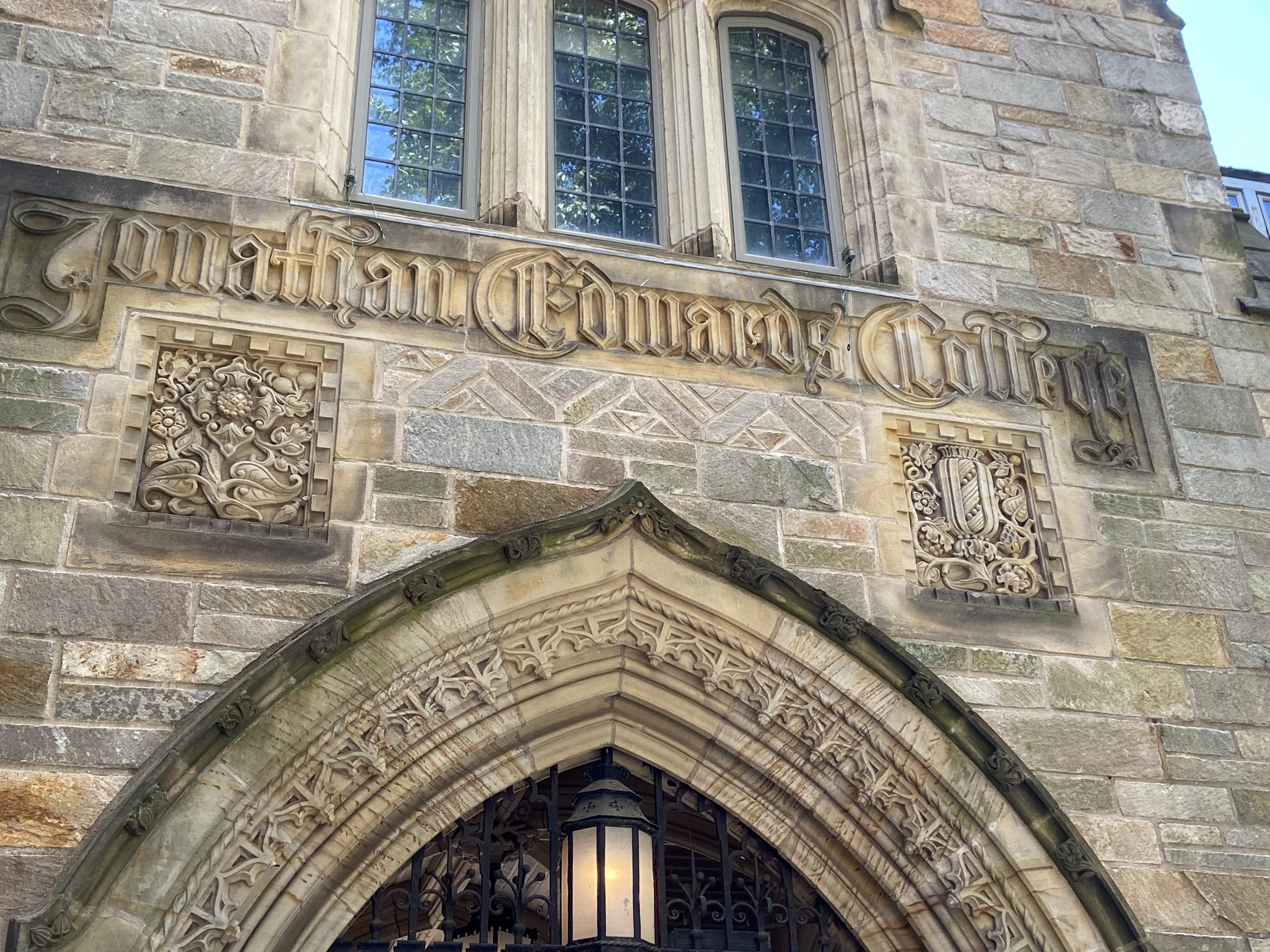
68 High St, New Haven
Jonathan Edwards College was constructed in 1932.
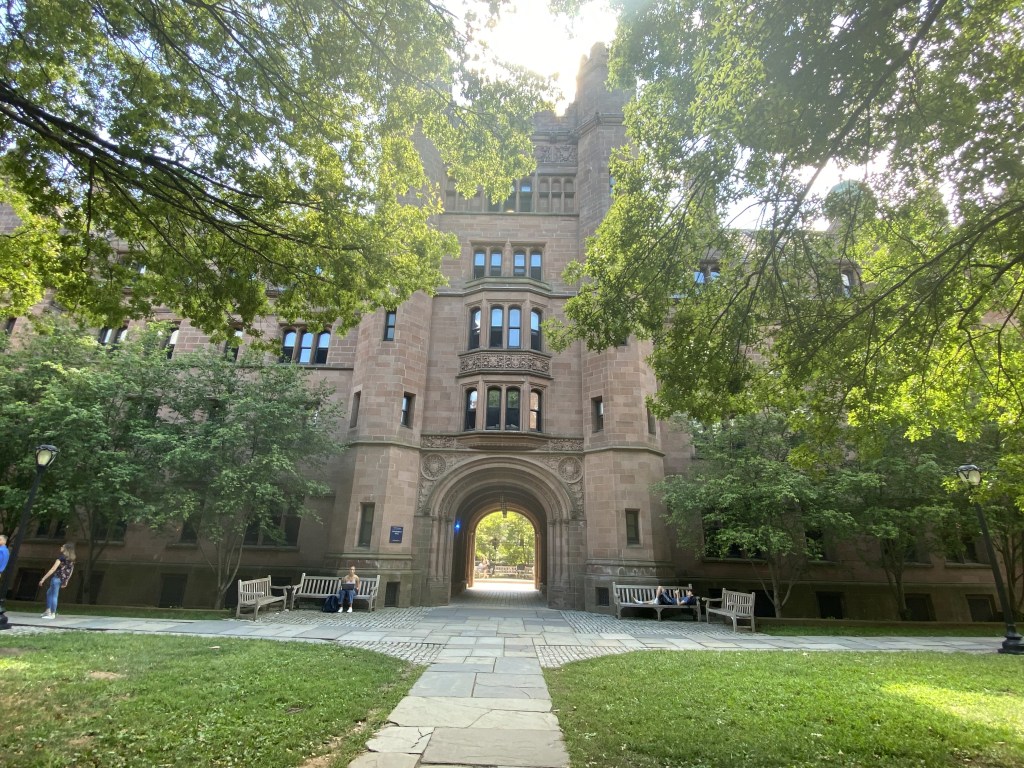
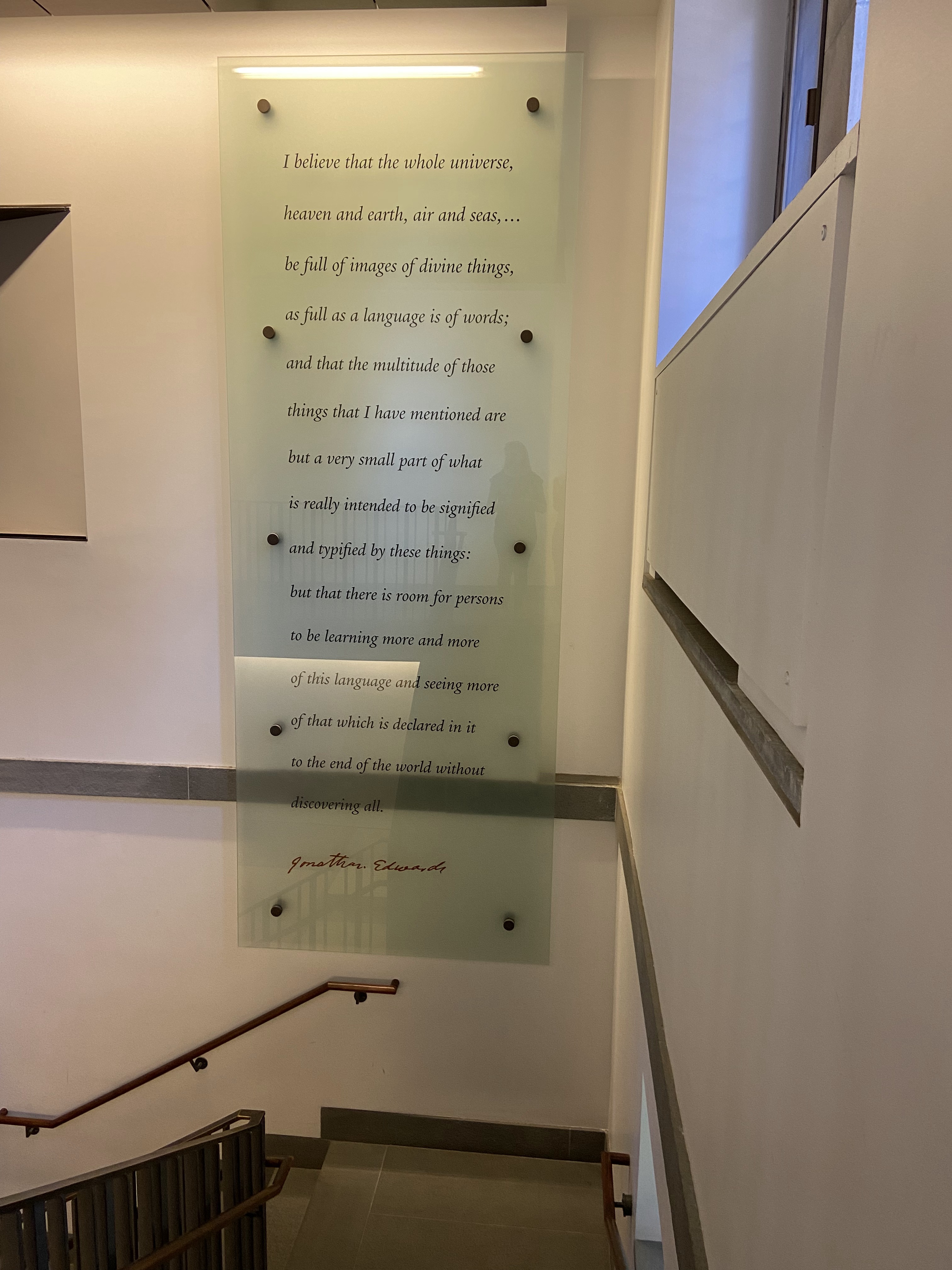
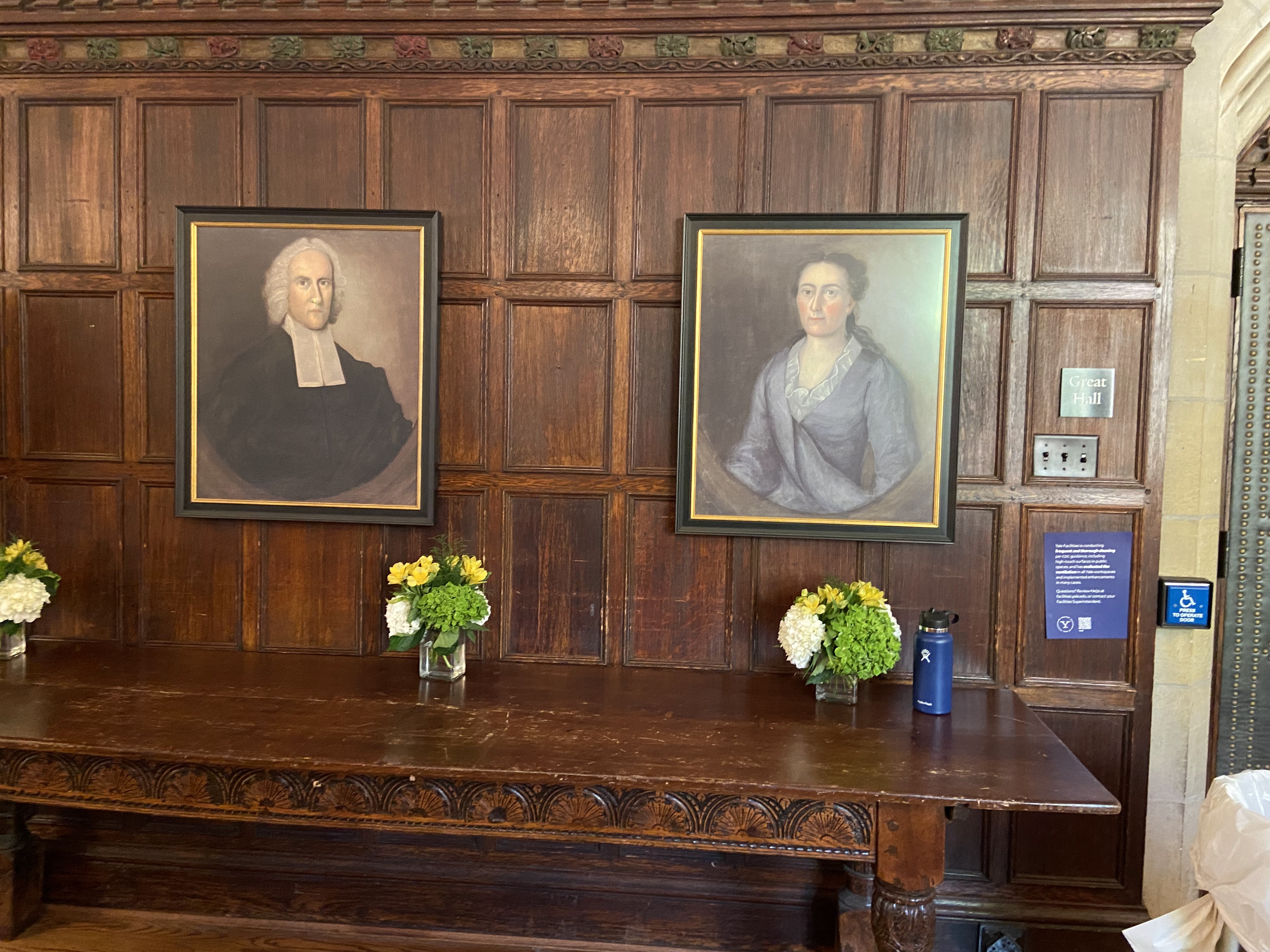
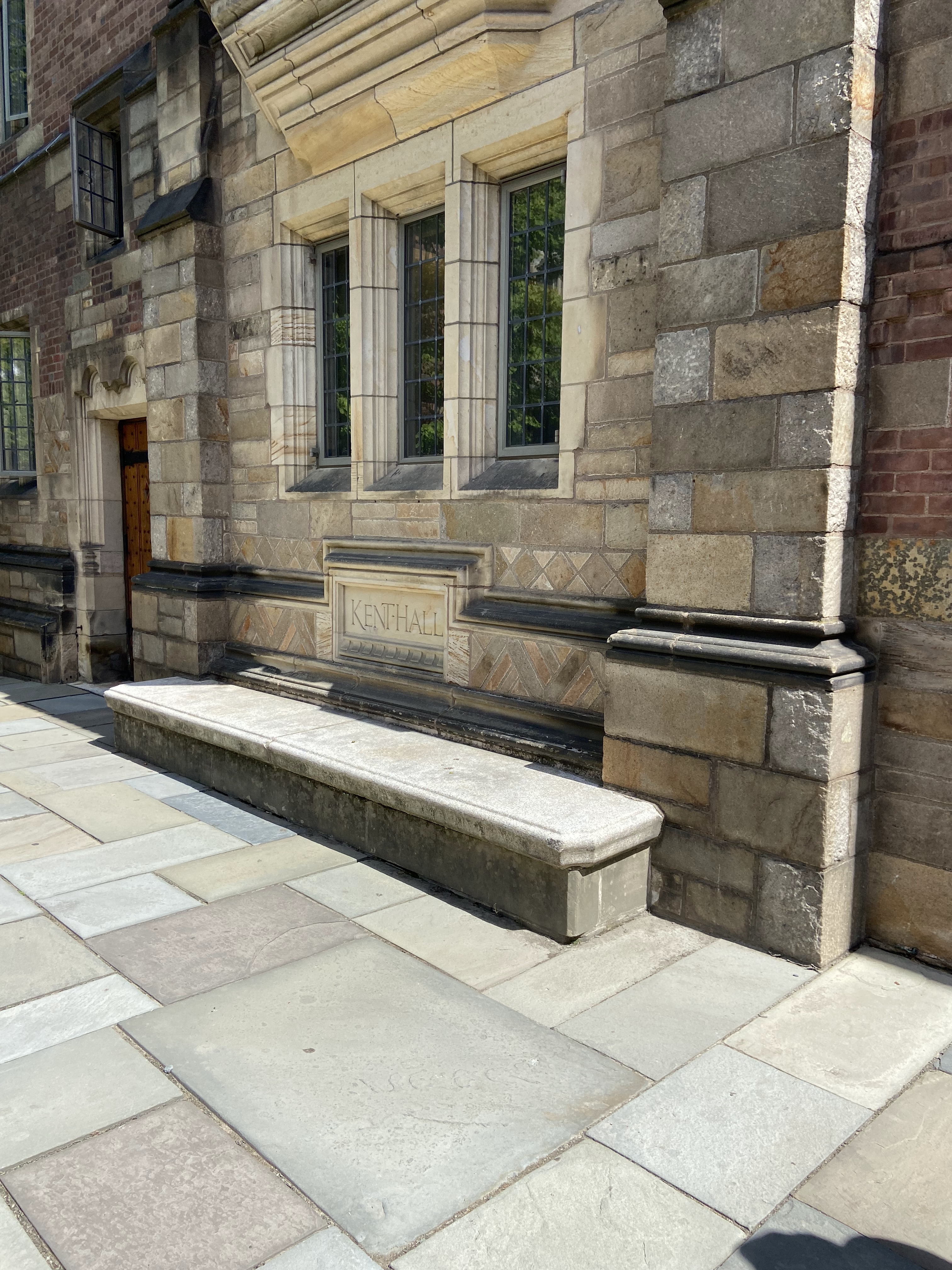
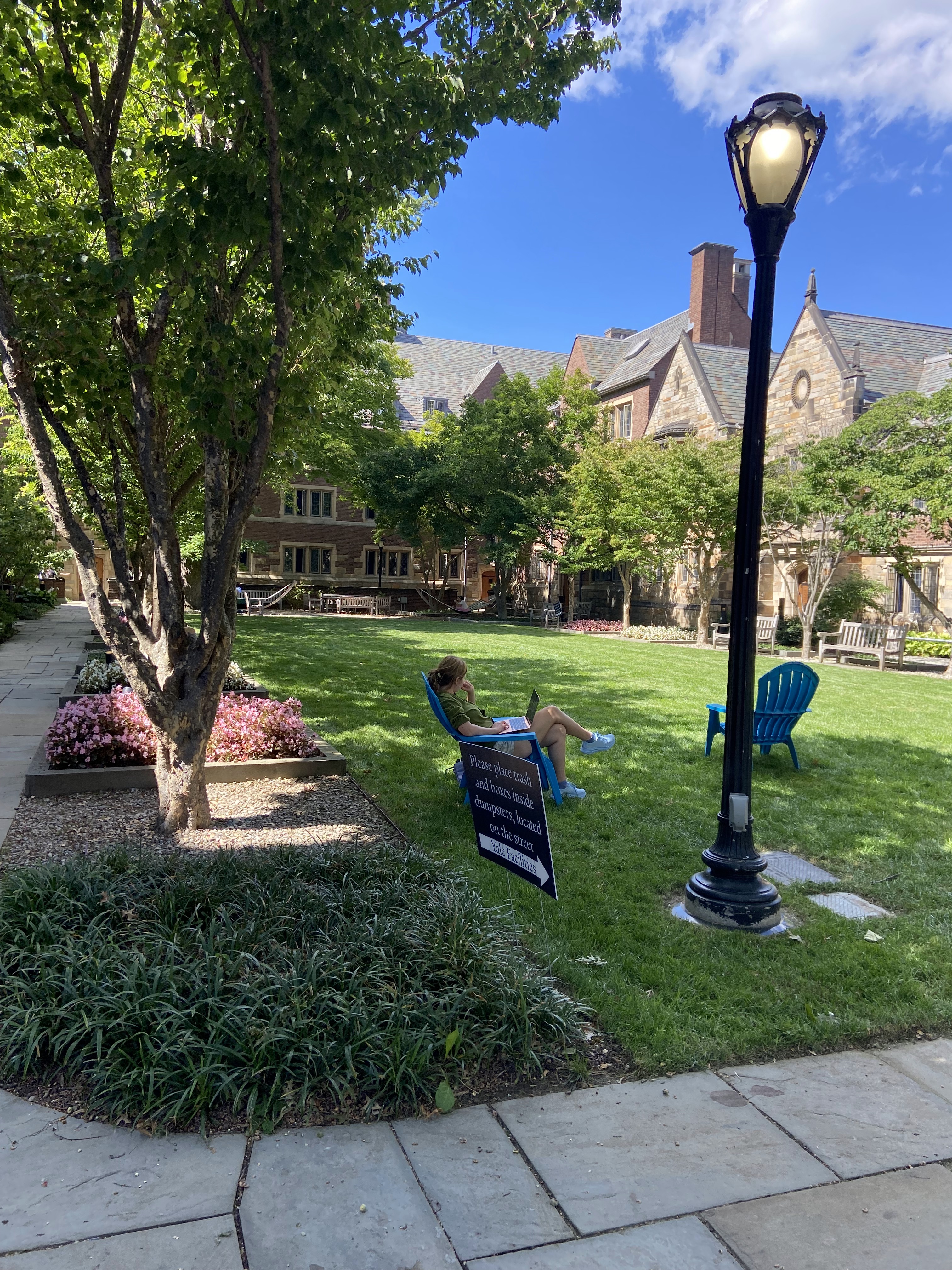
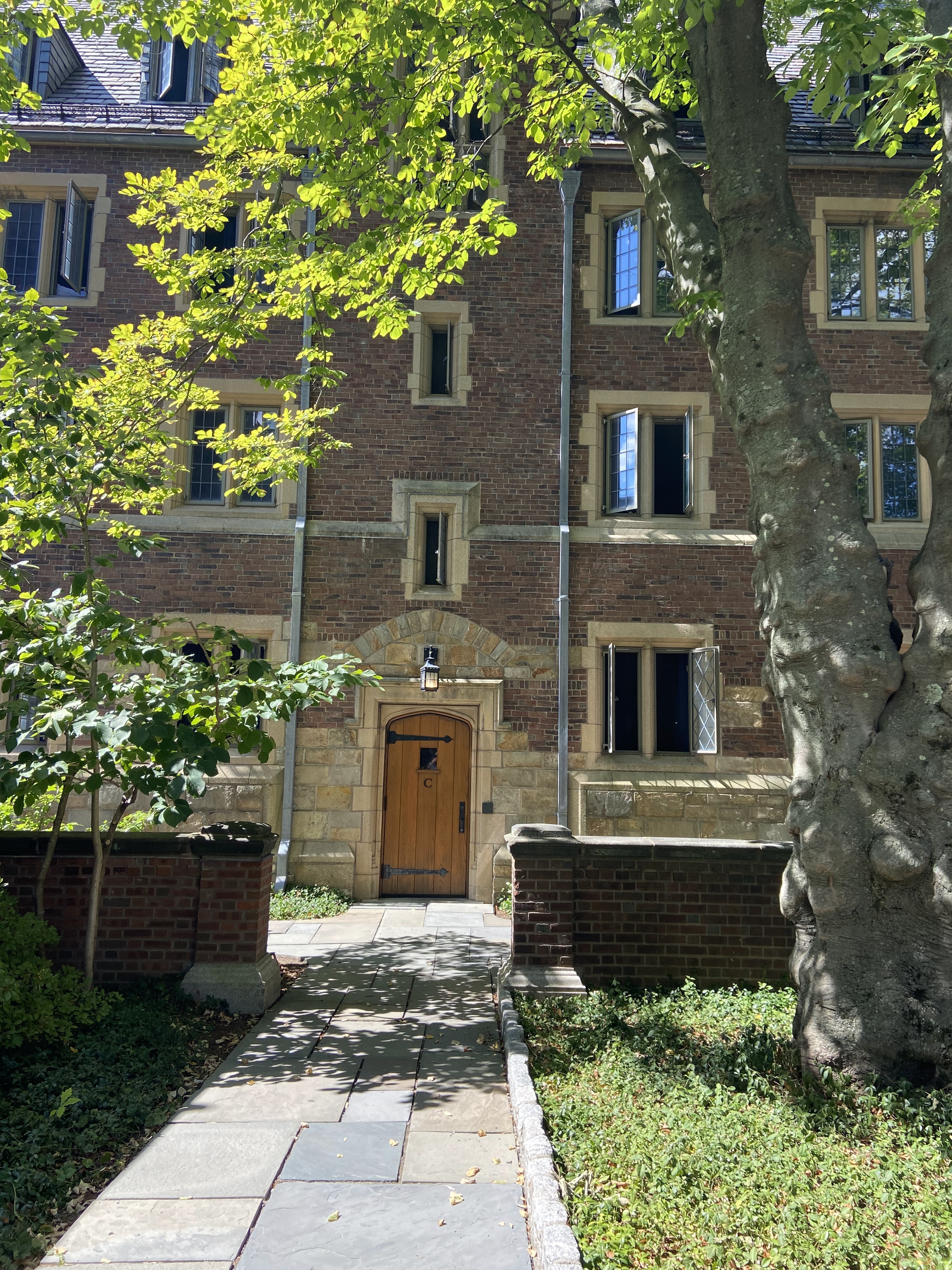
Pictures below include: the gates and arch into the lovely college center courtyard and surrounding buildings. Inside the Kent Hall are replicas of the Princeton tombstones of Jonathan and Sarah as well as their portraits. The glass plaque on the wall says,
“I believe that the whole universe, heaven and earth, air and seas,…be full of images of divine things, as full as a language is of words; and that the multitude of those things that I have mentioned are but a very small part of what is really intended to be signified and typified by these things; but that there is room for persons to be learning more and more of this language and seeing more of that which is declared in it to the end of the world without discovering all.”
Jonathan Edwards
This is hanging at Yale! Unbelievable it’s still there.
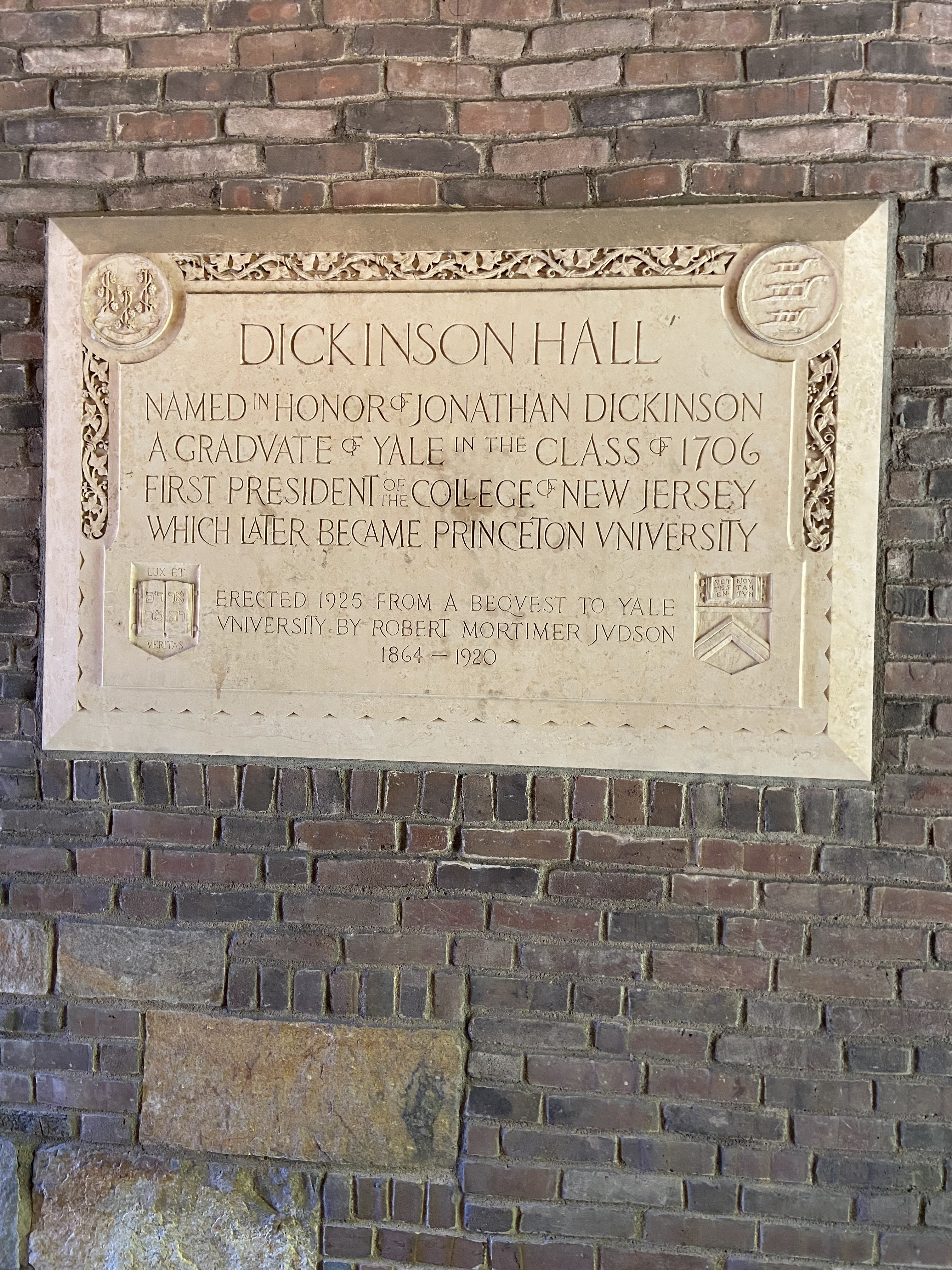
There is also hanging at Dickinson Hall within the College a plaque to Jonathan Dickinson the first President of what would become Princeton University. It reads, “Dickinson Hall Named in honor of Jonathan Dickinson a graduate of Yale in the class of 1706. First President of the College of New Jersey which later became Princeton University”
Even Yale has remnants remaining of its once godly past.

 Beside Old Hearthstones - An American Evangelical Church History Tour
Leave a comment