a church history tour of Stockbridge, Massachusetts
Driving map of Stockbridge locations
The Indian mission at Stockbridge, a town in the western part of the province of Massachusetts Bay. (sixty miles from Northampton,) being vacant by the death of the late Rev. Mr. Sergeant, the honoured and reverend commissioners for Indian affairs in Boston, who have the care and direction of it, applied to him (Jonathan Edwards), as the most suitable person they could think of to betrust with that mission. And he was at the same time invited by the inhabitants of Stockbridge; and being advised by the council above mentioned to accept of the invitation, he repaired to Stockbridge and was introduced and fixed as missionary to the Indians there, by an ecclesiastical council called for that purpose, , August 8, 17,51
Rev. Samuel Hopkins, The life and character of the late reverend, learned, and pious Mr. Jonathan Edwards, president of the College of New Jersey
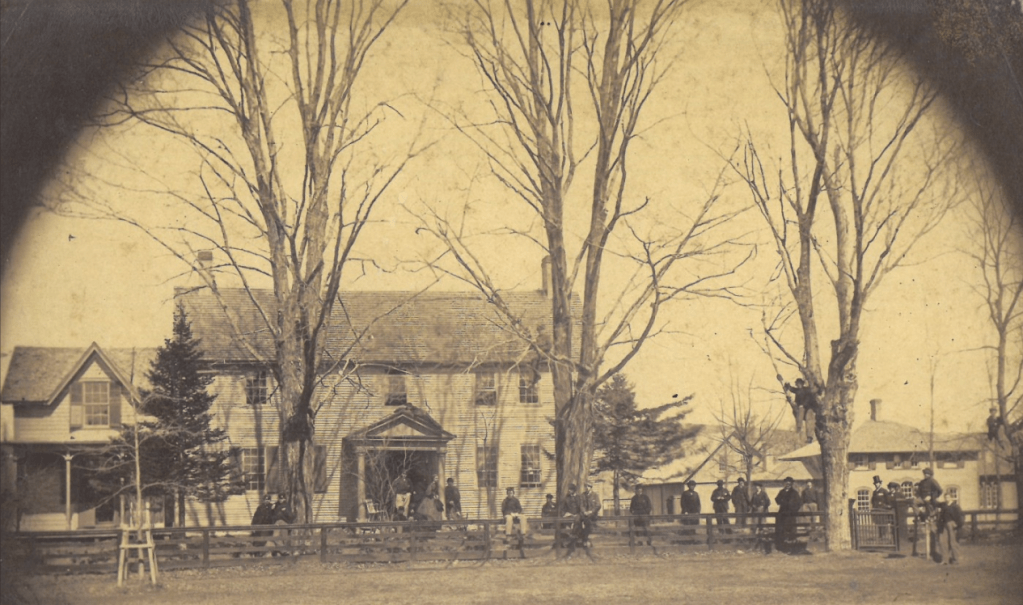
The Edwards’ Stockbridge Home
1750-1758
23 Main Street, Stockbridge
“The Edward’s house was situated on Main Street in town and served as the residence of Rev. Jonathan Edwards from 1751 to 1758… In 1900 the building was demolished, and parts of the house were made into souvenirs visitors could purchase in order to own a small bit of town history.” Stockbridge Library
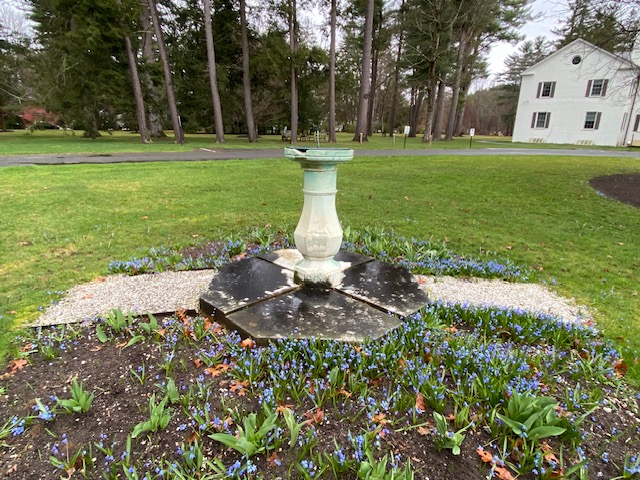
This fountain stands on the Edwards property. Edwards wrote some of his most well-known works here, including Freedom of the Will, The End for Which God Created the World, and Original Sin.
Stockbridge proved to Mr. Edwards a more quiet, and, on many accounts, a much more comfortable situation than he was in before.- It being so much in one corner of the country, his time was not so much taken up with company as it was in Northampton, though many of his friends, from almost all parts of the land, often made him pleasant and profitable visits. And he had not so much concern and trouble with other churches as he was obliged to have when at Northampton, by being frequently sought to for advice, and called to assist in ecclesiastical councils. Here, therefore, he followed his beloved study more closely, and to better purpose than ever. In these six years he doubtless made swifter advances in knowledge than ever before and added more to his manuscripts than in any six years of his life.
Samuel Hopkins
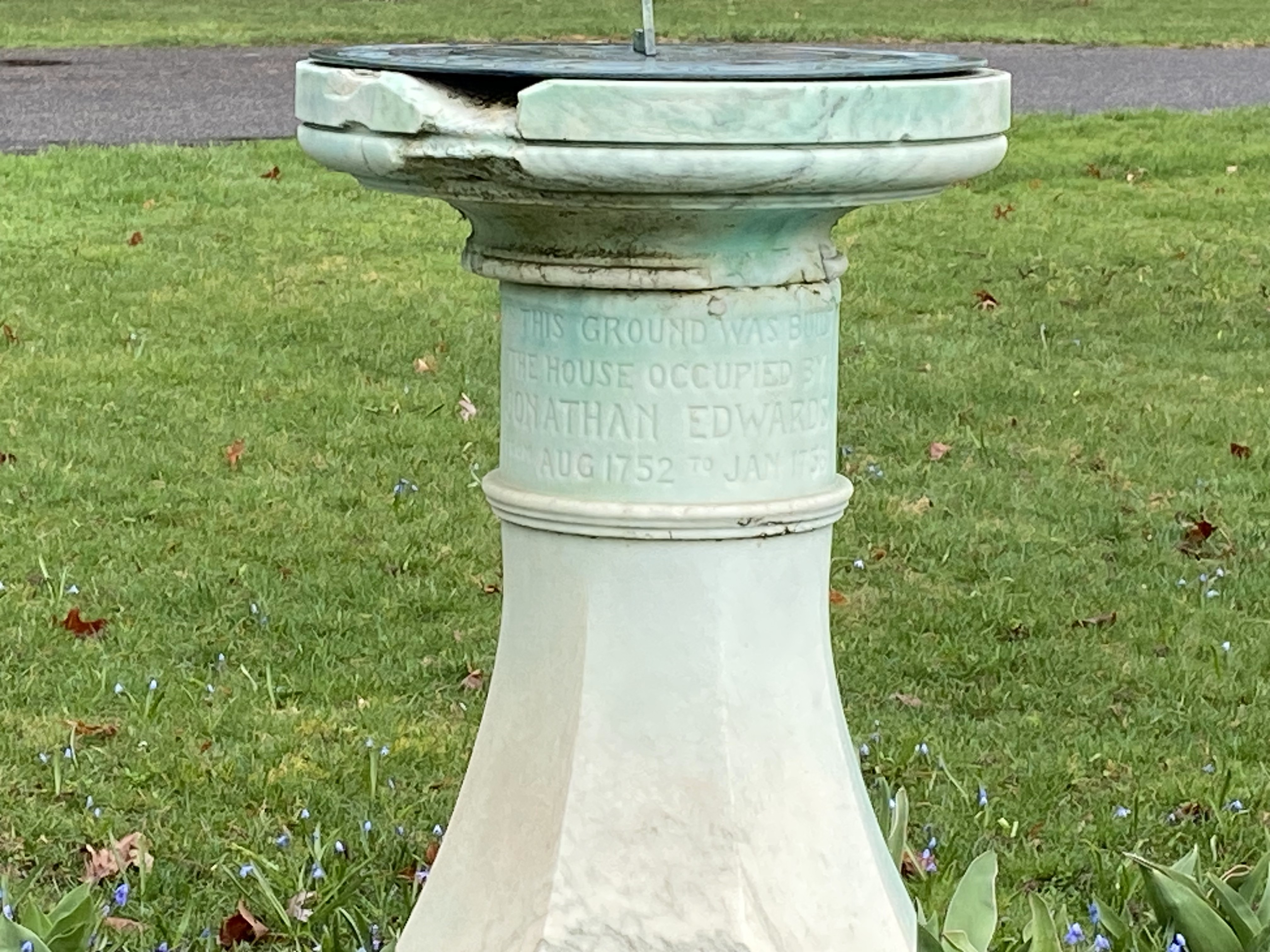
Inscribed on the fountain, “On this ground was built the house occupied by Jonathan Edwards from Aug 1752-Jan 1758”
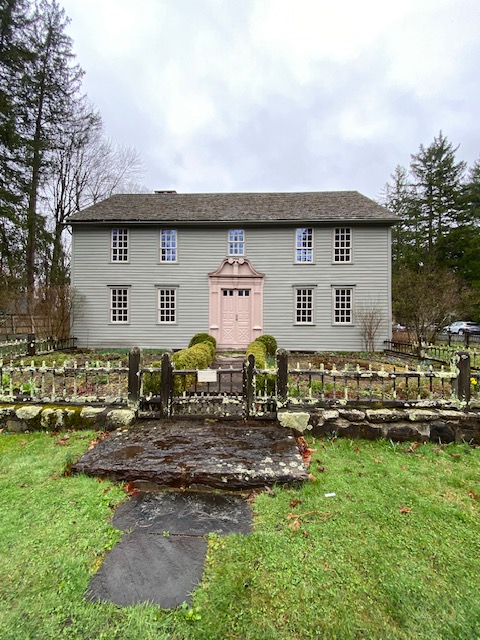
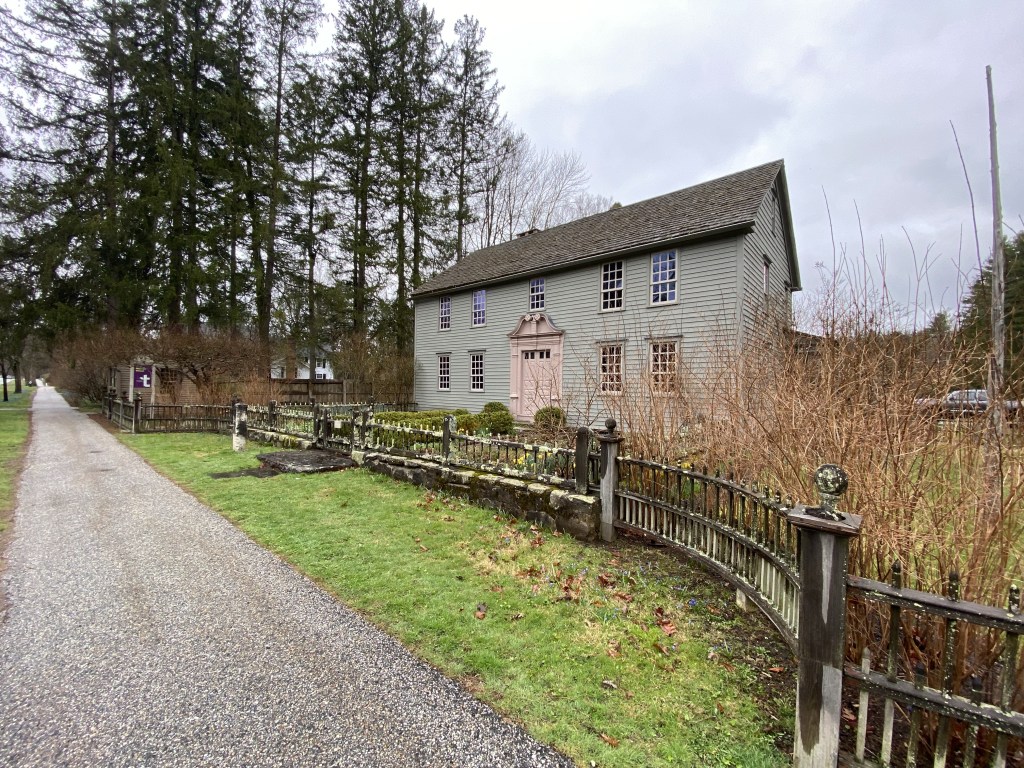
The Mission House -John Sergeant’s home
19 Main Street, Stockbridge
“John Sergeant arrived in 1734 as a missionary to assimilate the Mohican people. He learned their language so he could speak and preach to them without an interpreter. He built the Mission House around 1742 for his family…” Mission House
Visiting hours listed here.
A few years before Edwards arrived, David Brainerd passed through Stockbridge as he prepared to minister to the Indians. Here are a few journal entries with comments by Edwards:
1744- “he came to Mr. Sergeant’s at Stockbridge, Thursday, April 26. He performed this journey in a very weak state of body. ” JE
Friday and Saturday, April 27 and 28 – “Spent some time in visiting friends, and discoursing with my people (who were now moved down from their own place to Mr. Sergeant’s) and found them very glad to see me returned.” DB
Lord’s Day, April 29 – “Preached for Mr. Sergeant, both parts of the day from Rev 14:4“. DB
Tuesday, May 1 – “Having received new orders to go to a number of Indians on Delaware River in Pennsylvania, and my people here being mostly removed to Mr. Sergeant’s, this day took all my clothes, books, etc. and disposed of them and set out for Delaware River.” DB
“under a great degree of illness; but with encouragement and cheerfulness of mind under his fatigues” JE
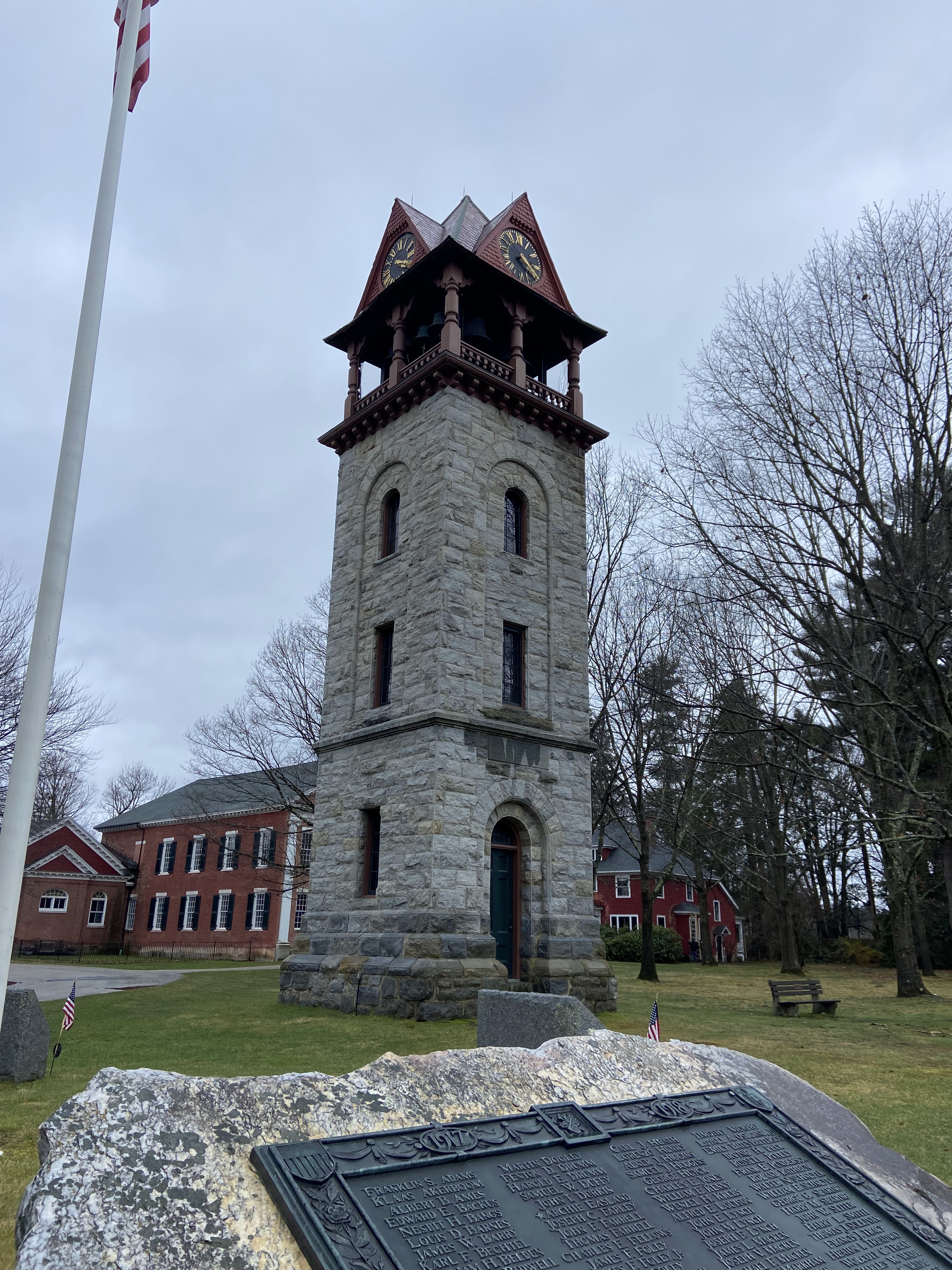
Stockbridge Church Site
4 Main St, Stockbridge
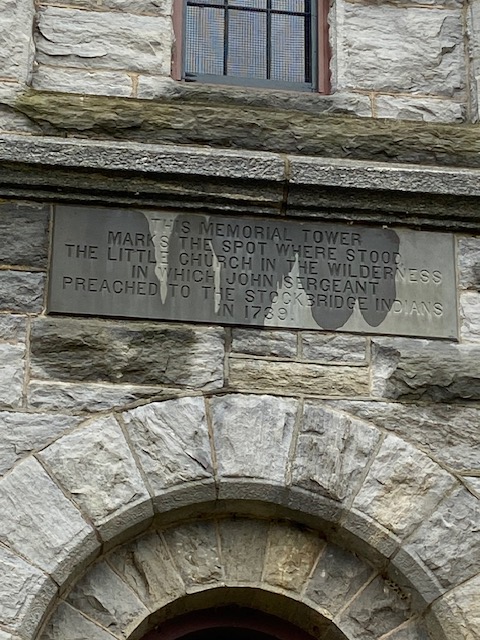
“This memorial tower marks the spot where stood the little church in the wilderness in which John Sergeant preached to the Stockbridge Indians in 1739.”
The very first church building stood from 1739-1785 a stone’s throw from the current building on the green where Children’s Chimes Tower now stands. It was two stories high and built of wood with three doors: one at each end and one on the south side. There were two aisles in this church. It was torn down to make a barn. source
Edwards did not stay in Stockbridge long. But long enough to write what God wanted him to contribute to the church. He would be called to serve as the President of the College of New Jersey for a short time before the Lord called him home.
Rev, and Hon. Gentlemen, Stockbridge, 19th, Oct 1757.
Jonathan Edwards
“I was not a little surprised on receiving the unexpected notice of your having made choice of me to succeed the late President Burr, as the head of Nassau Hall. — I am much in doubt whether I am called to undertake the business, which you have done me the unmerited honour to choose me for…
The last Sabbath which he spent in Stockbridge, President Edwards read the 20th chapter of Acts, so touchingly appropriate…When the day of his departure arrived, he made himself ready, took leave of his family, and stepped into the yard. Then turning back he said,
“ I commend you to God”
and left. These were last words to them.
Timothy Edwards – Son of Jonathan, Guardian to Aaron Burr, Jr.
Timothy Edwards (1738-1813) was the son of renowned theologian, Jonathan Edwards… As the oldest son, Timothy Edwards, remained in Stockbridge, where he lived in and ran a store from The Elms from 1760-1762.
27 Main Street, Stockbridge
He lived in New Jersey and came back to Stockbridge in 1771. He built a house and live there until his death. This eventually would be the home Norman Rockwell would live and die in as well.
8 South State Street
Aaron Burr Jr. would have lived here as well.
“Esther Edwards, sister of Timothy, was married to Aaron Burr, Sr. When she died in 1758, Timothy was named guardian of their son, Aaron Burr, Jr., who became vice president of the United States in 1801. In 1804, Aaron Burr, Jr. fatally shot Alexander Hamilton in a duel and was tried for and acquitted of treason.” source
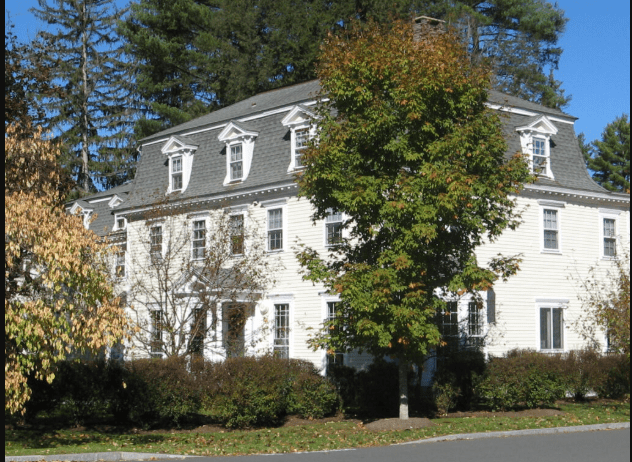
Next to The Elms, an interesting historical note: The law offices of Jonathan Edwards Field (1813-1868), one of the famous Field brothers, and the location where the first transatlantic cable message sent on August 17, 1858, by Cyrus Field from London, was received by his nephew Stephen D. Field who shared it with a waiting crowd. source
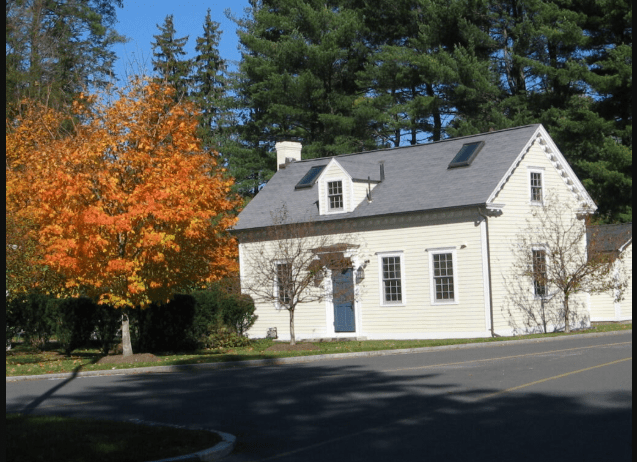
Other stops to visit:
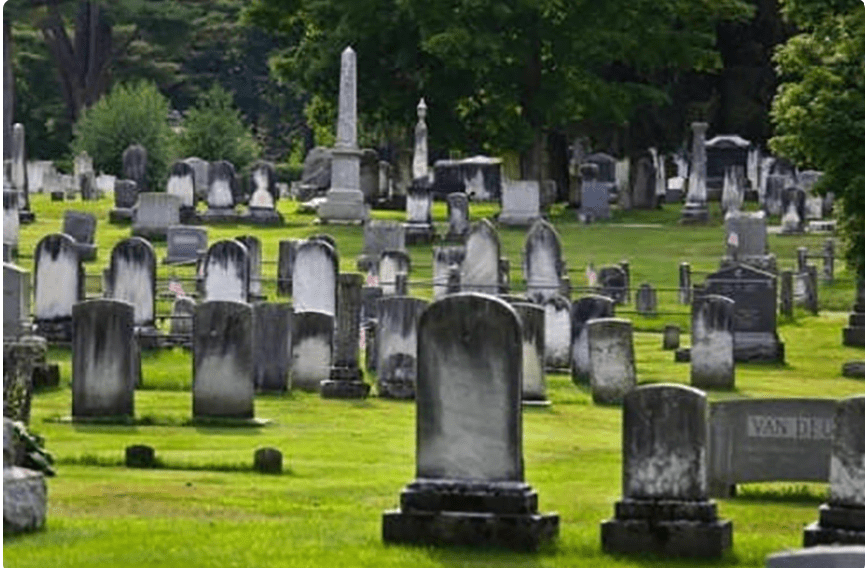
Main Street
Stockbridge cemetery self guided tour
John Sergeant, Mohican church members and Timothy Edwards (Jonathan’s son) and his wife, and also Norman Rockwell are buried here.
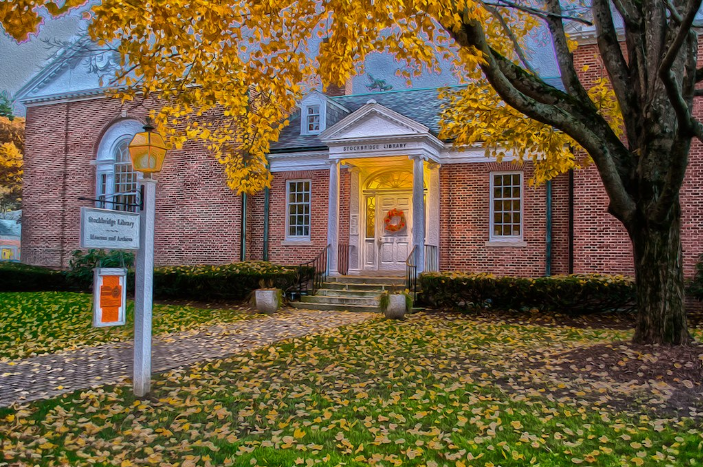
46 Main St, Stockbridge
The Stockbridge Library has Edwards writing desk on display during specific hours.
Mohican History Walking Tour of Stockbridge (secular)
Other Learning resources:
Jonathan Edwards: The Life, the Man, and the Legacy | Iain Murray (video)
Jonathan Edwards: A Life George Marsden (book)
 Beside Old Hearthstones - An American Evangelical Church History Tour
Leave a comment