a tour of Bucks County, Pennsylvania
Many pious people among us, are not aware
Archibald Alexander, Biographical sketches of the founder, and principal alumni of the Log college
that the ground on which they tread has,
as it were,
been hallowed by the footsteps of the Almighty.
And who knows,
but that prayers then offered in faith,
remain yet to be answered?
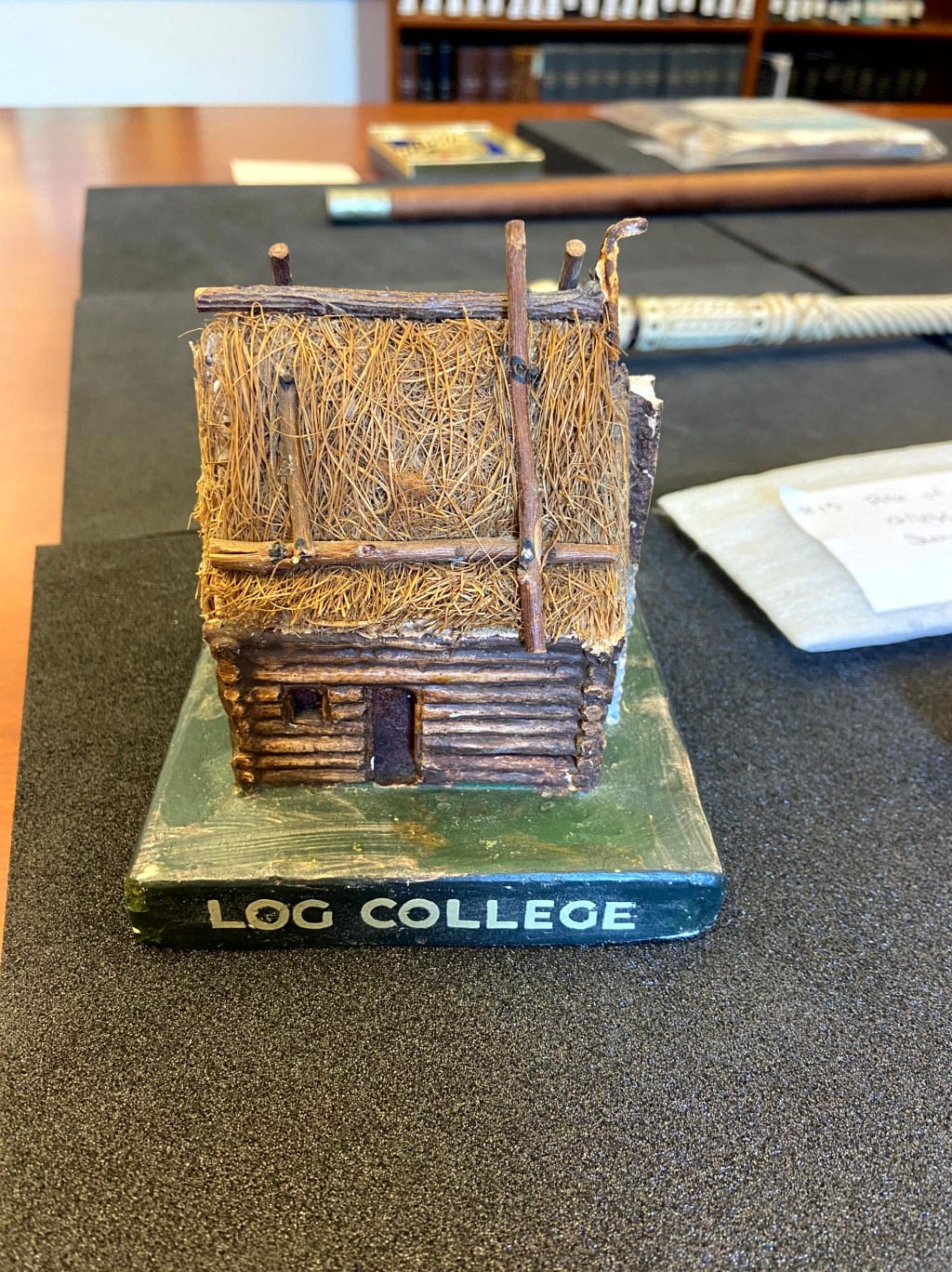
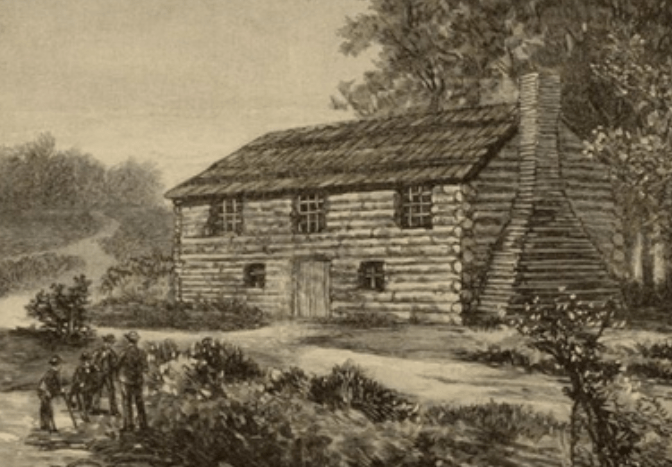
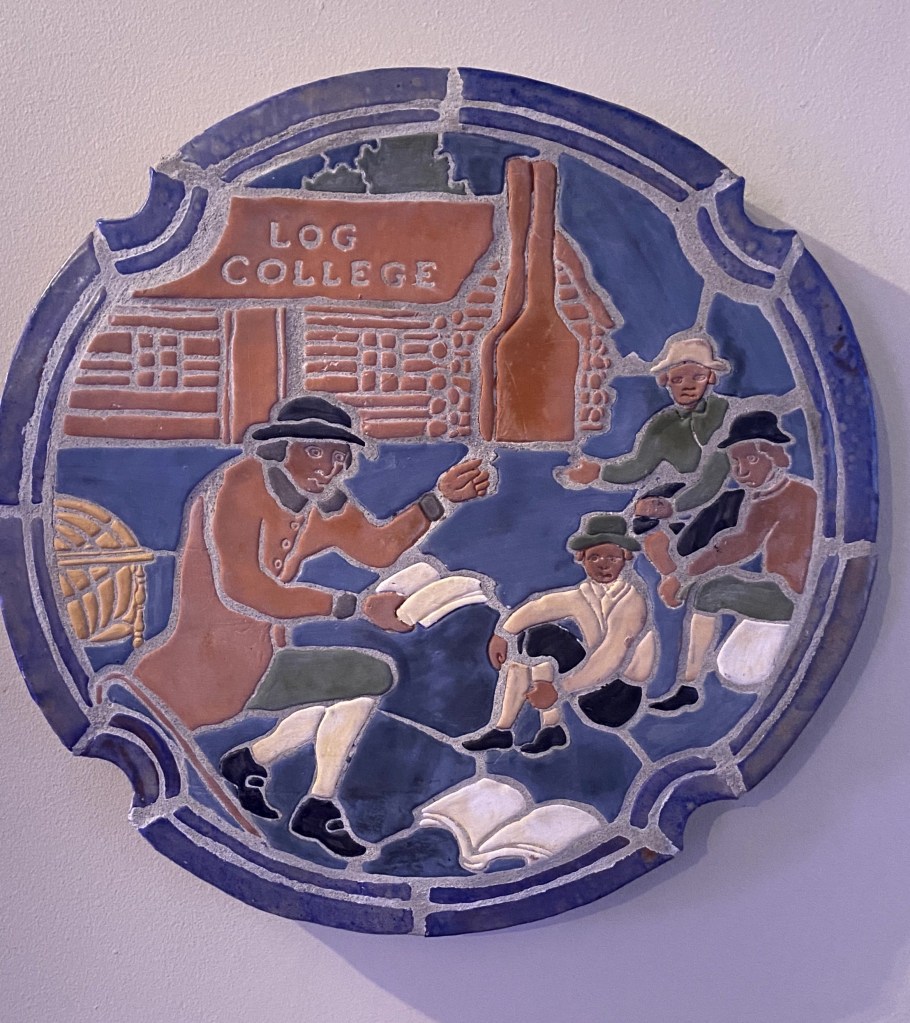
1727-1746 The Log College
880 York Road, Warminster PA
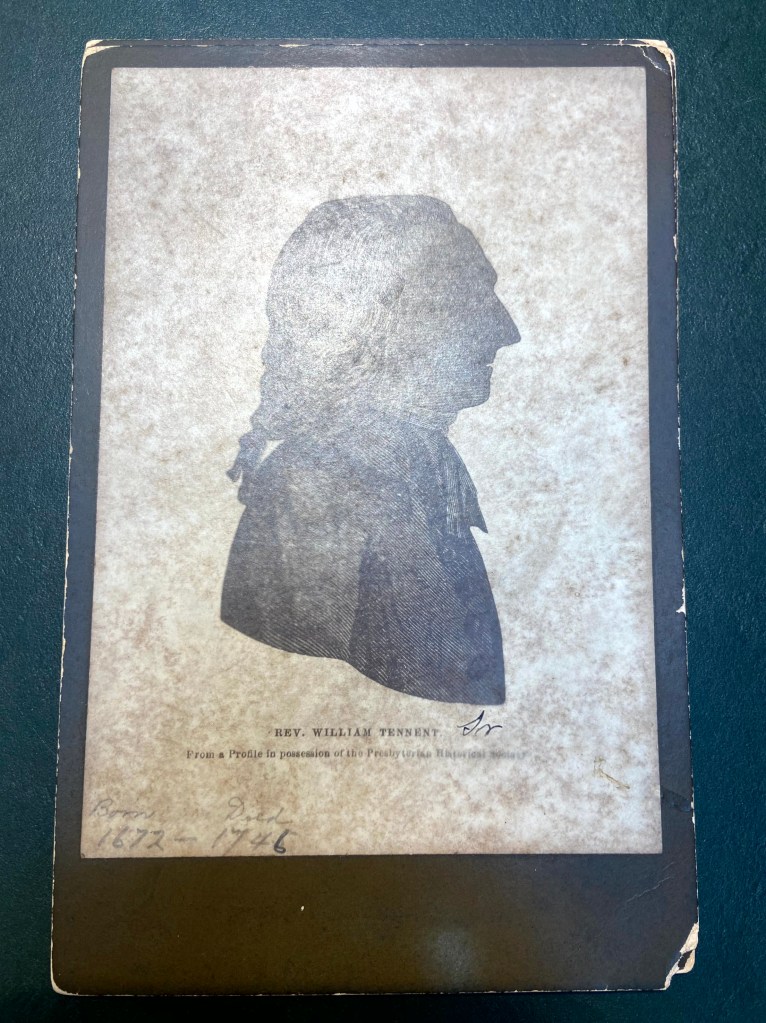
William Tennent, was born in Scotland in 1673. He graduated from the University of Edinburgh, and was ordained and came to the 13 colonies in 1718. He settled in what was then called Neshaminy-Warwick, Pennsylvania. It’s now called Warminster, Pennsylvania. He pastored there from 1718 until his death in 1746. We can say three things about his career. First, he was involved in the Great Awakening and was a significant figure in the Great Awakening in the colonies in the 1740s. Secondly, his two sons, Gilbert Tennent and William Tennent Jr. were also ministers and were also leading lights in the Great Awakening. It was Gilbert Tennent, his son, who preached the sermon “Dangers of an Unconverted Ministry.” And then lastly, let’s talk about this college. He founded the Log College. He built this college in 1727, and he operated as the president and as the primary professor till the time of his death in 1746. Ligonier 5 Minutes in Church History,
With the assistance of neighbors and his sons, logs were roughhewn out of the surrounding forests and a cabin erected with a stone chimney at one end providing a large fireplace for both warmth and cooking. Outwardly the building was rough and rugged; inside the furnishings meager and crude; but within those walls a group of eager young men studied diligently, soaking up with Latin and Greek and Hebrew the spirit and zeal of their teacher.
Light in Darkness: the story of William Tennent, Sr. and the Log College by Tennent, Mary A
This edifice, which was made of logs, cut out of the woods, probably, from the very spot where the house was erected, was situated in Bucks County, Pennsylvania, about twenty-eight miles north of Philadelphia. The Log College has long since disappeared; so that although the site on which it stood is well known to many in the vicinity there is not a vestige of it remaining on the ground; and no appearance which would indicate that a house ever stood there… (A. Alexander)
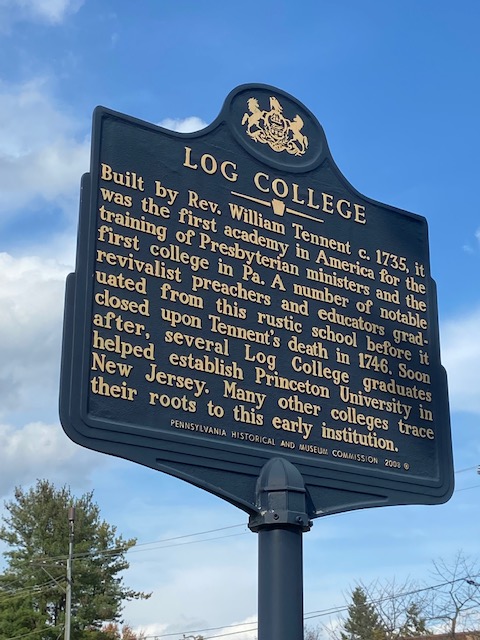
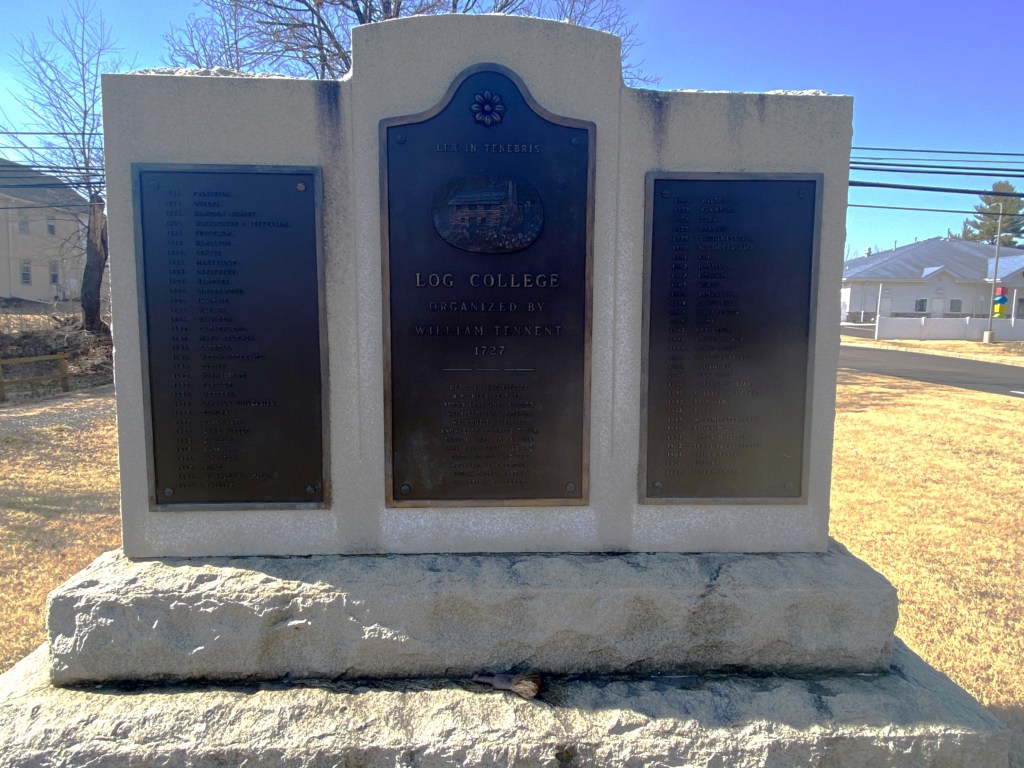
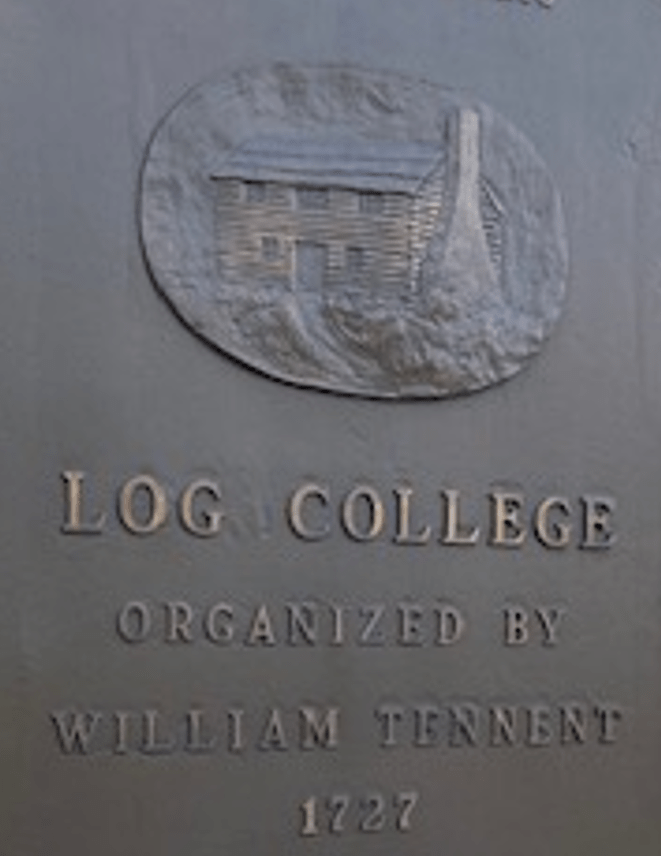
The large monument reads, “Post Tenebris Lux (after darkness, light) Log College Organized by William Tennent 1727 Here, in the life of a pioneer teacher, endued with spiritual passion; wrought to vitalize knowledge, glorify truth, enrich life, and in due time call forth, to the glory of God and the welfare of American youth, these worthy Christian colleges. The monument lists sixty-three colleges that flowed out of the humble Log College. The first being Princeton University.
Some men accomplish much more by those whom they educate,
than by their own personal labours.
A. Alexander
The Log College closed in 1746 upon William’s death, but continued on with the beginning of the College of New Jersey (Princeton University) under the leadership of his students in the fall of that same year.
George Whitefield wrote in his journal following his visit in November of 1739,
“The place, wherein the young men study now, is in contempt called “the college.” It is a log house, about twenty foot long, and near as many broad ; and to me it seemed to resemble the school of the old prophets ; for their habitations were mean ; …All that we can say of most of our universities is, they are glorious without. From this despised place, seven or eight worthy ministers of Jesus have lately been sent forth ; more are almost ready to be sent, and the foundation is now laying for the instruction of many others.”
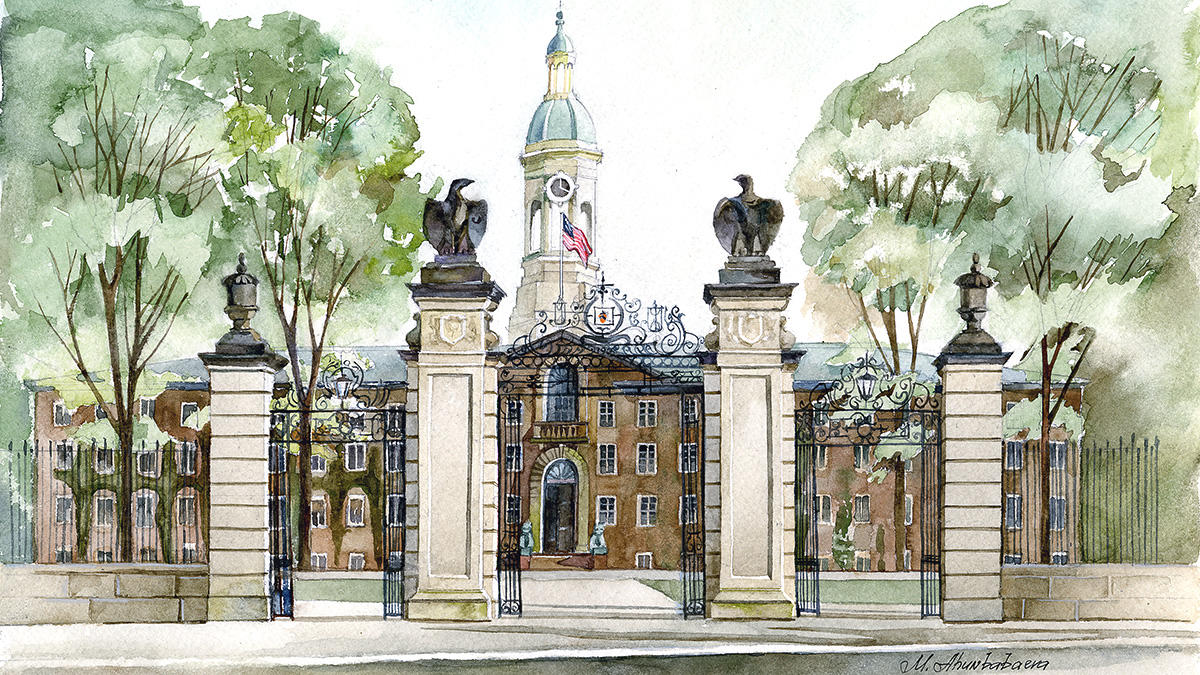
Princeton University was founded by men taught at the Log College and this is memorialized still today at the door to Nassau Hall.
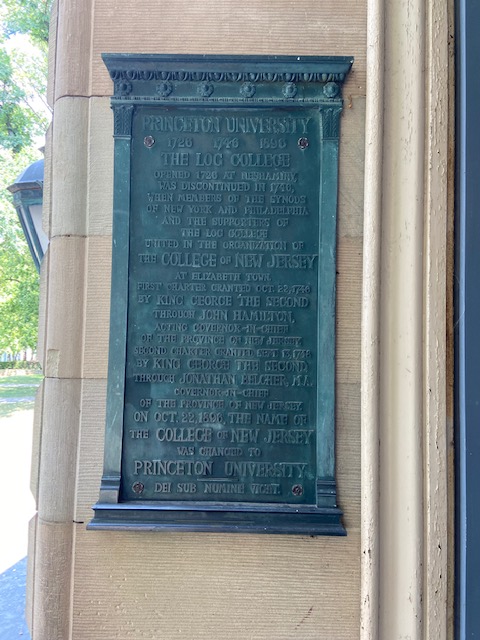
PRINCETON UNIVERSITY
1726 1746 1896
The Log College Opened 1726 at Neshaminy, was discontinued in 1746, when members of the Synods of New York and Philadelphia and supporters of the Log College united in the organization of The College of New Jersey at Elizabeth Town. First charter granted Oct. 22, 1746 by King George the Second through John Hamilton, acting Governor in Chief of the Province of New Jersey. Second charter granted Sept. 13, 1748 by King George the Second through Jonathan Belcher, M.A. Governor in Chief of the Province of New Jersey. On Oct. 22, 1896, the name of the College of New Jersey
was changed to Princeton University
Dei Sub Numine Viget
which translates to
“Under God’s Power She Flourishes”
At one time, this institution was blessed as it trained faithful men of God. That is no longer the case today, but the reminder is front and center on the main building as a rebuke to those who tragically compromised. Not every trace of our Christian past has been torn down. A local high school is named after William Tennent and a local middle school is named Log College. Sadly, most don’t know why!
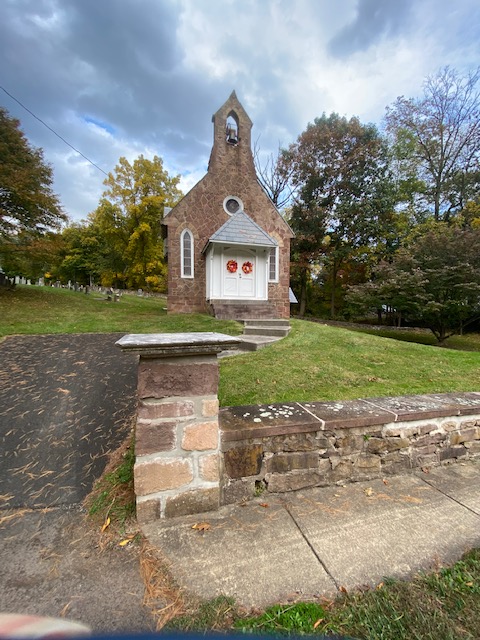
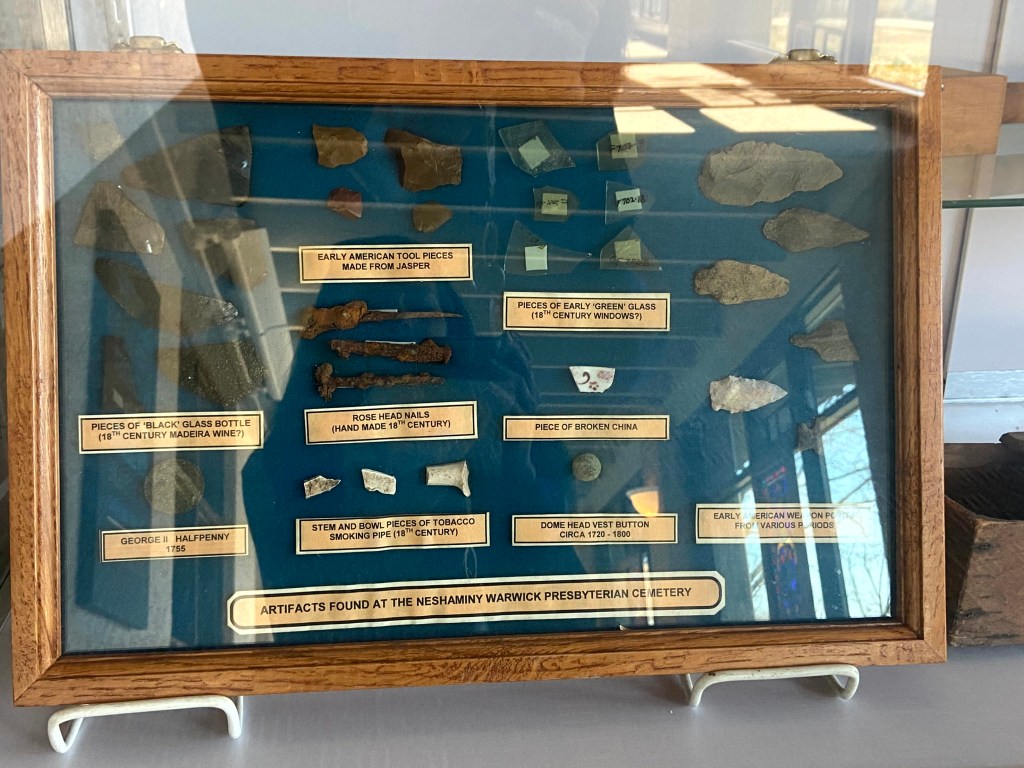
1727 Tennent Church and Cemetery
Neshaminy Cemetery, Warminster
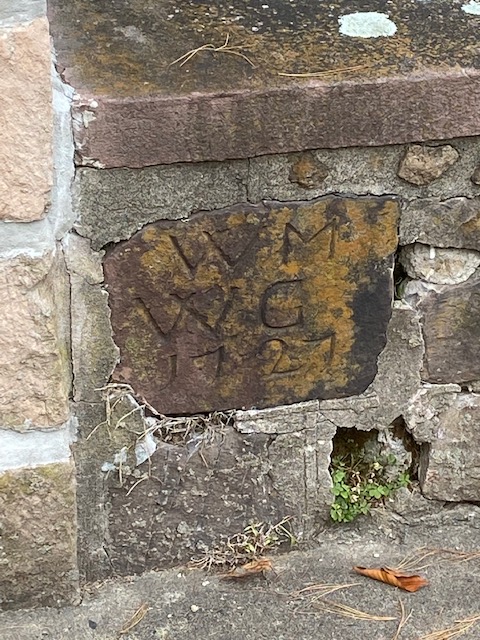
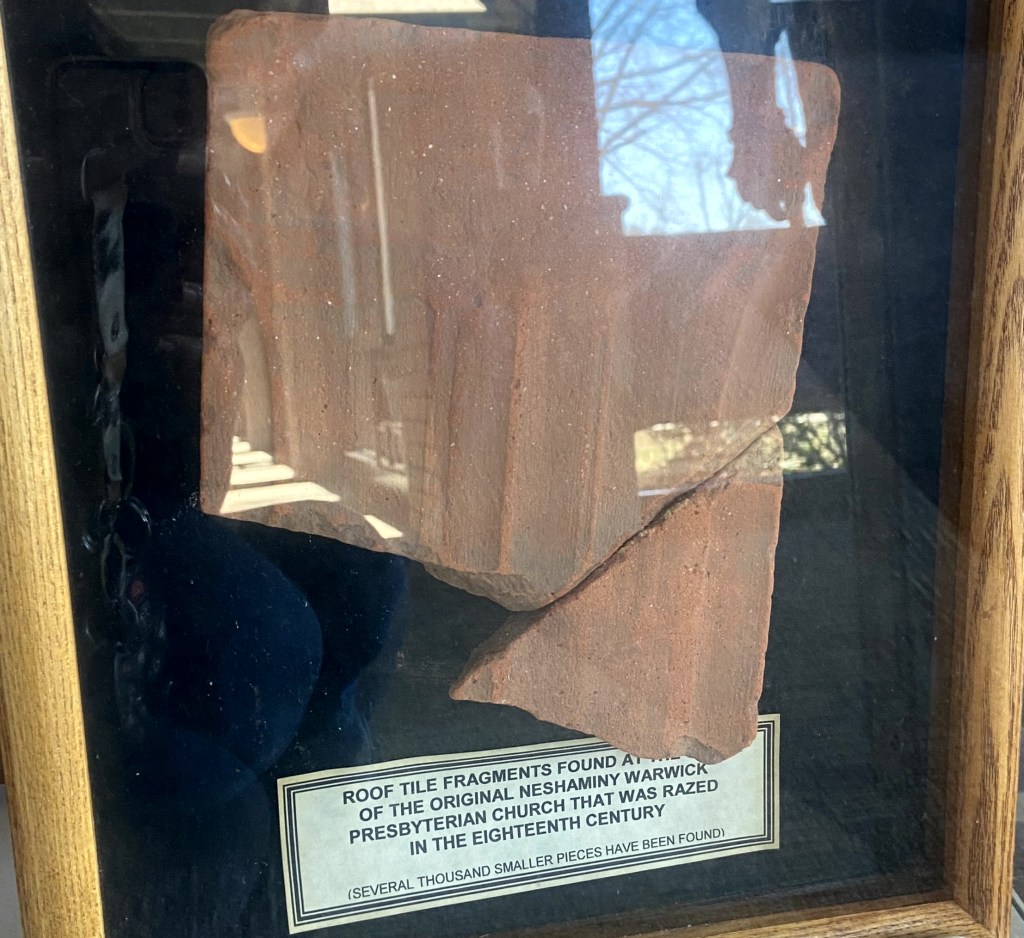
In 1727, under William Tennent, a meetinghouse was built on the grounds of the present cemetery. All that remains of that original sanctuary is its datestone, now embedded in the cemetery’s south wall near the current chapel. Neshaminy Warwick Presbyterian Church history
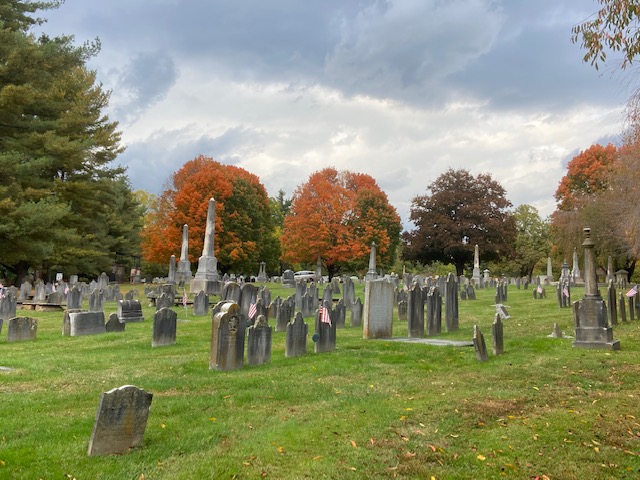
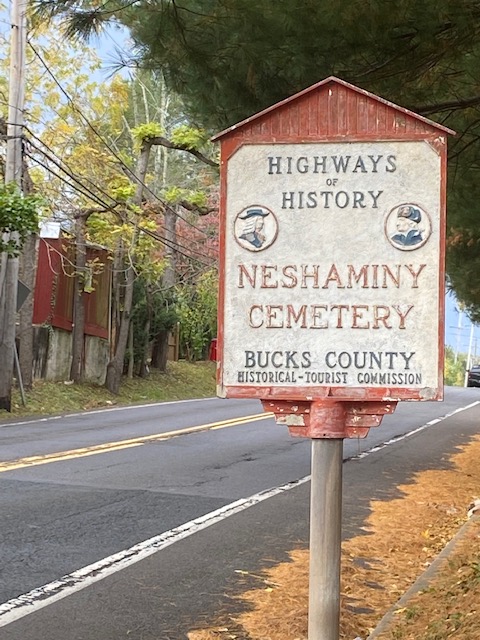
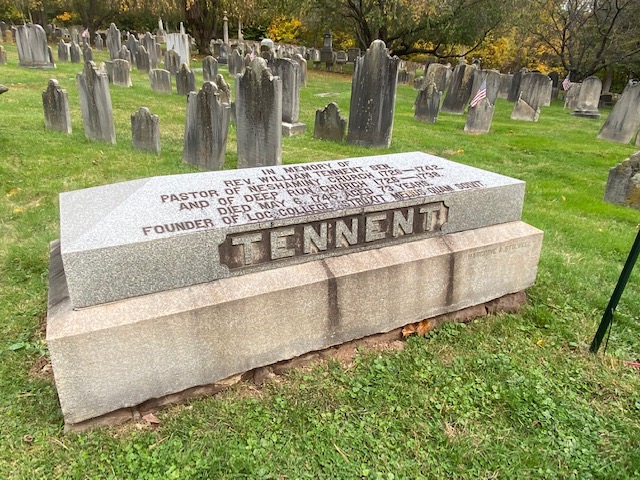
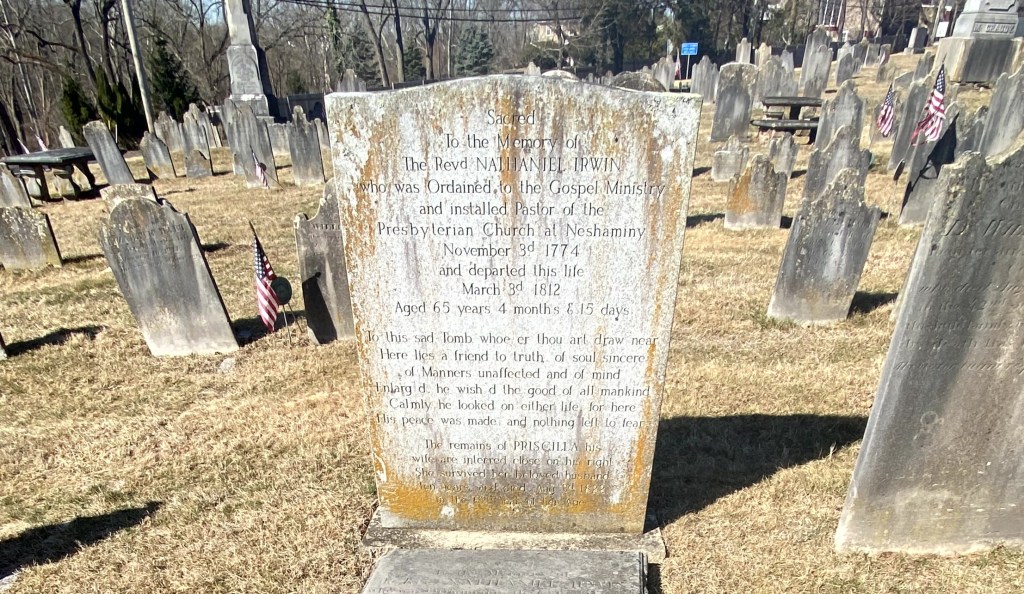
Nathaniel Irwin was the third pastor (1774-1812) and also buried in the Neshaminy Cemetery. “To this sad tomb whoe’er thou art draw near. Here lies a friend to truth of soul sincere of manners unaffected and of mind enlarged. He wished the good of all mankind. Calmly he looked on either life for here his peace was made and nothing left to fear.” During his tenure the old 1727 church was torn down and he requested to be buried at the spot of Tennent’s pulpit. He bequeathed $1000 towards the new seminary just beginning at Princeton.
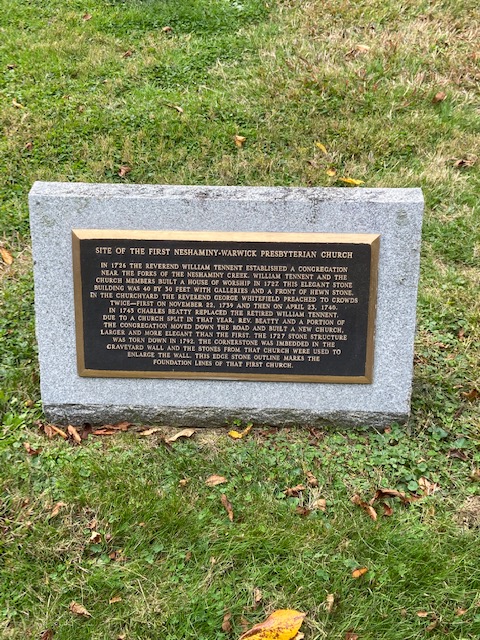
Site of the first Neshaminy-Warwick
Presbyterian Church.
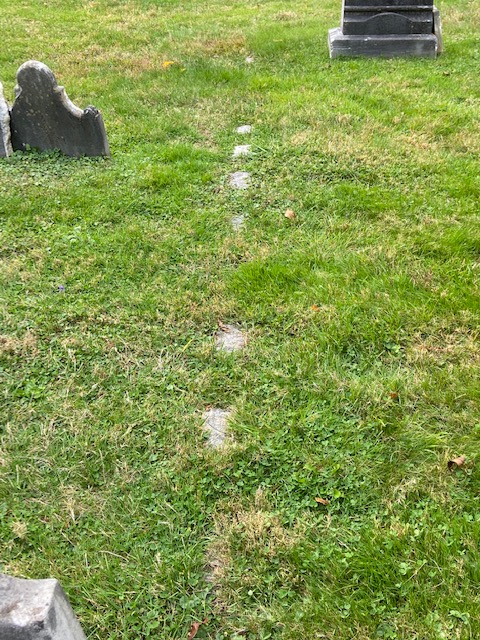
In 1726, the Reverend William Tennent established a congregation near the forks of the Neshaminy Creek. William Tennent and the church members built a house of worship in 1727. This elegant stone building was 40 by 30 feet with galleries and a front of hewn stone. In the churchyard the Reverend George Whitefield preached to crowds twice – first November 22, 1739, and then on April 23, 1740. In 1743 Charles Beatty replaced the retired William Tennent due to a church split in that year. Rev. Beatty and a portion of the congregation moved down the road and built a new church, larger and more elegant than the first. The 1727 stone structure was torn down in 1792, the cornerstone was embedded in the graveyard wall and the stones from that church were used to enlarge the wall. This edge stone outline marks the foundation lines of that first church.
Tennent and Whitefield
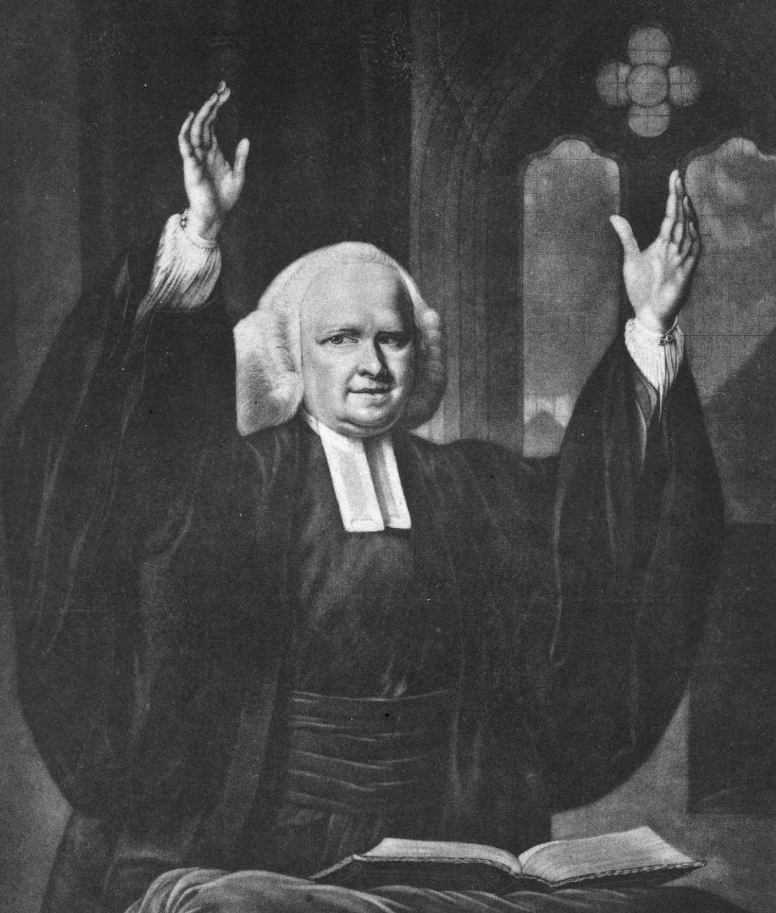
William Tennent’s relationship with George Whitefield played a prominent part in the Great Awakening in the Middle Atlantic Colonies. Whitefield considered Philadelphia a key base on his Colonial preaching tours. Tennent and Whitefield developed a friendship across denominational lines (Whitefield was Anglican and Tennent was Presbyterian) when Tennent went to Philadelphia in 1739 to hear Whitefield preach. Whitefield found deep kinship with the elder Tennent, whom he affectionately described as ‘that old grey haired disciple’. source
Whitefield notes in his journal that he twice preached in the meetinghouse yard of Tennent’s church in November of 1739 to 3000 listeners. And again in April of 1740, drawing five thousand – an astounding number of people for an area that was considered virtually wilderness at the time. He came a third time in 1754 while Charles Beatty was pastor.
William Tennent’s Home
880 York Road, Warminster, PA
“We went to old Mr. Tennent’s who entertained us like one of the ancient patriarchs. His wife seemed like Elizabeth and he like Zachary, both so far as I can learn walk in all the commandments and ordinances blameless.”
George Whitefield, November 22, 1739
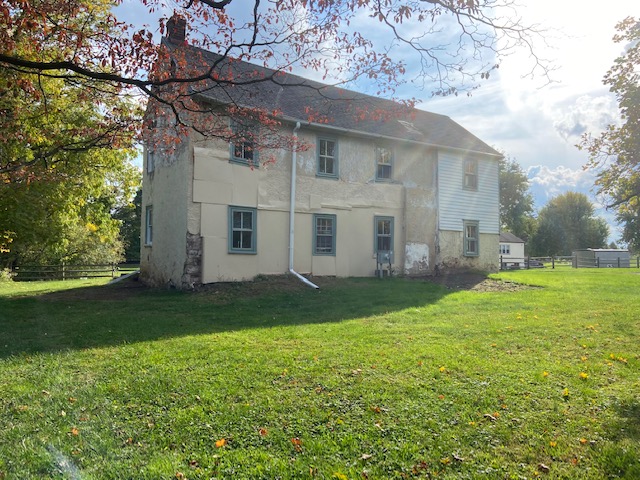
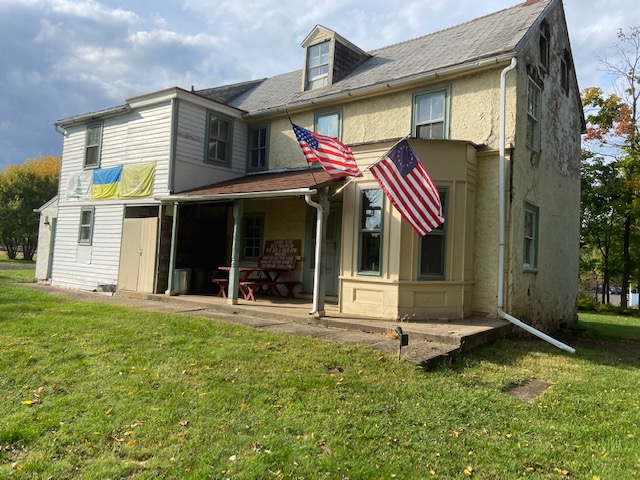
William Tennent sailed from Ireland and landed in Philadelphia in 1718. He stayed with his cousin James Logan, secretary to William Penn. James was a wealthy cousin who owned Stenton mansion in Germantown. (built after Tennent would have stayed with him). The church was not able to provide sufficient means for the Tennent family, so James gifted William’s wife Catherine 50 acres near the Neshaminy Creek in 1728, in Northampton. The original location given was too far from the church and so William bought 100 acres near the church in 1735 for 140 pounds. The home and Log College were built along “York Road” a main route of travel between Philadelphia and New York. Christ’s Home for Children now sits on his former property.
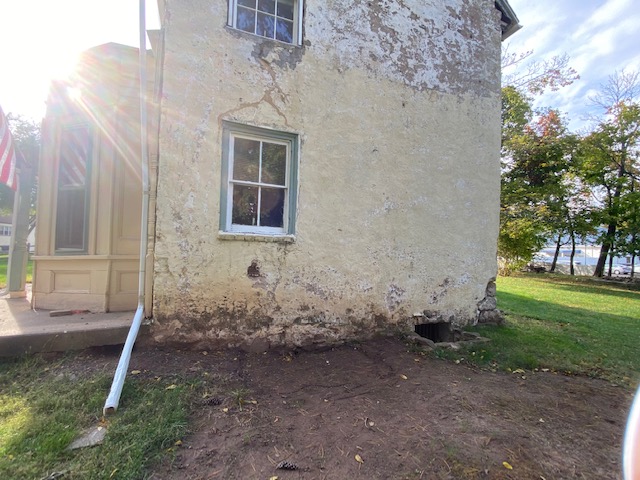
Extensive research on the William Tennent House and property point to this location as the residence of the Tennent family. Although the home has been altered and changed through the years, preliminary evidence shows that the east and west stone walls date to when the Tennent’s lived there… A Princeton source from the early 20th century indicates that when the Log College came to ruin, structural materials from that building were used in the rebuild of the house. source
Sept 5, 1889 – Celebration of the founding of the Log College at the Tennent farm
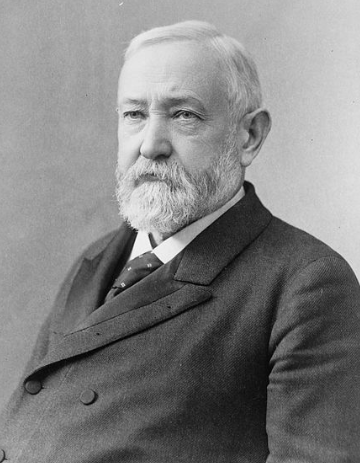
“I stand awed before the thought of what the Great Day will reveal as the fruit of this modest, but pious and courageous effort, the institution of the Log College – the wholesome fruit of faith.
Only the eye of God can follow those tender and imperceptible filaments of mental and moral influence that touch our lives. If it could be revealed to us today, how many in this great audience, gathered from remote sections of our country, would see the silver thread by which they had been drawn into the church of God reaching back to efforts that were started here!
It is pleasant to believe that that which is now hidden to our eyes will someday be known, and that we will be able better to realize what these men wrought for God and for mankind.” President Benjamin Harrison
Trains brought thousands to the Tennent farm. President Benjamin Harrison was invited and accepted. (His wife’s great grandfather signed the land transfer in 1745 for the new church building and buried in the church cemetery.) “Flags fluttered from houses and stores, and amid the din of ringing church bells and cheering throngs the residents waved their welcome from every window and doorway…1500 carriages followed” the President as the grand procession drove from Philadelphia to Warminster. 25,000 met him at the historic ground of William Tennent’s Log College. It is hard to imagine that many people, much less the President, finding this history to be so valuable today to be worth their time to remember and praise God.
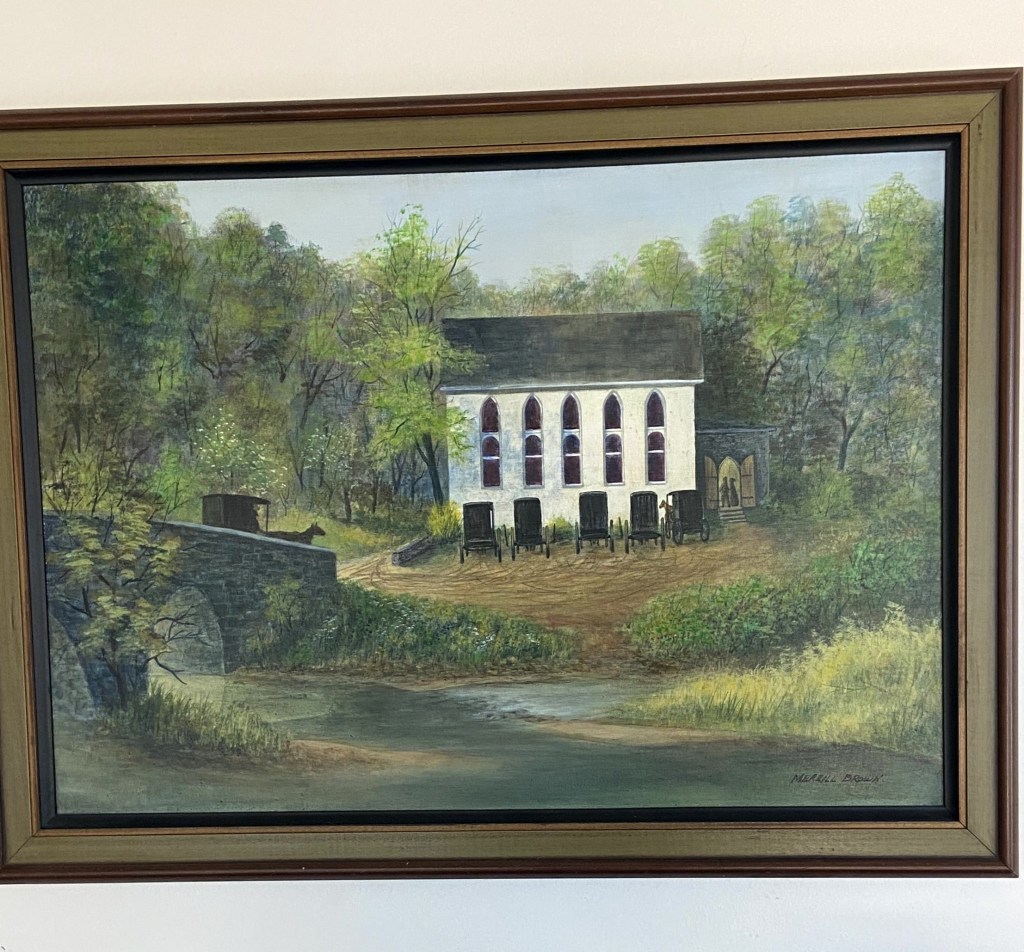
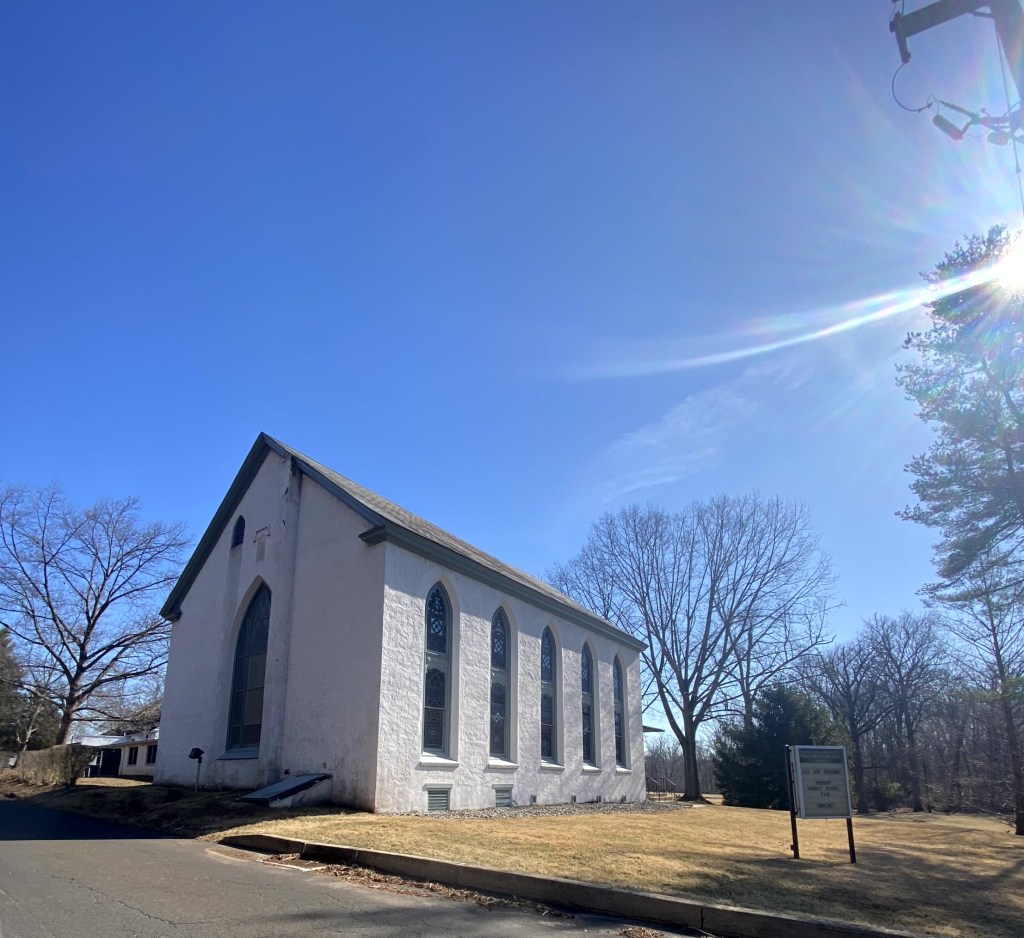
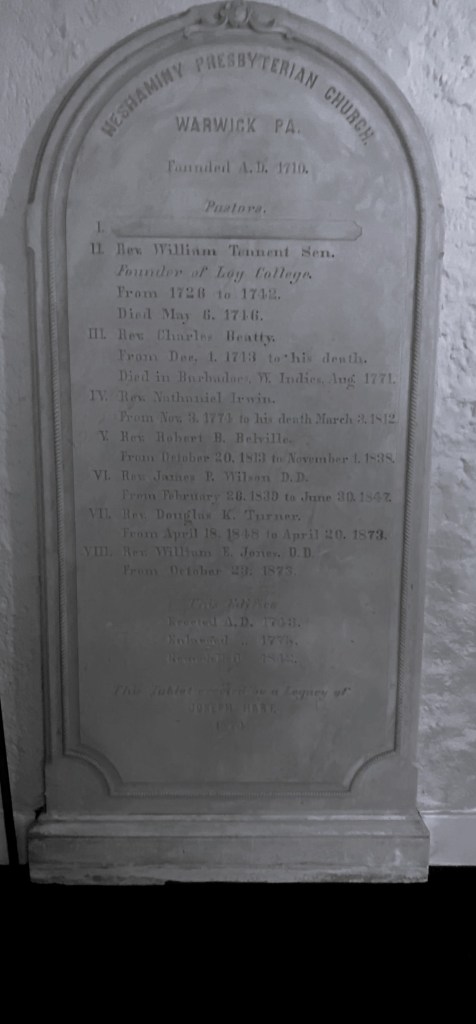
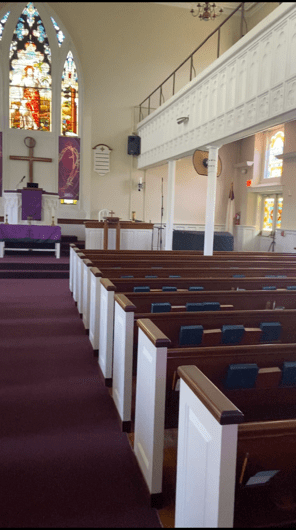
1743 Neshaminy-Warwick Church
1401 Meetinghouse Rd, Warminster
When Tennent retired in 1742 one of his students, Rev. Charles Beatty took over as pastor. Gilbert Tennent preached the sermon at his ordination Dec. 14, 1743. There was a split amongst the “Old Side/New Side” Presbyterians at this time and a new church was built next to the old one in 1743 with Beatty (New Side) as pastor. George Washington’s troops were camped nearby in August of 1777 with his headquarters at the Moland House. It is likely the church was used as a hospital and soldiers are buried in unmarked graves in the church cemetery.
Remnants at Princeton Seminary – Wright Library
The fact is, that some owner of the (Log College) property, never dreaming that there was anything sacred in the logs of this humble edifice, had them carried away and applied to some ignoble purpose on the farm, where they have rotted away like common timber, from which, if any of them remain, they can no longer be distinguished. But that some small relic of this venerable building might be preserved, the late Presbyterian minister of the place. Rev. Robert B. Belville, some years ago, rescued from the common ruin so much of one of these logs, as enabled him, by paring off the decayed parts, to reduce it to something of the form of a walking staff, which as a token of respect, and for safe keeping, he presented to one of the oldest Professors [Dr. Samuel Miller] of the Theological Seminary, at Princeton, N. J., in whose possession it now remains, and who will, it is hoped, before he leaves the world, deposit it in the cabinet of curiosities, which has been formed, in connexion with the Theological Seminary. Archibald Alexander, Biographical Sketches of the Founder, and Principal Alumni, of the Log College (1845), pp. 11-12
25 Library Pl, Princeton, NJ
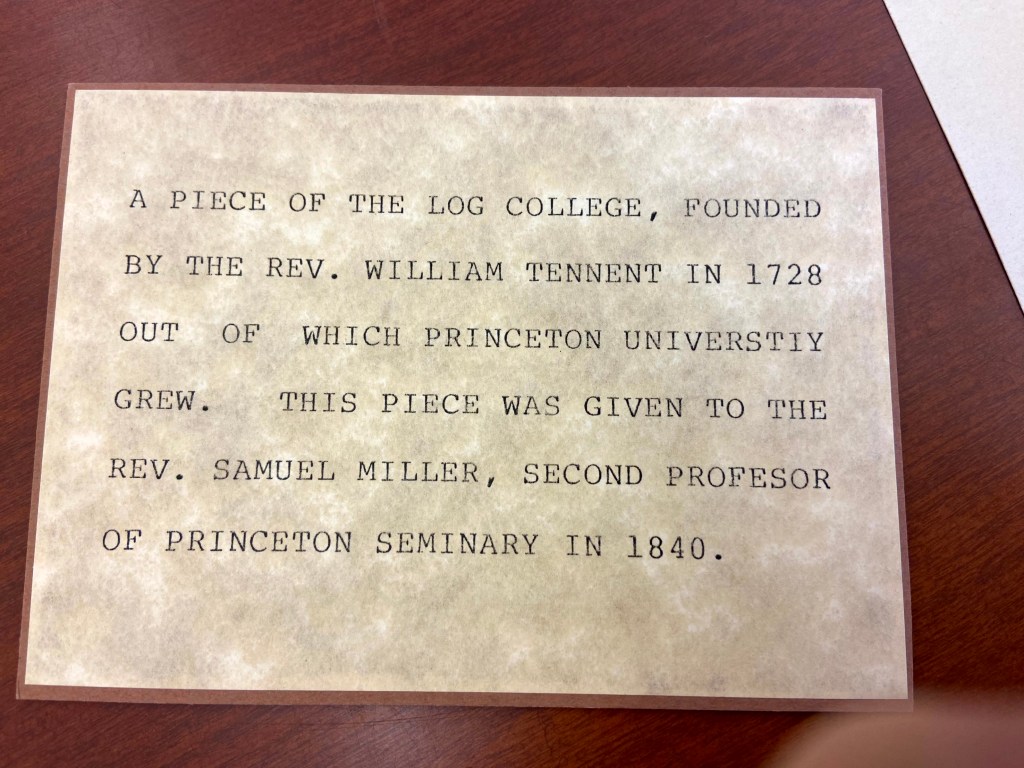
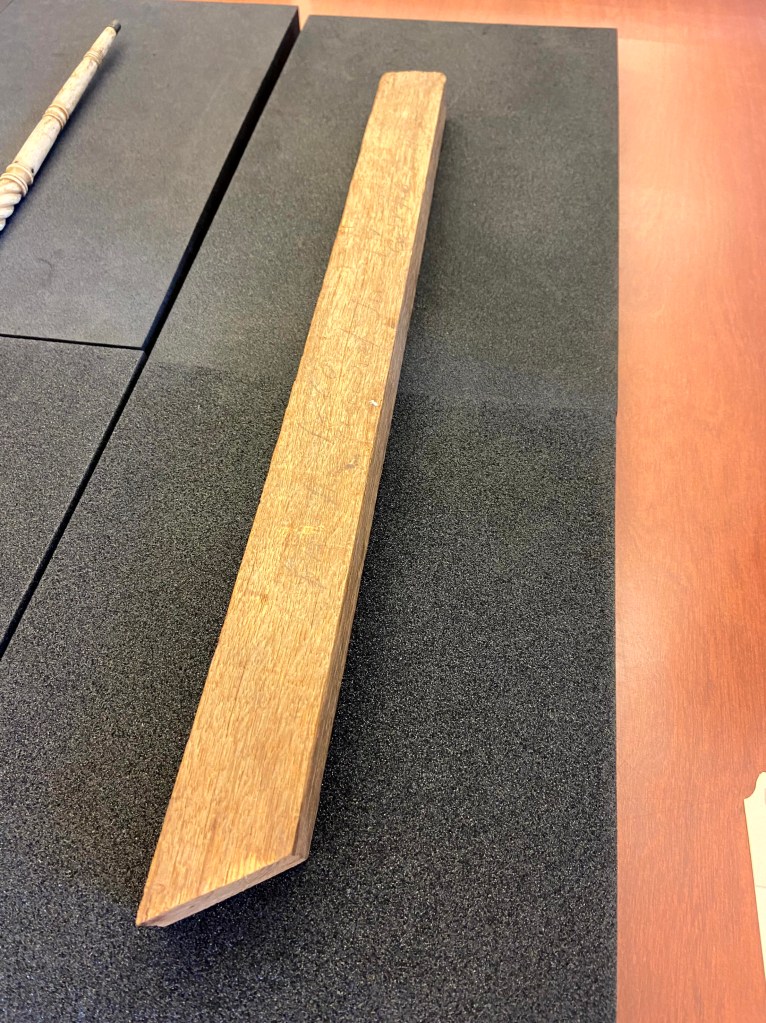
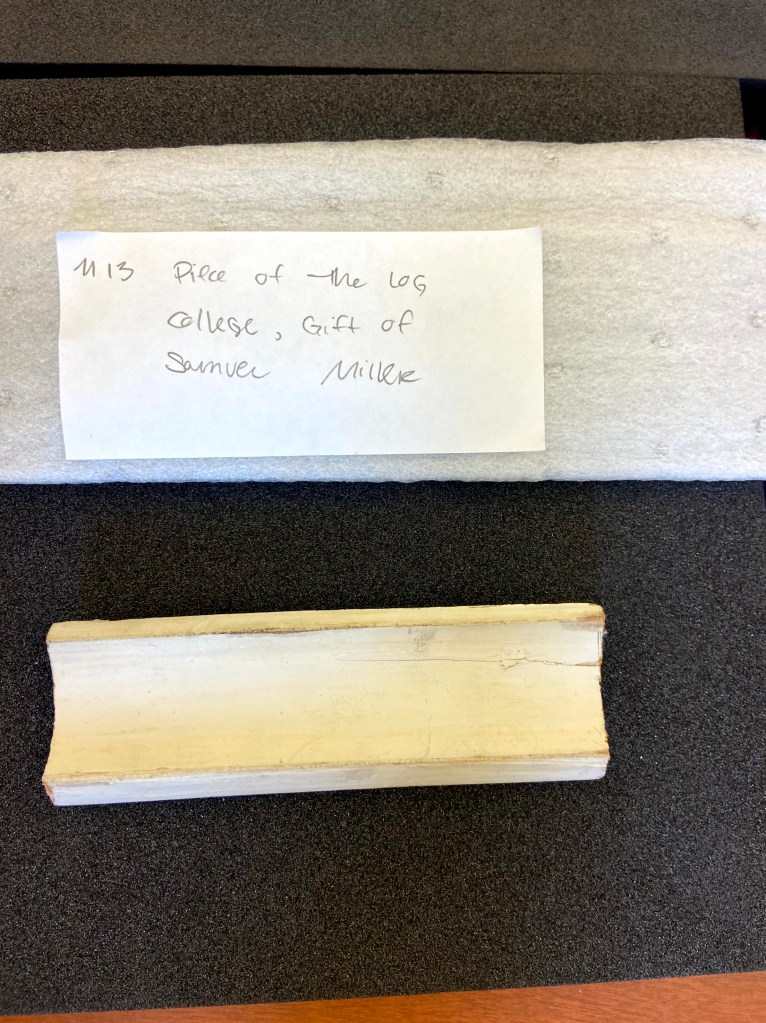
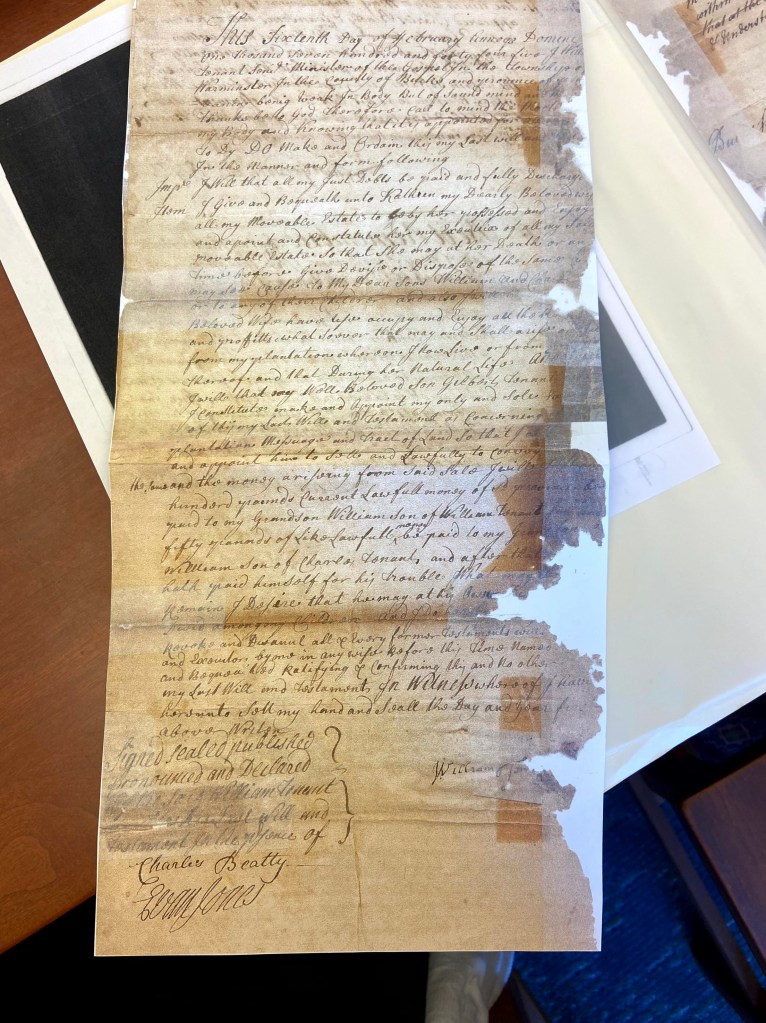
William Tennent’s Last Will and Testament – February 16, 1744
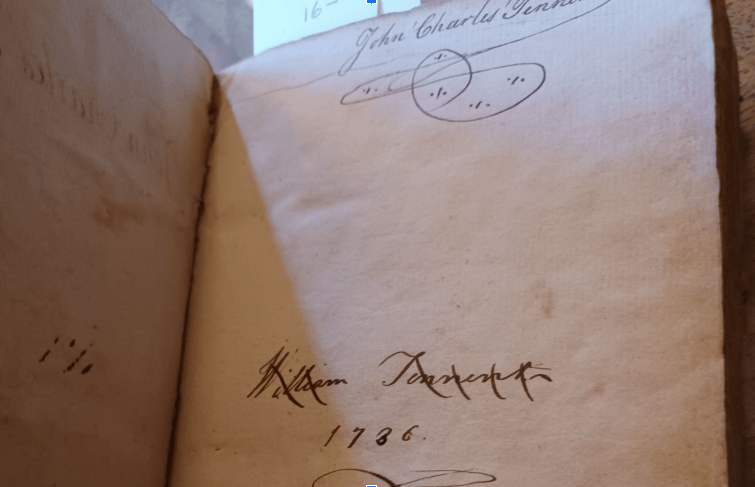
As a side note, a Bible used by William Tennent is at the William Smith Morton Library at Union Presbyterian Seminary in Richmond, Virginia. This volume contains the inscriptions of William Tennent, Sr. (dated 1736) and John Charles Tennent (great-grandson of William Tennent, Sr., son of William Tennent III). A Rare Treasure Located: A Bible Used by William Tennent at the Log College — Log College Press
I hope to add more to the Log College history with further study on William’s students and the wide-reaching effect of his efforts to educate young men for the ministry. Just maybe the prayers of long ago have been answered in graciously giving Bucks County, yet again, a faithful man in the pulpit teaching the whole counsel of God. It is a joy to consider, that my home church would be God’s mercy here in this dark place, started only a few years ago and nearby where Tennent lived and taught.
Resources
Light in Darkness: The Story of William Tennent, Sr. and the Log College by Mary Tennent
Biographical sketches of the founder, and principal alumni of the Log College by Alexander, Archibald
Documentary History of William Tennent and the Log College Press by Thomas Pears and Guy Klett
Listen: William Tennent and the Log College
Listen: The Log College: Reformation and fellowship in the First Great Awakening
 Beside Old Hearthstones - An American Evangelical Church History Tour
Leave a comment