a tour through Old Boston, Andover and Hartford
This post is a continuation of Part 1. We will cover Chapters 4-6 including Thomas Hooker, Thomas Sheperd and Anne Bradstreet following along the excellent book titled The American Puritans by Nate Pickowicz and Dustin Benge.
Chapter 4 Thomas Hooker 1586-1647
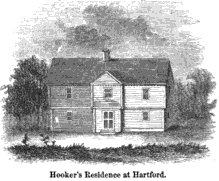
Pastor Thomas Hooker and family arrived on the Griffin at Cambridge (formerly known and New Town) in September of 1633. John Cotton was on the same ship. He was reunited many friends and congregants from England. Interesting fact…Thomas was grandfather to Sarah Edwards. Mary Hooker, Thomas’ daughter, was her mother. There is no known portrait of him.
Hooker settled in New Towne, now Cambridge. There are quite a few reminders here of his early days.
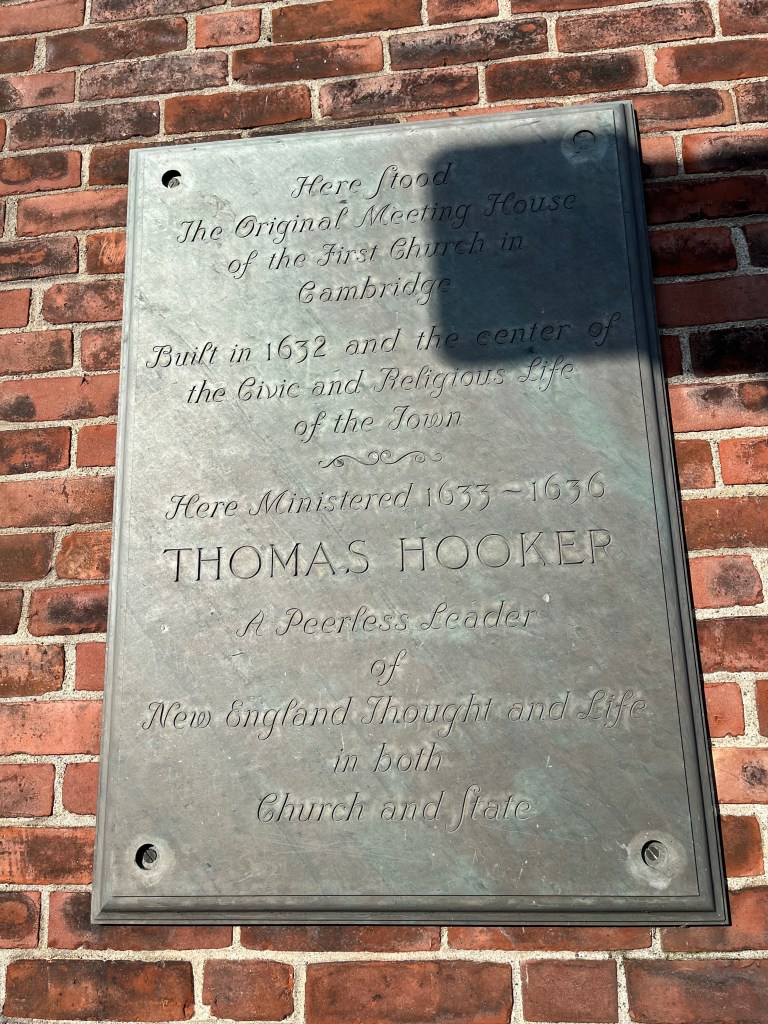
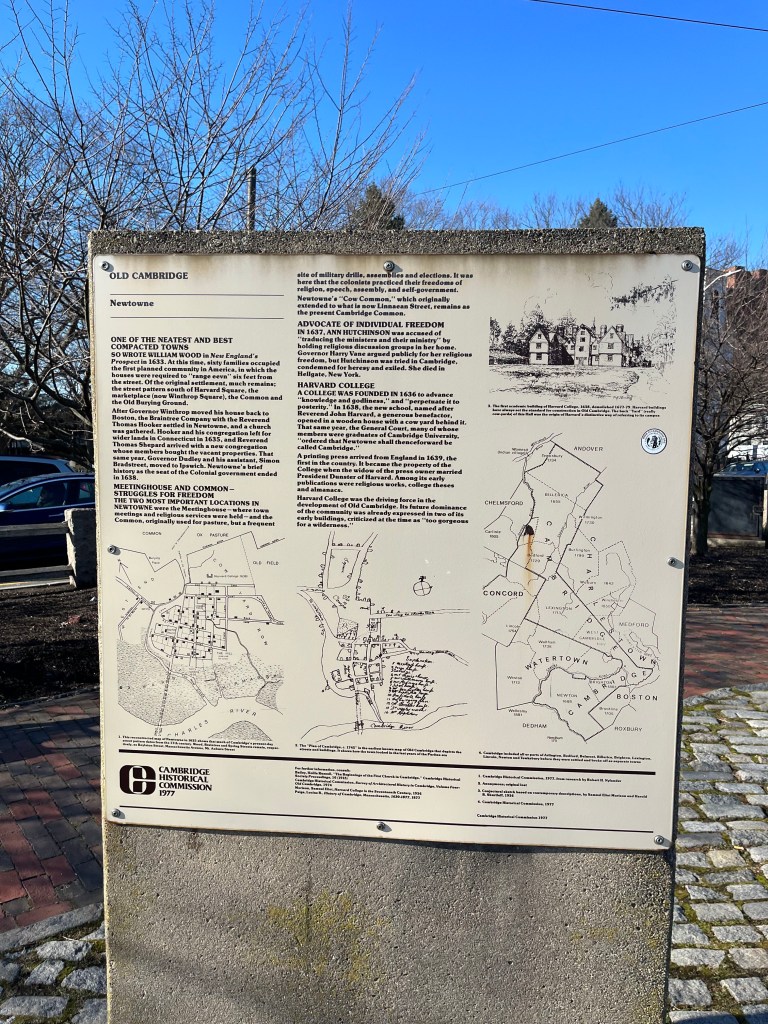

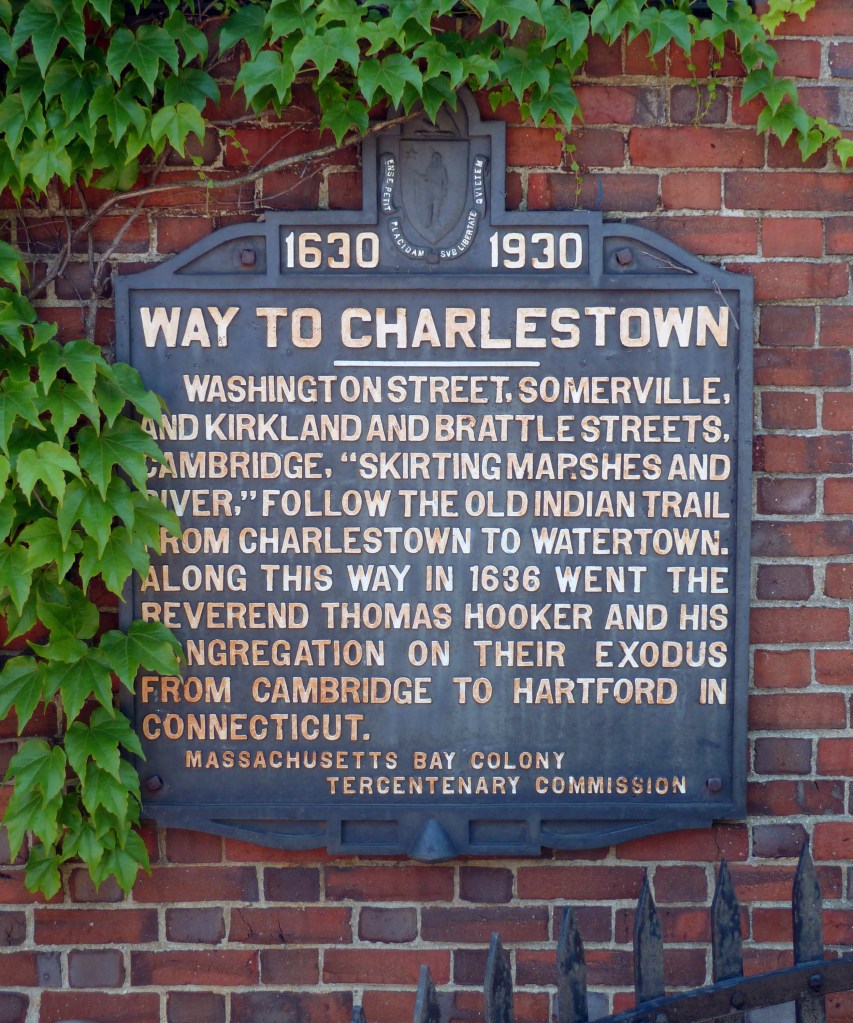
“After Governor Winthrop moved his house back to Boston, the Braintree Company with the Reverend Thomas Hooker settled in Newtowne, and a church was gathered. Hooker and his congregation left for wider lands in Connecticut in 1635, and Reverend Thomas Shepard arrived with a new congregation whose members bought the vacant properties.” source
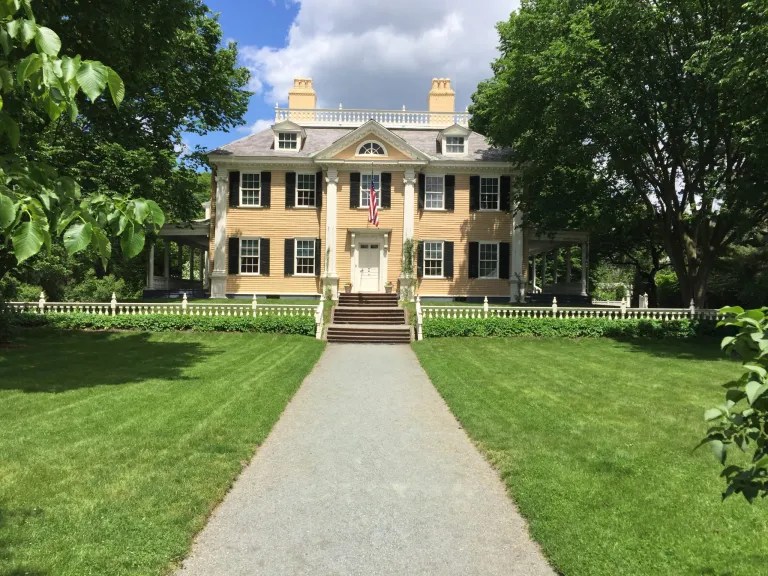
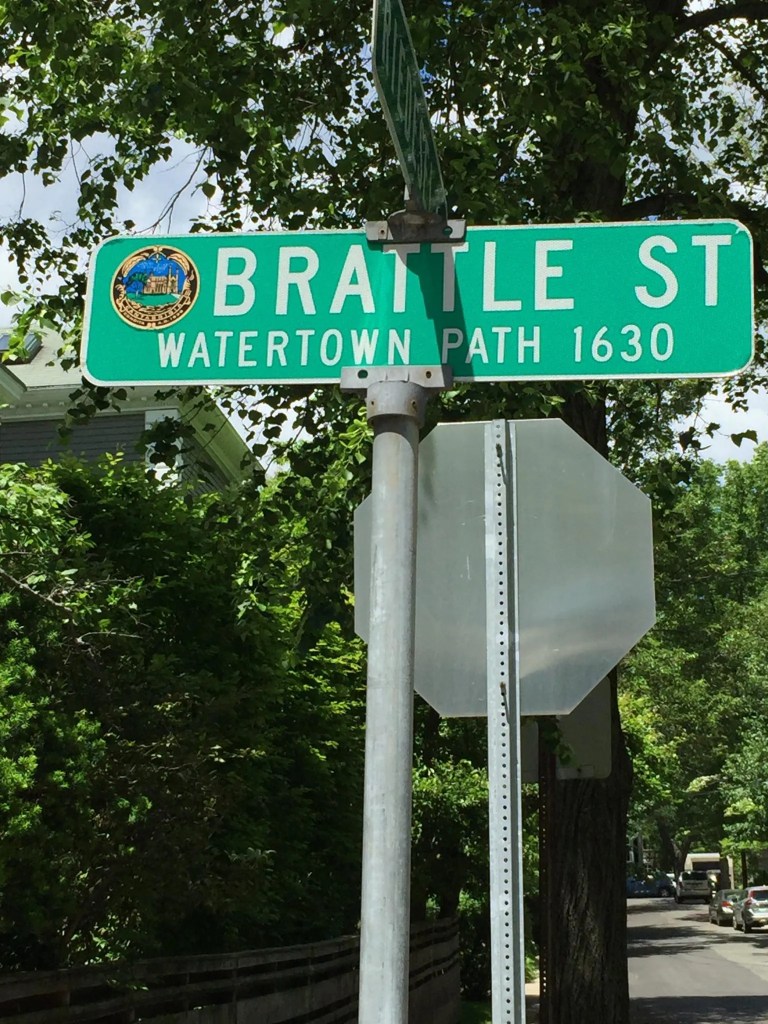
The 1777 map below shows the Old Watertown Path that Hooker would have traveled as he left Cambridge. Today it is called Brattle Street. As an aside, the home of Major-General William Brattle/Henry Wadsworth Longfellow still stands and is known at the Longfellow House Washington’s Headquarters and open to visitors. Circled on the map below.

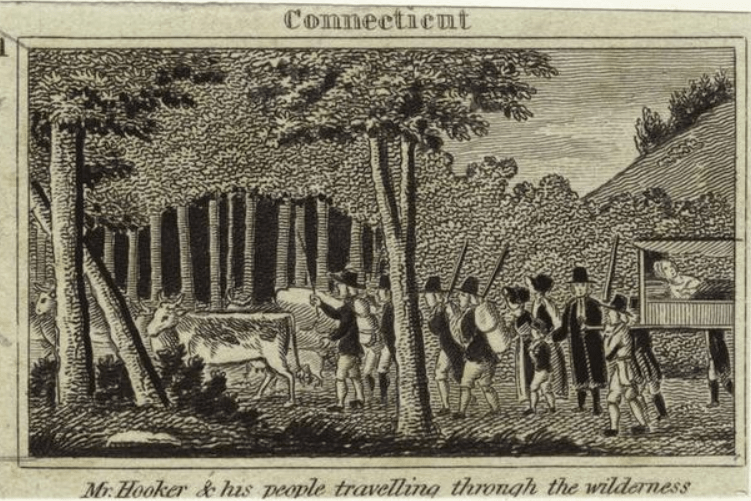
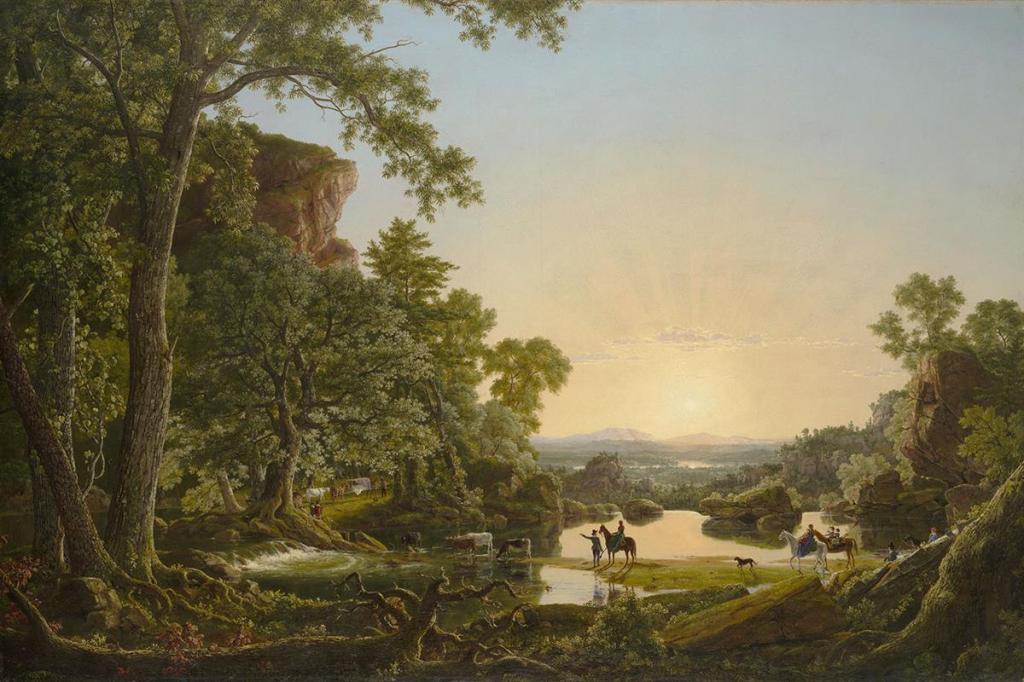
Hooker and Cotton had a disagreement in 1636. This led to Hooker leading a group of 100+ settlers down the Old Bay Path to form Hartford, CT. (pg 89)
“The small village on the Connecticut River was as close as Hooker would come to re-creating the Promised Land.“
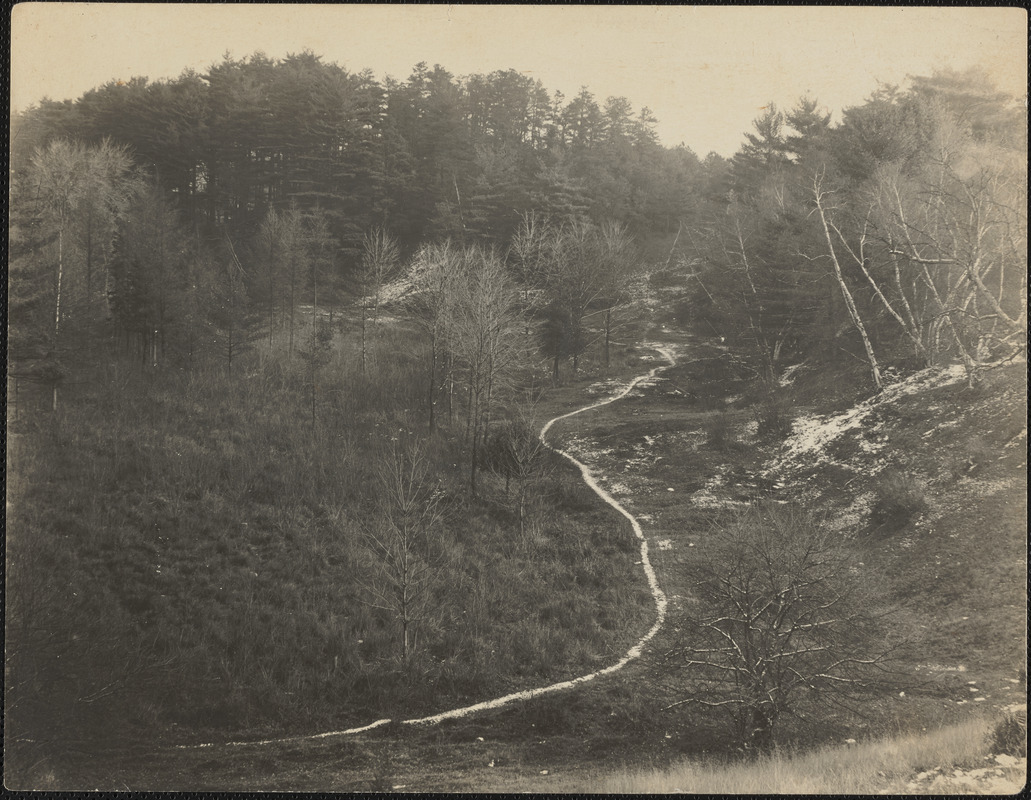
A section of the prehistoric Indian trail called the “Old Bay Path” or “Watertown Path” from Boston to the west
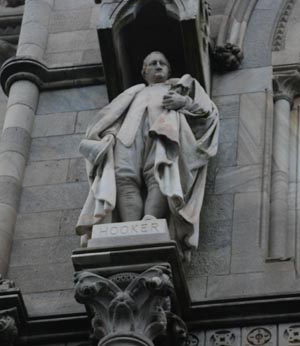
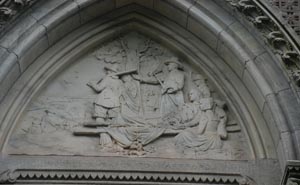
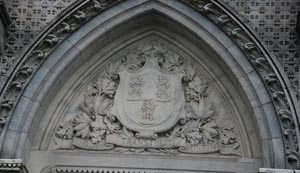
Thomas Hooker and his journey are memorialized in bas relief on the capital building in Hartford. source
210 Capitol Ave, Hartford, CT
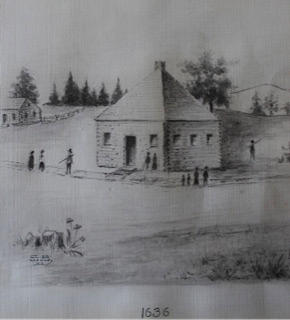
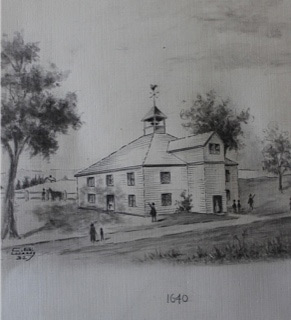
The first two meetinghouses were located where the Old State House stands today. “he first, built in 1636, was a small log structure and was given to Mr. Hooker to be his barn when the second was built in 1640.” History of Center Church
800 Main St, Hartford, CT
Hooker remained undistracted from the singular task (of preaching) for sixty-one years. He serves as a faithful example to all successive generations of the necessity of keeping one’s eyes on the most important task – the proclamation of Jesus Christ.
AP, pg 95
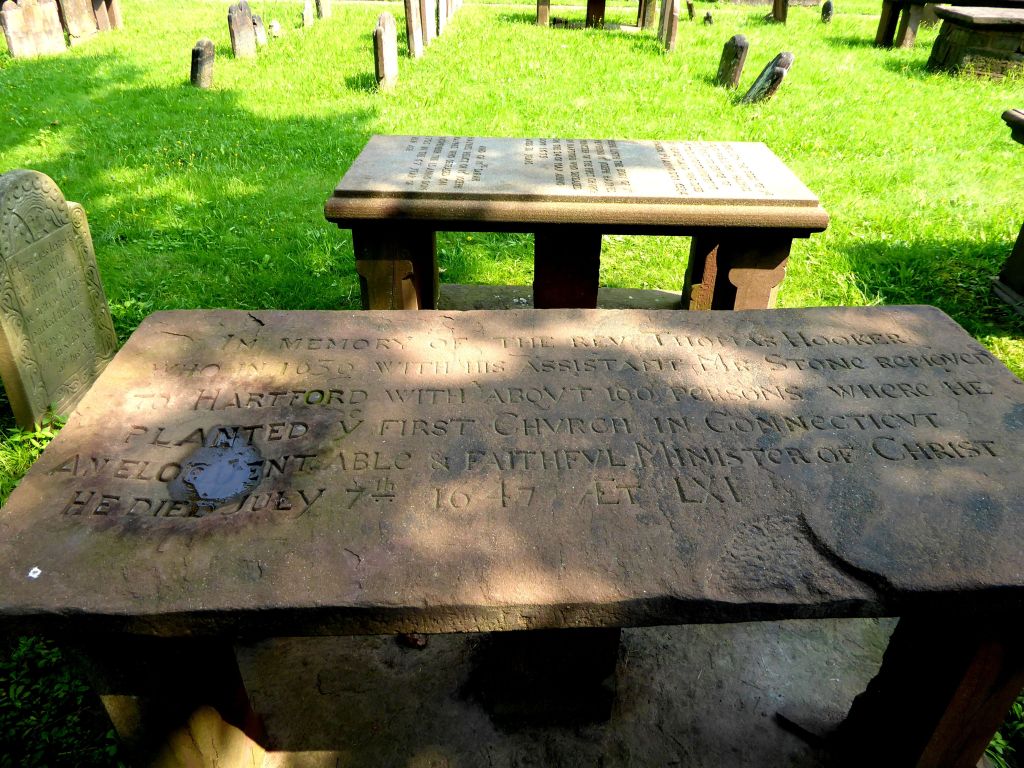
Hooker died at age 61 in the influenza epidemic and is believed to be buried in Hartford’s Ancient Burying Ground.
60 Gold St, Hartford, CT
Additional resource: Thomas Hooker and the Doctrine of Conversion by Iain Murray
Chapter 5 Thomas Shepard 1605-1639
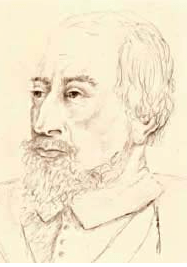
“I saw the Lord departing from England when Mr. Hooker and Mr. Cotton were gone.” Thomas Shepard, his wife and infant son arrived in Boston on Oct 3. 1635. In February of 1636, after a public assembly was convened, a permanent church was founded in Cambridge, of which Shepard was installed as a Congregationalist pastor. (pg 102-103)
Shepard was in the middle of the antinomian controversy regarding Anne Hutchinson that continued from Oct 1636 to March 1638. (pgs 105-107) He was also intimately involved in the founding of Harvard College and lobbied for it to be located in his hometown of Cambridge. (pg 108) After his first wife died, he married Joanna Hooker, the eldest daughter of Thomas Hooker. (pg 111) He died at age 44.
“The first Meeting House was built in 1632 near the corner of the present Dunster and Mt. Auburn Streets. Thomas Hooker became the first minister in 1633. In 1636, he and most of his flock moved to Connecticut. A new church, the First Church in Cambridge, was gathered on February 1, 1636 under Reverend Thomas Shepard, a significant leader of the great Puritan migration to New England in the 1630s. In the first Meeting House were held the sessions of the General Court of Massachusetts, which banished Anne Hutchison from Massachusetts in 1637.
By order of the General Court of Massachusetts, Harvard College was founded in 1636. A year later, because of the influence of Thomas Shepard, the college was located in Newtowne (now Cambridge), where the students might profit by his evangelical preaching.” History of First Parish Cambridge
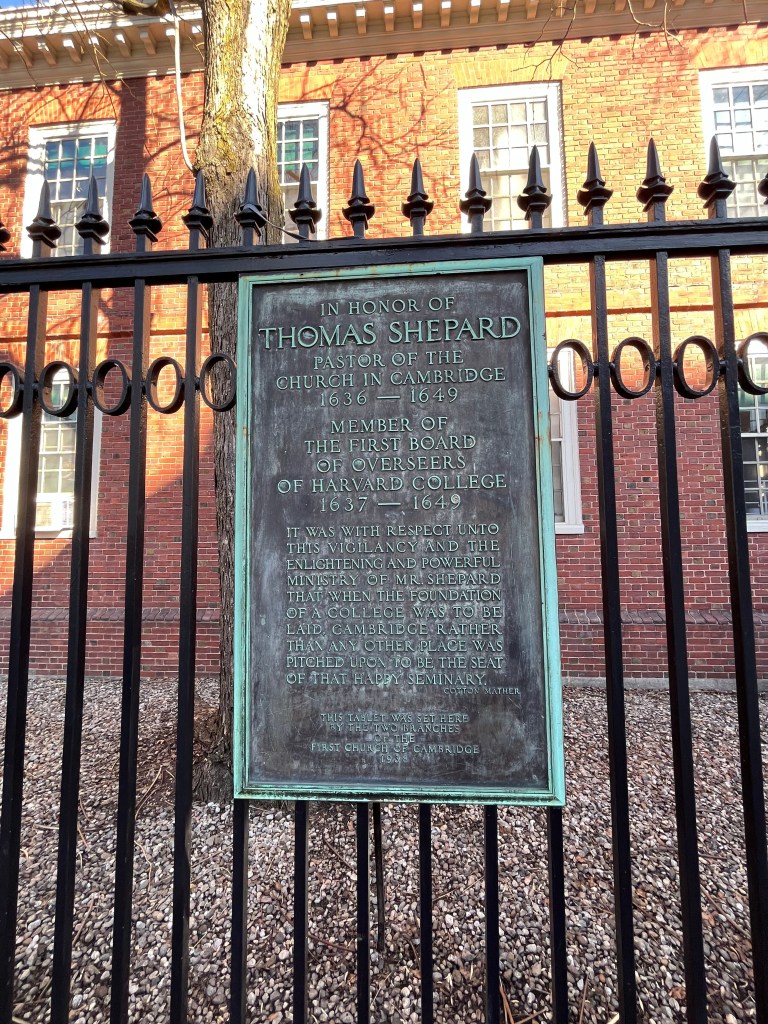
Harvard still commemorates his involvement in starting the university with a plaque.
“In honor of
Thomas Shepard
Pastor of the
Church in Cambridge
1636 – 1649
Member of
the first Board
of Overseers
of Harvard College
1637 – 1649
It was with respect unto this vigilancy and the enlightening and powerful ministry of Mr. Shepard that when the foundation of a college was to be laid, Cambridge rather than any other place was pitched upon to be the seat of that happy seminary.
Cotton Mather“
1341 Massachusetts Ave, Cambridge MA
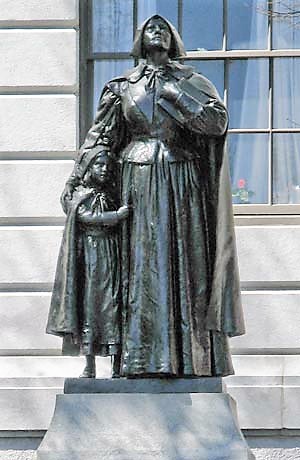
A note about the Anne Hutchinson controversy. As a member of John Cotton’s congregation, she began teaching Antinomian doctrine (“extreme focus on the grace of God to such an extent that it rejected any Christian obedience”) in a home bible study. “she taught the indwelling of the Holy Spirit afforded believers with “immediate and special revelations” that “superceded all other sources of authority – even Scripture itself” “Shepard led the Synod hearings. (AP pg 105) She was banished in 1638. The state of Massachusetts has memorialized her outside the State House.
Massachusetts State House, Beacon St, Boston, MA
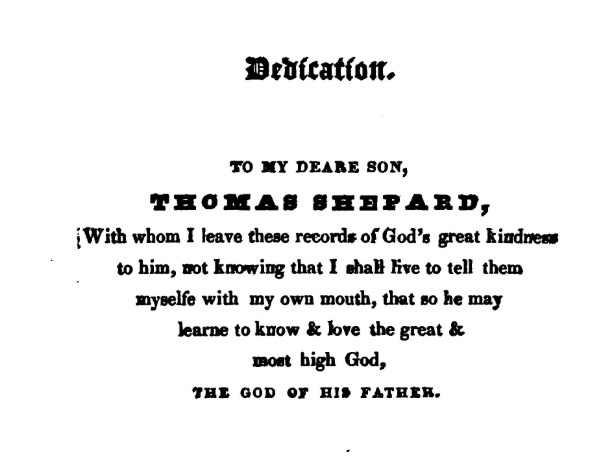
Thomas was married three times and produced at least seven children. He writes to his son, Thomas below.
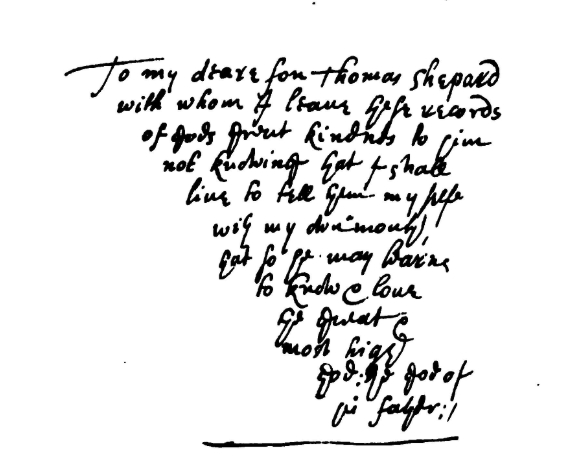
He is buried in Cambridge Cemetery. I believe the grave may be unmarked.
“Shepard was laid to rest in Cambridge and was ‘universally lamented by the whole colony, in whose service he had exhausted all his powers.’ While he did not possess the titanic intellect of John Cotton or Thomas Hooker, he was ‘one of the best loved men.’ ”
(pg 112)
76 Coolidge Ave, Cambridge, MA
Chapter 6 – Anne Bradstreet 1612-1672
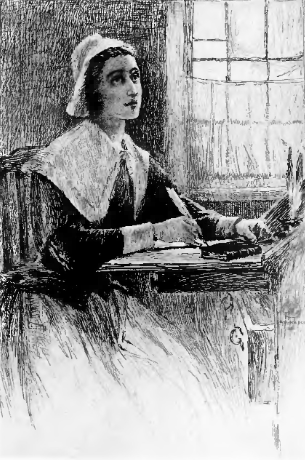
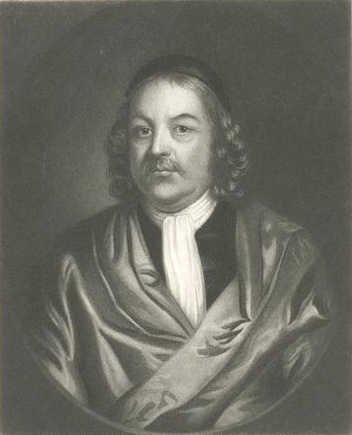
Anne and her husband Simon, along with John Winthrop, her parents and siblings sailed on the Arabella in 1630 landing in Salem in June. Ultimately ending up in Charlestown for more favorable living conditions. Their “Charlestown church (under Pastor John Wilson and John Cotton) relocated to Boston not long after it had been established and became the First Church of Boston.” (pg. 123)
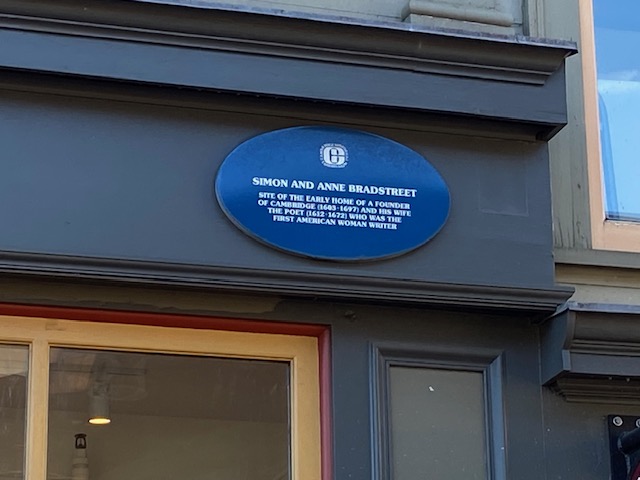
Simon and Anne Bradstreet
site of the early home of a founder of Cambridge (1603-1697) and his wife the poet (1612-1672) who was the first American woman writer
1380 Massachusetts Avenue Cambridge
The first home Anne and Simon moved into sits on what is now known as Harvard Square, and the cow pasture next door was in what is now Harvard Yard…Although sparsely furnished, Anne and Simon’s home had a table for meals, a cupboard for tableware and other items, benches, and a bed. (pg. 124)
Harvard University started in 1638 near where their first home had been. (pg. 131) Simon and his father-in-law Thomas Dudley were both instrumental in the founding, and two of Anne and Simon’s sons were graduates of Harvard (Samuel the class of 1653 and Simon the class of 1660). source
Harvard dedicated a wrought iron gate to Anne Bradstreet in 1997, featuring a quote from one of her poems. Located across from the Harvard Science Center next to Holworthy Hall.
1824 Cambridge St, Cambridge, MA
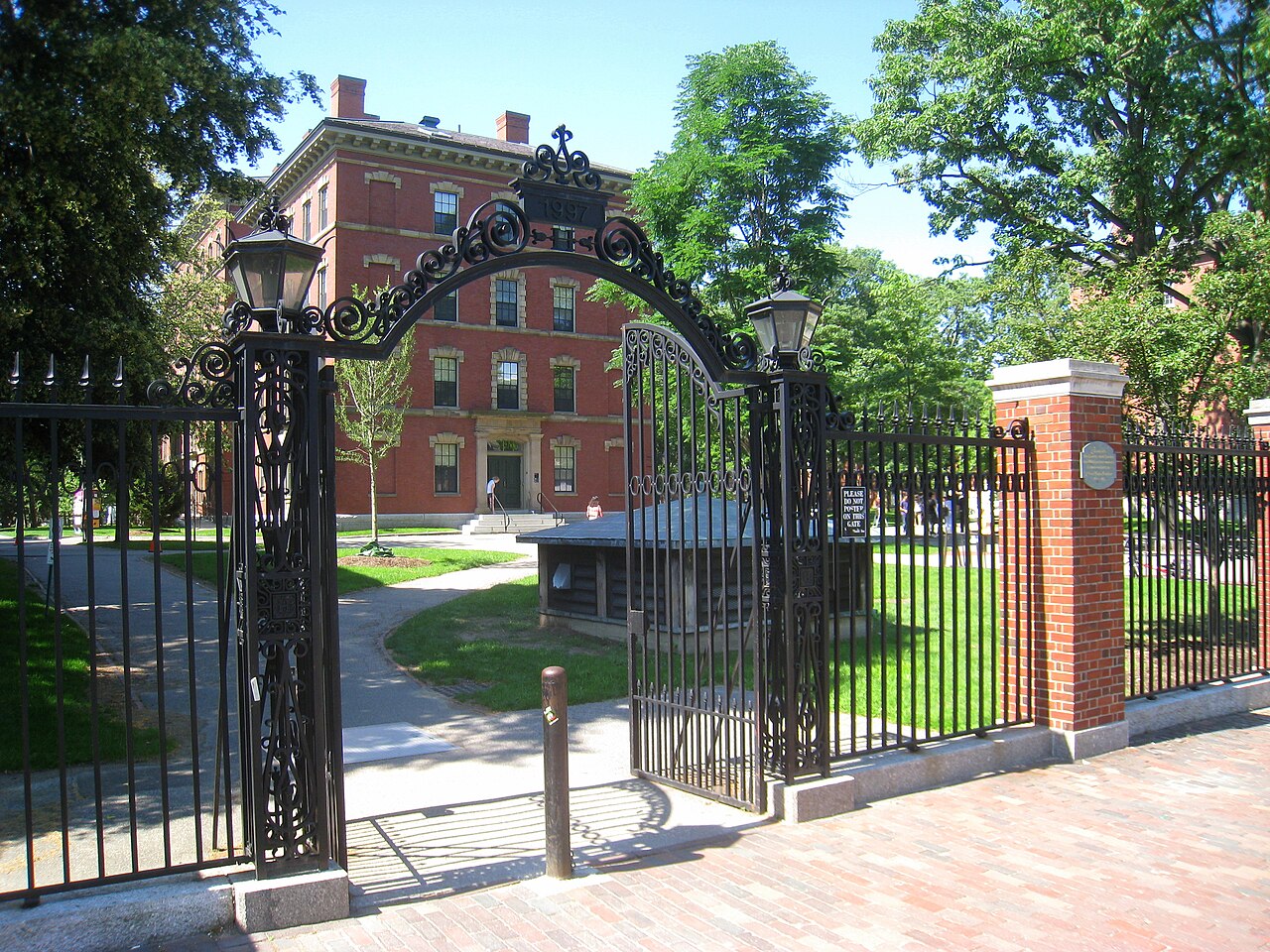
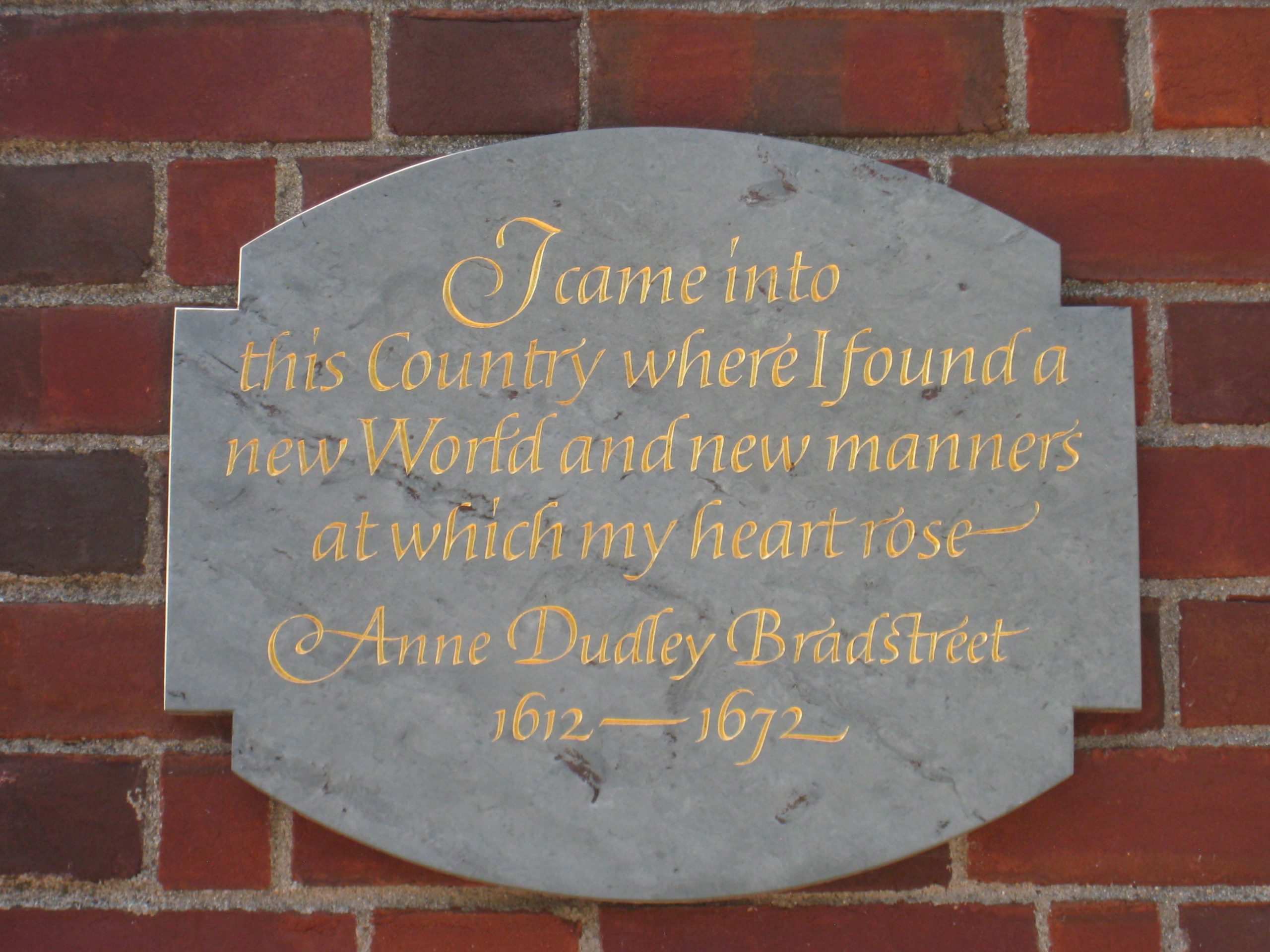
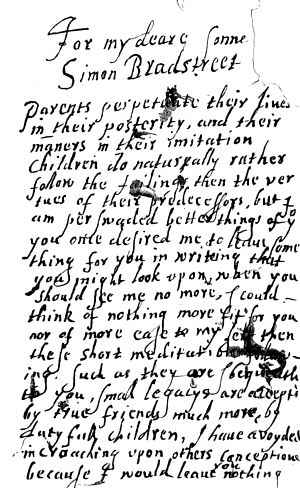
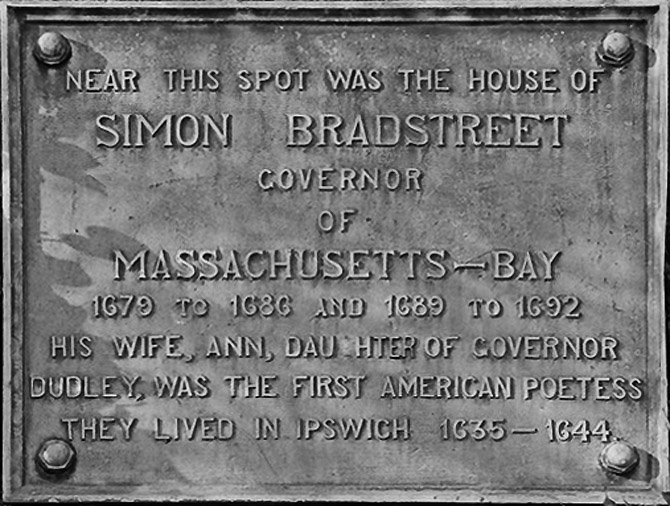
Their next move was to Ipswich, MA in 1635. Anne was to find time for her writing here. Here is a sample of her famous poems.
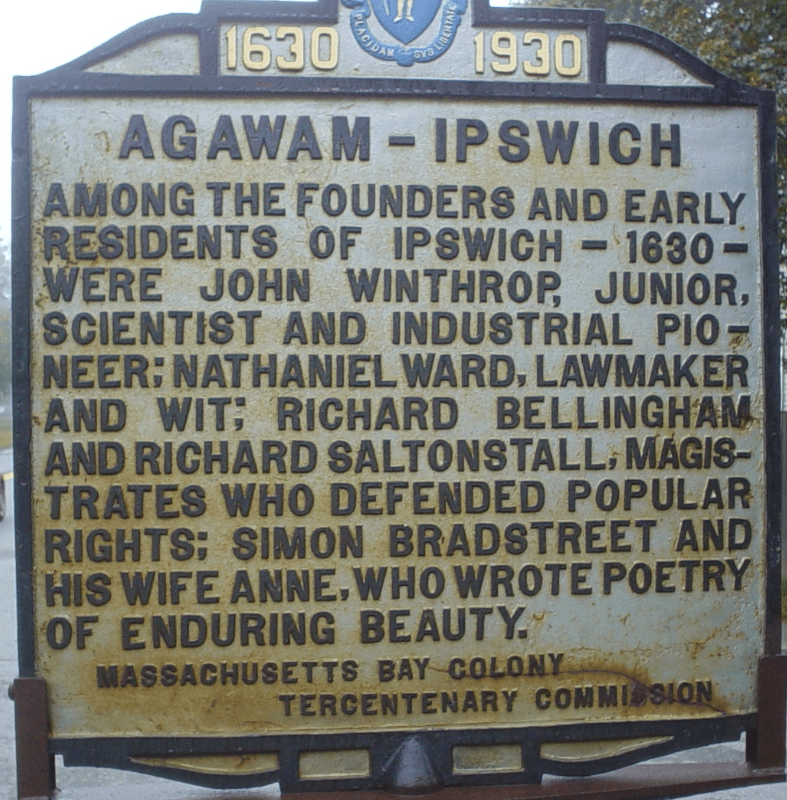
Among the founders and early residents of Ipswich – 1630 – were John Winthrop, Junior, scientist and industrial pioneer; Nathaniel Ward, lawmaker and wit; Richard Bellingham and Richard Saltonstall, magistrates who defended popular rights; Simon Bradstreet and his wife Anne, who wrote poetry of enduring beauty.
86 Country Road, Ipswich MA
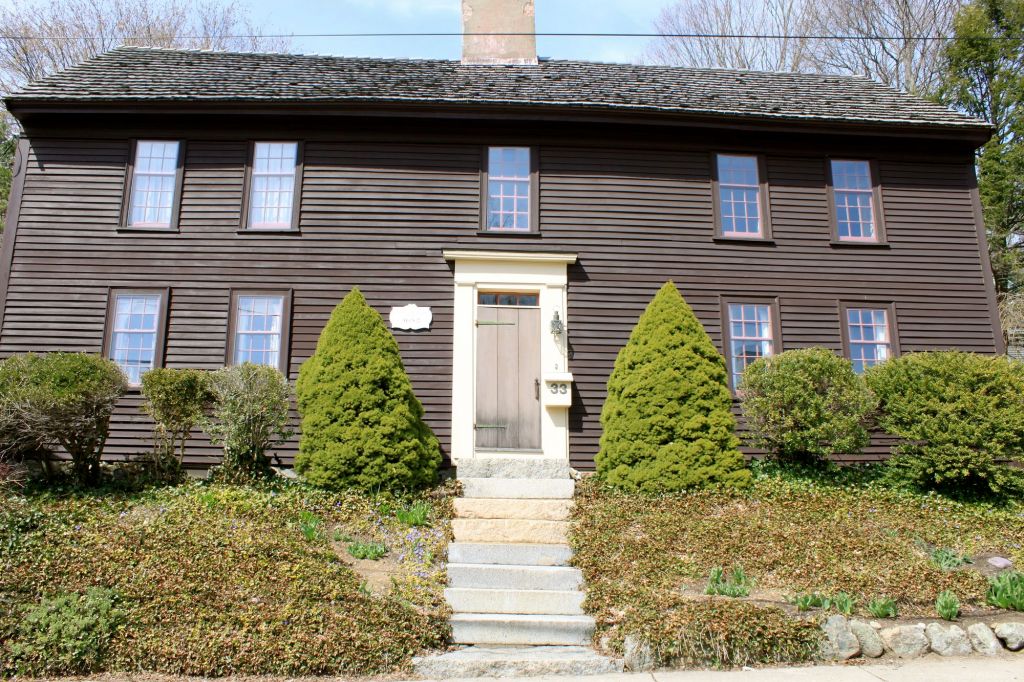
The Caldwell house sits on the lot granted to Simon Bradstreet, who became Governor of Massachusetts, and his wife Anne Bradstreet, America’s first published poet, who lived in Ipswich until 1644. source
33 High Street Ipswich, MA
In 1644, Simon moved the family yet again, this time to Andover. She spent many years in frail health and lost loved ones as well. Always, putting her emotions down in her poems. In 1670 the Bradstreet’s lost their home to fire. A new home was built on the same site. (pg. 138)
In silent night when rest I took,
Upon the Burning of Our House
For sorrow near I did not look,
I wakened was with thund’ring noise
And piteous shrieks of dreadful voice.
That fearful sound of “fire” and “fire,”…
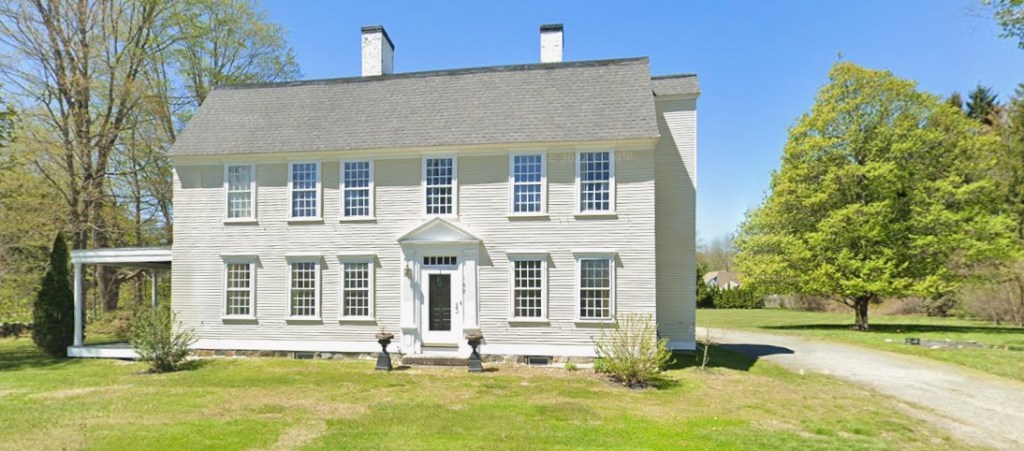
The building known today as the Phillips Manse is also the site of the Bradstreet home in Andover that burned in 1666. “Part of the Anne and Simon Bradstreet home that burned in 1666 was built into the back of the Phillips Manse.” An interesting fact, “the Rev. Phillips Brooks, who wrote the lyrics to “O Little Town of Bethlehem,” spent his summers at the house in the 1800s.” (source)
Excavations have revealed many artifacts. The remaining garage has 17th century structural elements including a door. Bricks from their chimney, charred remains, sewing tools, and a sleigh bell are among other items found. This lecture explains with pictures.
168 Osgood St, North Andover, MA
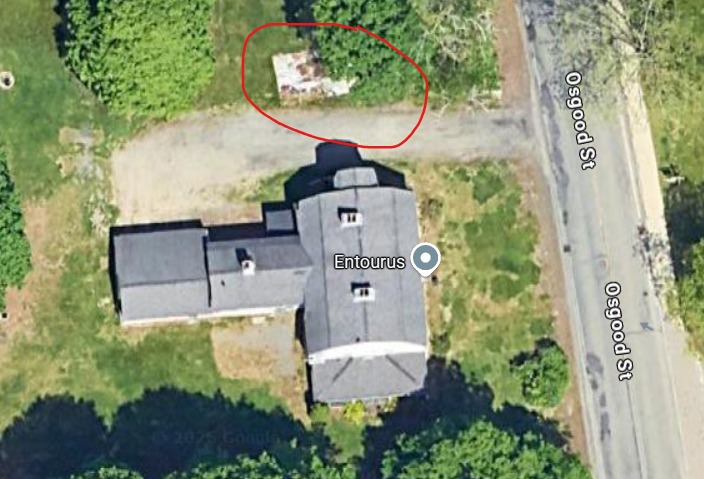
In 1672 Anne passed away at age 60 as the result of many accumulated ailments. She was buried in Andover in an unknown grave. Simon married again and lived to the age of 94. “Many historians believe her body is in the Old Burying Ground at Academy Road and Osgood Street in North Andover, MA.
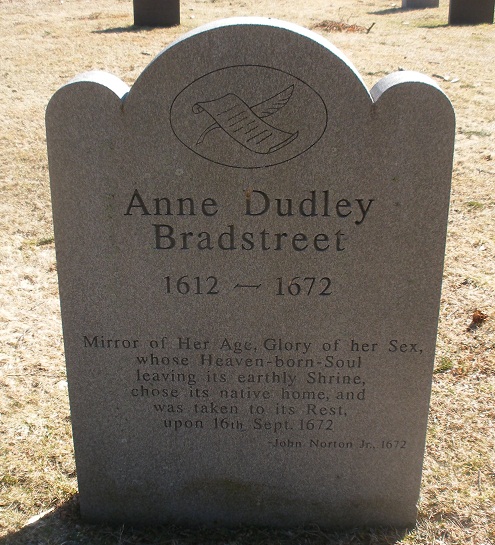
Simon moved to Salem, MA and remarried after his wife’s death, he died in 1697 and his centotaph is in the Burying Point Cemetery. “the Bradstreet tomb which was sold to the Hawthorne family in 1789, who, “having taken possession, with no further scruple cleaned out the tomb, throwing the remains of the old Governor and his family into a hole not far away.” source
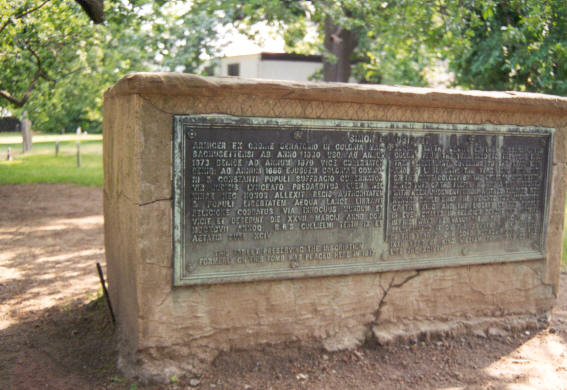
51 Charter St, Salem, MA
Resources:
Anne Bradstreet (1612-1672): Poet of Purity Audio lecture
Thomas Hooker & the Doctrine of Conversion Audio Iain Murray
The Autobiography of Thomas Shepard: The Celebrated Minister of Cambridge
Finding Anne Bradstreet lecture on Anne’s home excavation
Puritan Wives: The Tenth Muse, Anne Bradstreet
Puritan Wives: Anne Hutchinson- Screeching usurper, or passionate devotee?
 Beside Old Hearthstones - An American Evangelical Church History Tour
Leave a comment