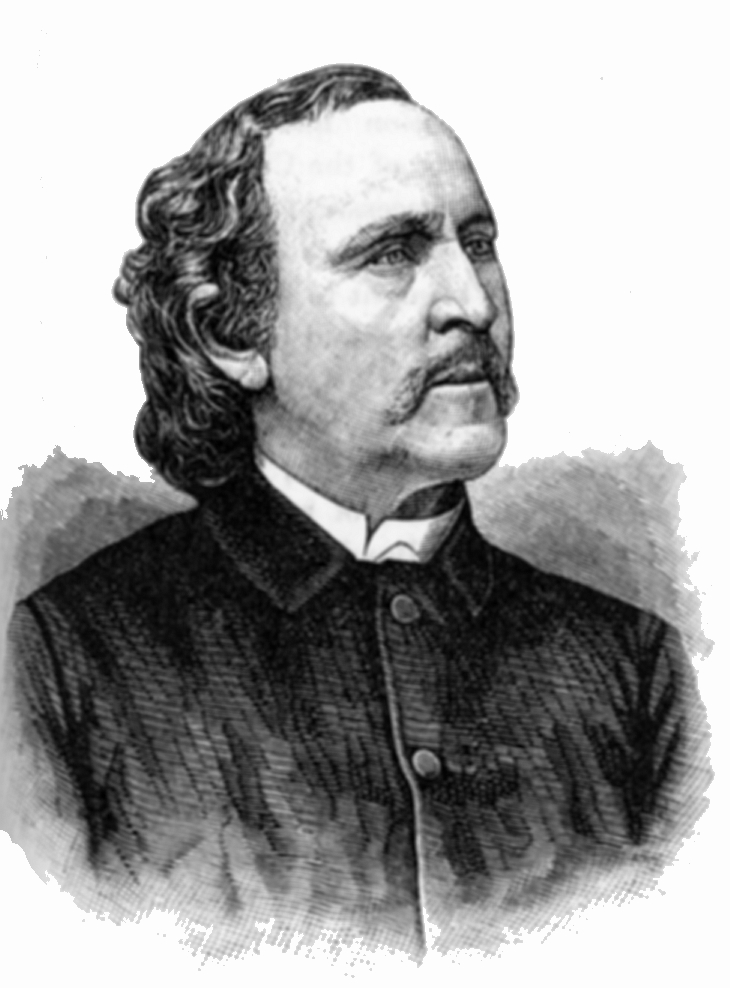
Matchmaker and biographer for Adoniram Judson, pleaded with President Lincoln, counseled a Lincoln conspirator, and much loved by all.
Abram Gillette lived a full and interesting life! He introduced Adoniram Judson to his third wife, was present at the hanging of the Lincoln conspirators as counsel to Lewis Powell, he pastored in three of our biggest cities and was known as the kindest of shepherds by all.
“There are men of genius and culture, of generous and grand aspirations, who from childhood through youth and manhood, have no other object in life than to win souls. They meet merchant-princes, statesmen and scholars, as peers ; and the pure, true mission of the Gospel herald, appreciated by such men, causes their own superficial life and influence to dwindle and pale in the comparison. They see crowds gather indeed about the coffin of the sons of fortune, but with eyes that speak no affection ; while about the grave of the preacher that won and the pastor that led them, the weeping crowds of sincere mourners cluster, till the new laid sod is watered as by a shower with falling tears…
Reminiscences of the life and labor of A.D. Gillette, D.D
the true, the honored, the loved pastor, has something in his character, his life, his labor, the world wishes to remember.”
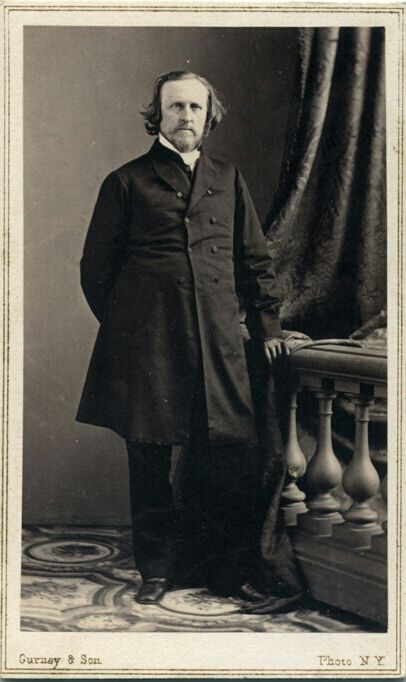
There are no historical markers and not many remembrances of this godly man. But the souls he helped to heaven are the great cloud of witnesses to his life as a faithful shepherd to his people. Thankfully, one man wrote his biography so we can remember how God uses mere men. I will quote often from this work.
early life and family
Abram Dunn Gilette was born on September 2, 1807, in Cambridge, NY near the Vermont border. His family was originally from Piscataway, New Jersey, but moved soon after the Revolutionary War. The family had at least 10 children, 3 died young. The family home burned down in 1813 and soon after, Abram was sent to live with his grandfather and an uncle to work and live because the family could not afford to stay together. Then, in 1818 his father died suddenly at age 57 when Abram was only 11. He spent many years in Hartford, CT with an aunt and uncle until God called him to ministry.
Abram married Hannah Jenkins in July 1835 when he was 27 and she not quite 17. They met at the home of her father in New York City and were happily married for 47 years until his death.
In 1835, after a residence of a few months in Philadelphia, he had fulfilled the promise of his heart by marrying Hannah, the eldest daughter of his friend James Jenkins, Esq., of New York, at whose house he had been entertained on the occasion of his first visit to the metropolis. About the home over which she presided clustered a varied company of friends, social at all times, but belonging to many walks and diverse creeds…It was the home to which the great Judson came as comes a brother, and where he met and wooed his wife, Emily Chubbuck, (Fanny Forrester); where such missionaries as Dean and Abbot, and the Karen and Japanese converts, knew the welcome they could not doubt.
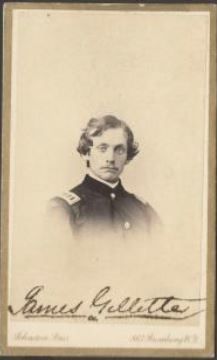
They had at least 4 sons (James, Daniel, William and Walter) and 2 daughters.bOne daughter, Evelyn, died at the age of 3, Gracie died as a young bride and James also died before his father. His sons, Col James Gillette and Corporal Daniel Gillette, were soldiers in the Civil War for the Union army. They spent time in prison and on the battlefield.
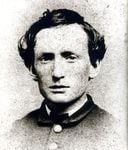
the ministry years 1834-1882
NEW YORK STATE 1831-1835
In his teen years, he desired to be educated for the ministry and struggled to find time and money for this goal. He wandered a bit and 1831, when he was 23, he was brought to a little Baptist church in Schenectady, NY (of unknown name so far in my research) that needed a pastor. He filled their pulpit but hesitated to be settled until he could continue his education. Yet, he stayed and the church grew from 60 to 600 under his ministry. He was a single man during these years.
PHILADELPHIA 1835-1852
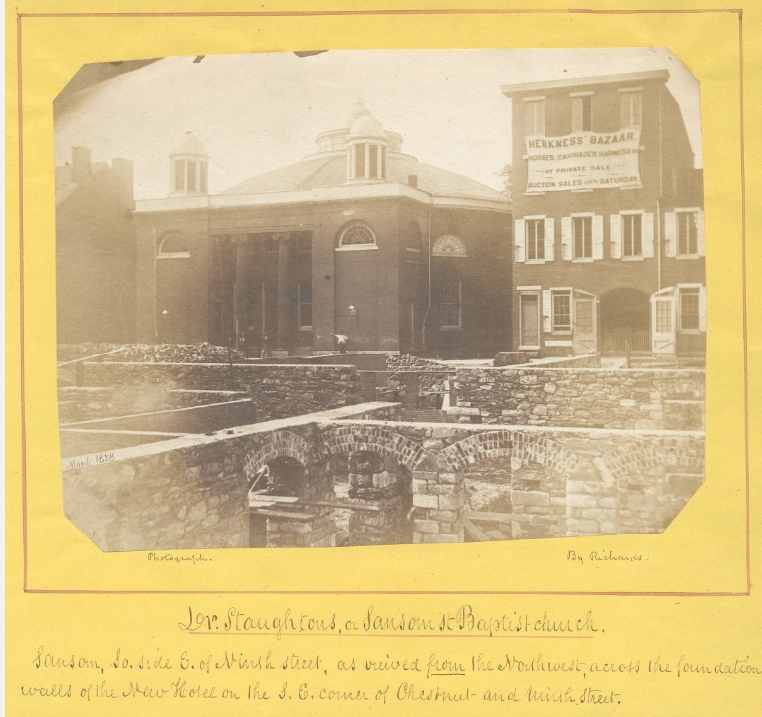
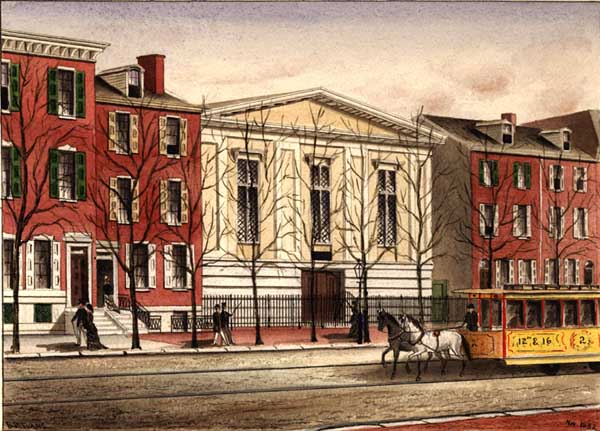
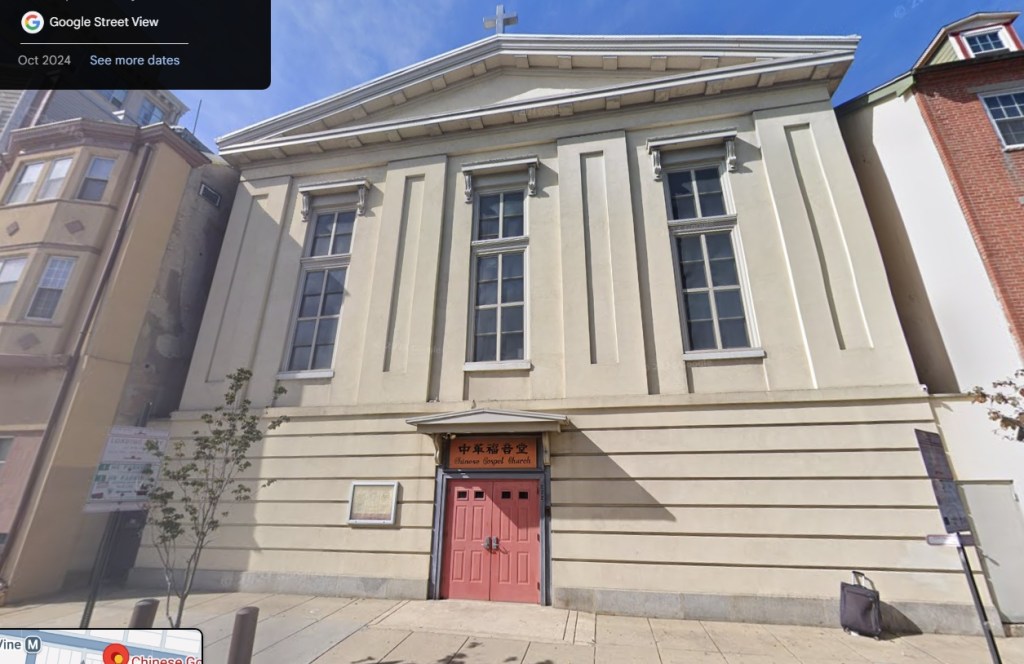
In 1834 he was called to Philadelphia’s Sansom Street Baptist Church. “Its first pastor was the celebrated and popular Rev. William Staughton, D.D., who was regarded as one of the greatest pulpit orators of his day in America.“ Here he served until 1838 when he was called to a new church, Eleventh Baptist Church also in Philadelphia.
222 N 12th St, Philadelphia, PA and near 879 Sansom St, Philadelphia, PA
There was a peculiar magnetism in his manner which drew people to him and made them feel that he was their sympathizing friend. None went to him for comfort without realizing that his heart felt for them. His presence, whether in the sick-room or in the prayer meeting or the crowded assembly, was like a perpetual benediction.
ADONIRAM AND EMILY JUDSON 1846
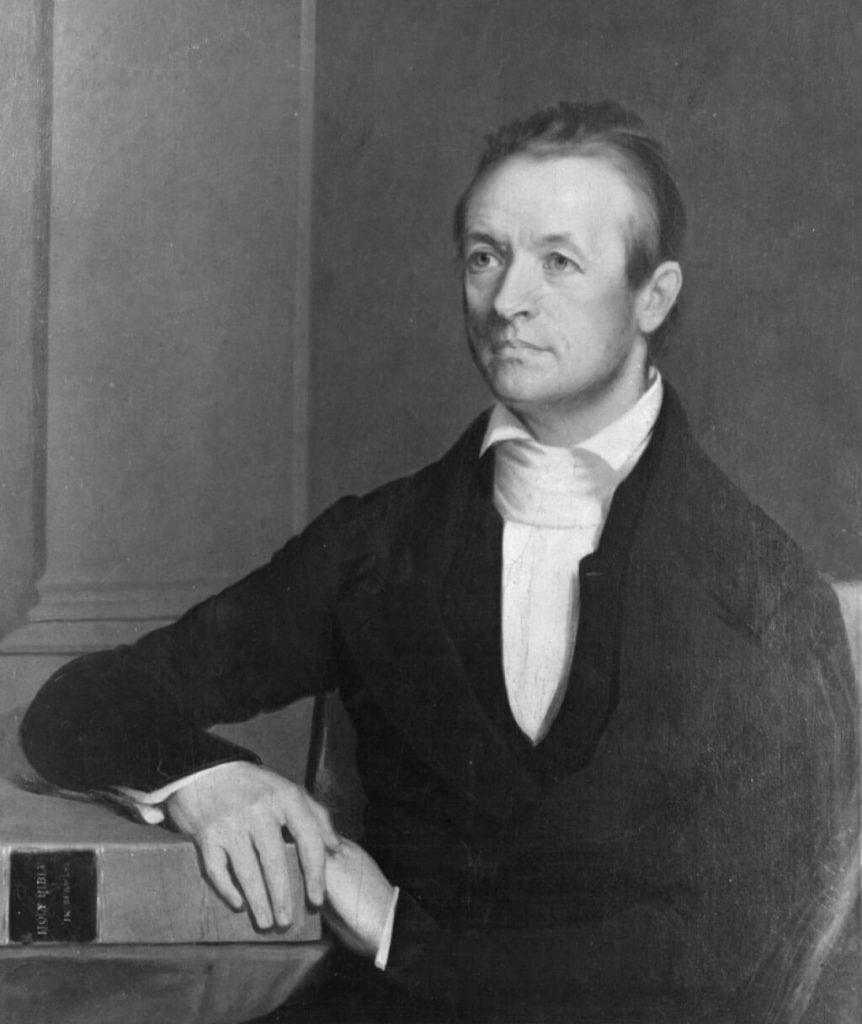
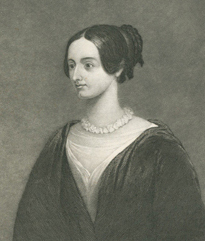
It was through his efforts that Dr. Judson visited the Philadelphia churches. He made his home with one of Dr. Gillette’s members (Mr and Mrs W. S. Roberts), and was on terms of warm intimacy with him, and while visiting at the house of Dr. Gillette met Miss Emily Chubbuck, who afterward became his wife. Referring to this event, Dr. Judson, in a letter to his friend, said, ” I never cease to thank God that I found her, accidentally as it were, under your roof.” When the sad news of Dr. Judson ‘s death came over the waters, he resolved to improve the event for the good of the living, and prepared and preached a discourse which, as above stated, was published by him.
In 1814, Adoniram Judson was to become the first supported missionary of the newly formed Baptist Mission organization in Philadelphia. William Staughton (Gillette’s predecessor) was the secretary. He had written about The Baptist Mission in India in 1811 and so had begun the Hand of Providence that would introduce Adoniram to Emily at Abram and Hannah’s home in 1846. After Judson’s death Gillette would become his biographer, writing A Sketch of the Labors, Suffering, and Death of the Rev. Adoniram Judson, D.D. in 1851.
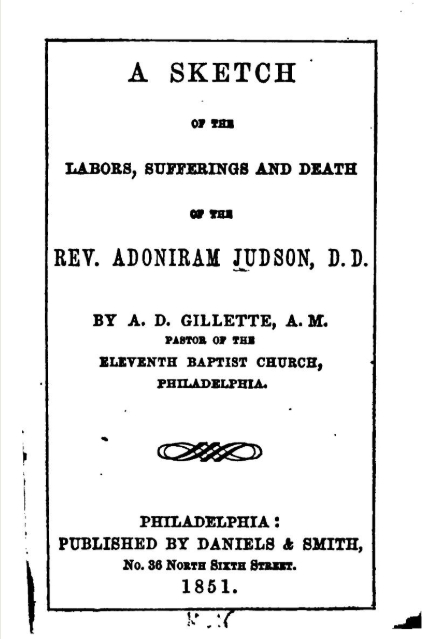
“In December of 1845, Adoniram was invited to attend a series of missionary meetings in Philadelphia. To make sure of his accepting, the Reverend Dr. A.D. Gillette of Eleventh Street Baptist Church of that city visited him in Boston with an offer to accompany him on the trip.” …On the journey Gillette gave him a book by Fanny Forester to pass the time…”Who is Fanny Forester?” This writing has great beauty, great power”. Gillette told him her real name was Emily Chubbuck and she was currently a guest in his home. They met on Christmas Day. Less than a month later he proposed.
Read more details of their meeting in To the Golden Shore chapter 7
New York City 1852-1864
After serving Philadelphia for 14 years, he was called to Broadway Baptist in New York City on 23rd Street. His Philadelphia church very reluctantly let him go, he was much loved! The Civil War broke out during this time and his own four sons entered the army. “During all these bloody years he was a constant visitor to the hospitals for the wounded and became active in the work of the Christian Commission in its ministrations to the sick and disabled. His journal records how during the riots of 1863 in New York, he was stoned, insulted, and abused on his merciful errands to Bellevue Hospital.” He was also very involved in the YMCA while in the city, one says of him, “Dr. Gillette stands in my memory and judgment with the four or five men to whom New York is really indebted for the Young Men’s Christian Association as it exists to-day.” His church was open for receiving and distributing hospital supplies and many of his young parishioners joined the fight including his own sons.
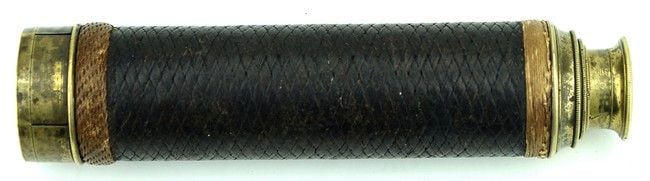

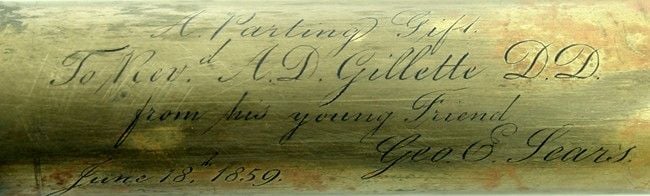
I have not found any artifacts aside from this brass telescope and I am unsure where it is currently located. The inscription reads, “A parting gift to the Reverend AD Gillette, DD from his young friend Geo E Sears June 18, 1859.” A memorial window was erected in the church, but I have not been able to locate it yet.
Washington DC 1864-1869
Another move came in 1864 when called by the First Baptist Church in Washington DC. Abraham Lincoln was President and the civil war was even closer in this location. His church had members sympathetic to both sides. He showed compassion to all, even pleading with Lincoln at times…
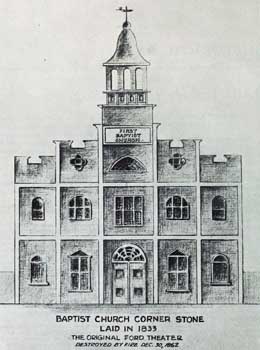
The original church building was located at 10th Street, when they moved to 13th Street, they sold their building to John Ford who converted it into Ford’s Theater. Sadly, this building was destroyed by fire and rebuilt into what we know today at the location Lincoln was shot.
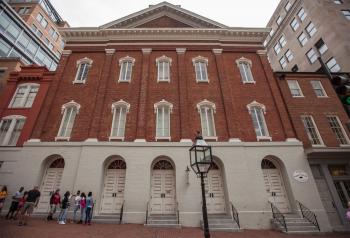
511 10th St NW, Washington, DC
“…his face grew familiar at the White House and at the several departments of the Government. There are men living to-day whose lives he begged at the door of the Executive. Of Mr. Lincoln he used to say he never asked in vain; and even the great War Secretary, hard and unyielding as he seemed to many others, always heard him speedily and patiently. He delighted to recount how Mr. Lincoln, after hearing his plea for the life of a deserter sentenced to death, hesitated long, urging his own duty to the struggling army dying so faithfully and devotedly. ” Yes! Mr. President, but this is scarcely more than a child, and the only one left to his widowed mother.”
Reminiscences of the life and labor of A.D. Gillette, D.D.
” Is that so, Doctor? Well, then let the poor fellow live.” And hastily indorsing a commutation of the death penalty, he handed it to the Doctor and bade him take it to the Secretary of War.
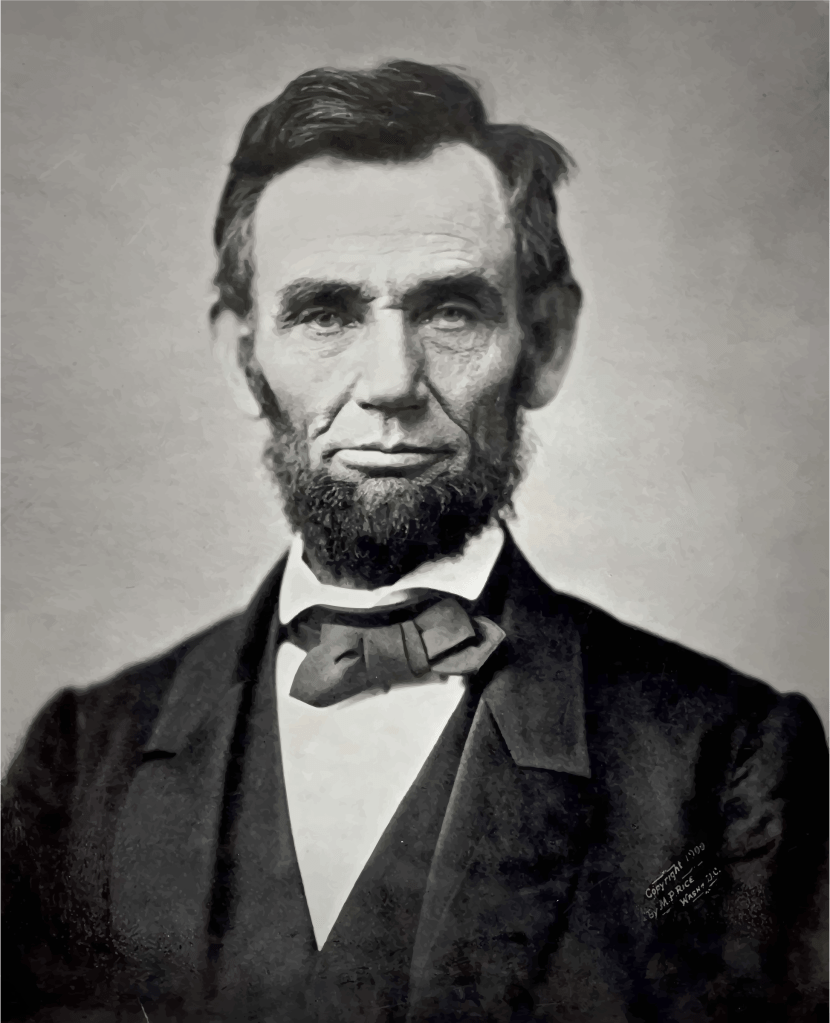
When Lincoln was assassinated, he comforted and exhorted his congregation with these words…
“When the Executive head of a great nation falls, all nations become mourners ; for they know that the ruler they look to, to carry them on in improvements and give them desirable perpetuity and stability upon the earth, is also a man, and must ere long die, and may be called to his dread account in a moment least expected, and when they seemed most to need his guiding hand in the affairs which so vitally concern their common and individual good…
The lesson of this hour is — God seen above all national calamities…Abraham Lincoln is dead — as we speak of death; his ever-laboring brain was pierced by a bullet, shot from a pistol by the hand of a drunken, debased assassin, April 14, 1865…
I fear, my brethren, that when our heavenly Father saw that His goodness did not deter us from putting our trust in princes, nor from resting too entirely on an arm of flesh, He permitted a reckless wretch to assassinate our good President, and cowardly (Lewis Powell) steal into the home of our chief of cabinet, and with bloody hands complement and companion that act, at least in extent, and even beyond in diabolical intentions of butchery, and so commit the deed that has disgraced the name of civilization.”
sermon God seen above all national calamities: Gillette, Abram Dunn
Quite unexpectedly, the “coward” Lewis Powell, who attempted the murder of Secretary of State William Seward, requested Gilette to come to his prison cell for counsel. It is an incredible story.
The Reverend Doctor Abram Dunn Gillette was greatly puzzled. On the afternoon of July 6 (1865), Assistant Secretary of War Thomas T. Eckert arrived at Dr. Gillette’s front door in a carriage and asked the pastor of Washington’s First Baptist Church to attend to the doomed conspirators at the Arsenal. Seward’s assailant, Lewis Paine, had personally asked for Dr. Gillette by name and desired his spiritual attendance and consolation.
All excerpts above from Alias “Paine” by Betty J. Ownsbey
Upon reaching the Arsenal, the perplexed but willing and kindly minister was conducted at once to Powell’s cell. The good clergyman knew nothing of the condemned man and was “much concerned to learn why he had chosen him, a loyalist, in preference to other clergymen of his own faith who were in admitted sympathy with the Southern Cause.”
Powell explained that he had heard him preach not long before:
“Do you remember a bitter, sleety Sunday last February, when you preached in the Reverend Dr. Fuller’s church in Baltimore? It was then I heard you. I sat with two ladies in one of the end pews to the right of the pulpit. There were scarcely more than a score of people in the church as the walking was so icy and dangerous. My companions and myself were the only occupants of the end pews on either side of the chancel. I had hoped that perhaps you might remember the circumstances, as you frequently turned towards us as if addressing us.” (According to the “Local Matters” section of the Baltimore Sun for February 13, 1865, this would be Sunday, February 12.)
Powell related to Dr. Gillette that he was the son of a Baptist minister and in conversation pertaining to his mother and family, broke down in tears, weeping bitterly for the first time since his sentence had been pronounced.
In conversation with Powell, Dr. Gillette claimed that the prisoner told him that:
“he thought he was doing the right thing in attempting to kill Secretary Seward, as he still claimed to be a Confederate soldier; aside from that, he admitted that he believed it would give peace to the South. He thinks now that it was all wrong, and blames the Rebel leaders for his death, though he did not fear to die. Several times he expressed his thanks for the kind treatment which he received from officers while in the prison. He stated that he was led into the conspiracy by Booth and John Surratt.
Powell continued to agonize over Mrs. Surratt, telling the Reverend Dr. Gillette: “She at least, does not deserve to die with us. If I had no other reason, Doctor – she is a woman, and men do not make war on women.”
Dr. Gillette was impressed with Powell’s intelligence in direct contrast with the newspaper accounts that portrayed him as a coldblooded killer with a moronic mentality. Lewis requested the clergyman to write his parents and tell them he had repented and had his hope of heavenly – if not earthly – pardon. Throughout the long night, the prisoner took special advantage of Dr. Gillette’s ministrations, alternately praying and weeping. His last prayer was, as suggested by his friend, Dr. Gillette, “Lord Jesus, receive my spirit.” Finally, towards dawn, emotionally drained, Powell was able to get about three hours of sleep.
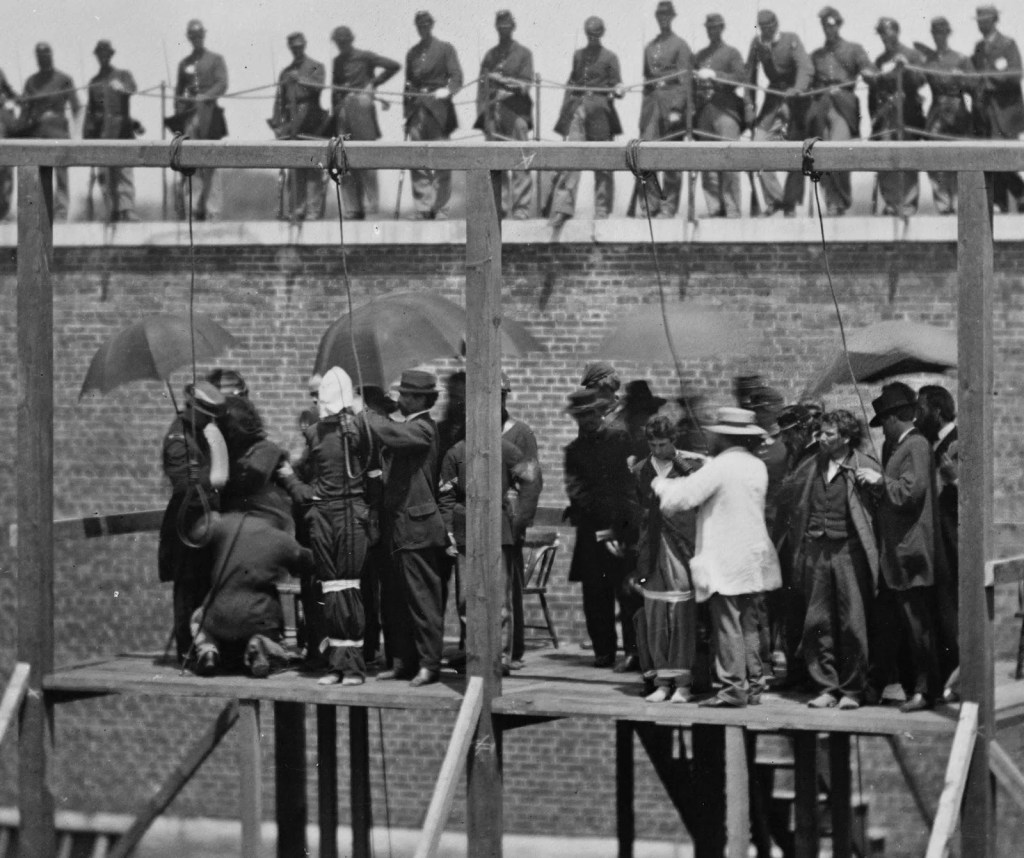
Gilette’s son confirmed that Gilette is standing behind Powell holding the umbrella. Powell has the white shroud over his head.
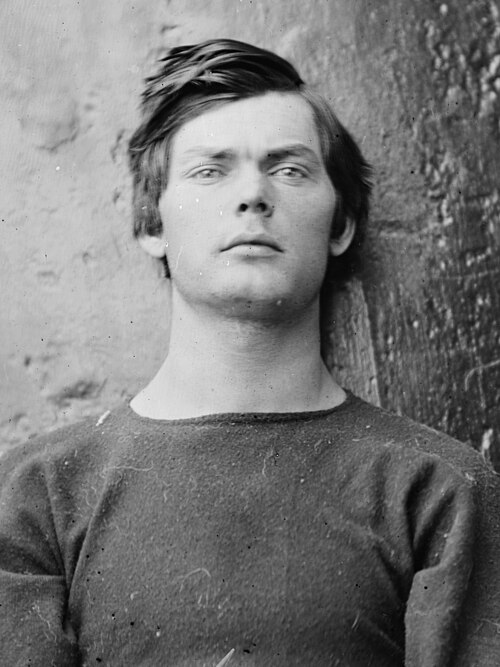
300 5th Ave SW, Washington, DC
I will also recount the story as told by Gillette’s biographer.
One of the most memorable and trying of his public duties was his service as spiritual adviser to the would-be assassin of Secretary Seward, on the memorable night in April 1865, when, of the several high officers of the Government selected for the same fate, President Lincoln alone became the victim of the chief conspirator. When called, after his trial and condemnation, to visit the youth who had with almost superhuman daring entered the house of Secretary Seward, passed all his attendants, mounted the stairs to his bed-chamber, struck aside his nurse, and been foiled in his persistent effort to sever the jugular artery only by the steel garniture which had been made to keep in place the broken jaw of the Secretary, fractured in a recent accident, and who had, after all this, passed coolly and successfully out, striking aside every opposer, and deliberately mounted his horse, which he had left at the door — this mere youth Dr. Gillette found to be the son of a Baptist minister, ingenuous and sincere, in early life a professed Christian. Such had proved the serpent fascination of the chief conspirator, that he had been made to believe that the private assassination of the one whom he regarded the chief violator of the rights of his country, was as honorable and as much a duty as to shoot an enemy in battle. Not till he had taken his seat in the saddle, after his daring attempt, did the character of his act as a crime break on him.
He resolved at once that he ought not, as he had proposed, to ride past the lines of the city and escape. He returned his horse to its stable; he repaired to his boardinghouse ; he awaited arrest ; he offered no defence on his trial ; he met his fate as a penitent for his crime against God and man ; but death to him was that of many who fell in the same cause on the battle-field, except that they were never conscious of wrong, while he was the penitent on the cross, looking to Him who had suffered even for those like him misguided.
Gilette was with him in his cell the entire night before the execution and stood with him on the scaffold and saw the four wretches sent into the life beyond, with all their horrible writhings and sickening gasps. No scene in all that dreadful war equaled that. For days he was bowed in sorrow. He would lie upon the sofa for hours, shading his eyes with his hand as if to shut out the vision of death. At times he would murmur, ” Horrible! ” ” Horrible! ” And start away as if to divert his thoughts from the dreadful theme; and until a year or two before his own change came, he was wont to say that the hours he spent with the four conspirators did more to break him down than all his years of service.
final years and death 1869-1882
Now at age 62 he resigned his pastorship, tired physically and emotionally, but he says, “wearied in mind and body I expect to work until I die.” He headed to Europe to recover and rest. When he returned to America in 1870 he took charge two more churches in Brooklyn. He was crushed by the death of two more children before his own death on August 24, 1882. Abram is buried with his family at Greenwood Cemetery in Brooklyn on Snowberry Path.
He “never wavered in his faith in the glorious doctrines of the Gospel.”
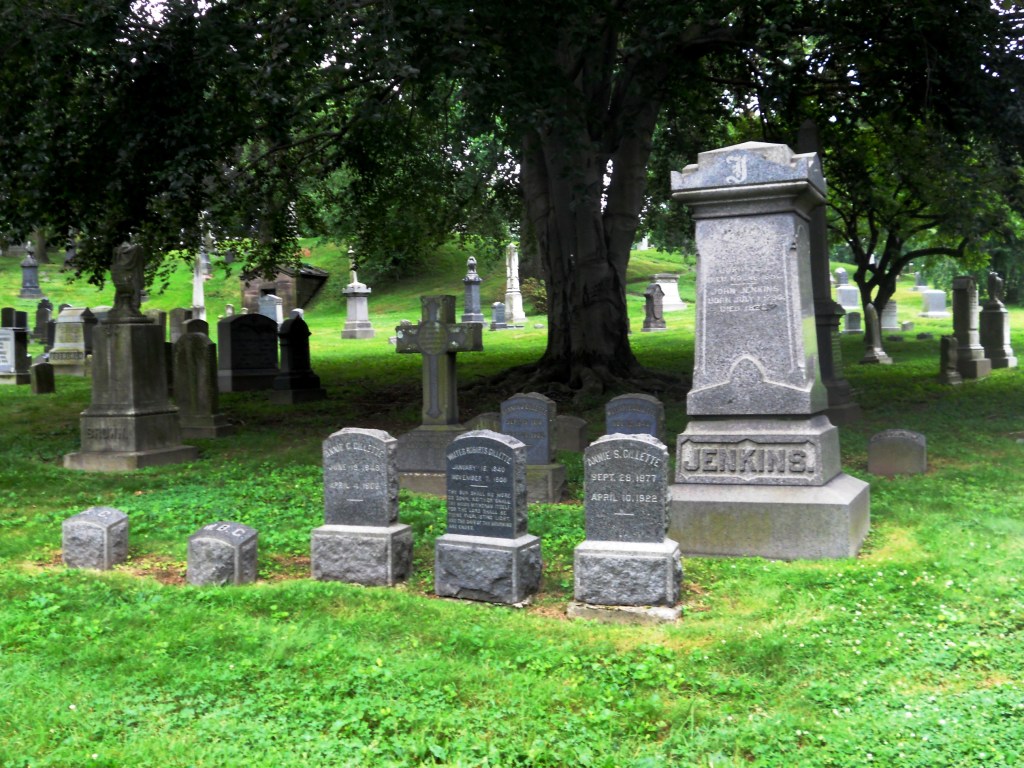
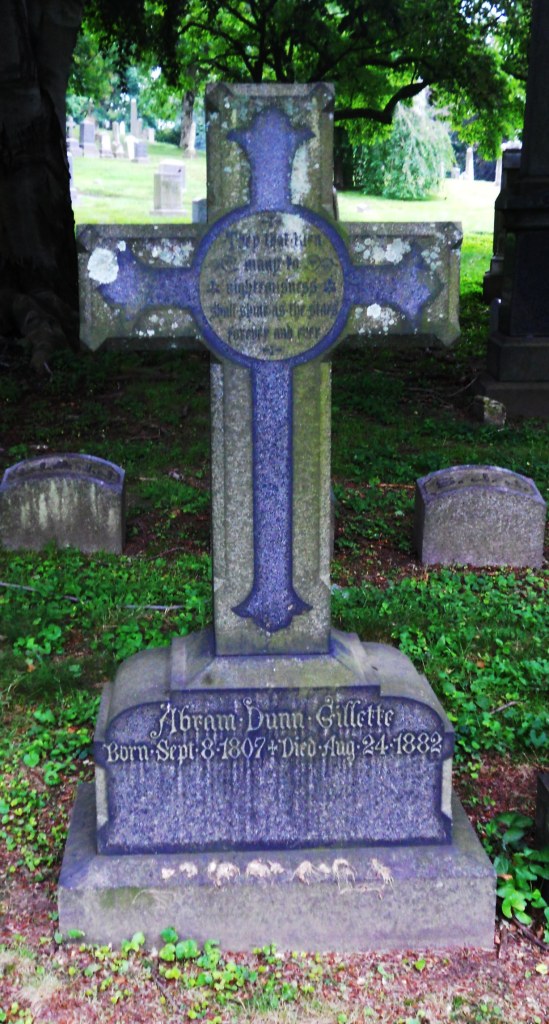
In the family register of glory, the small and the great
Spurgeon
are written with the same pen.
 Beside Old Hearthstones - An American Evangelical Church History Tour
Leave a comment