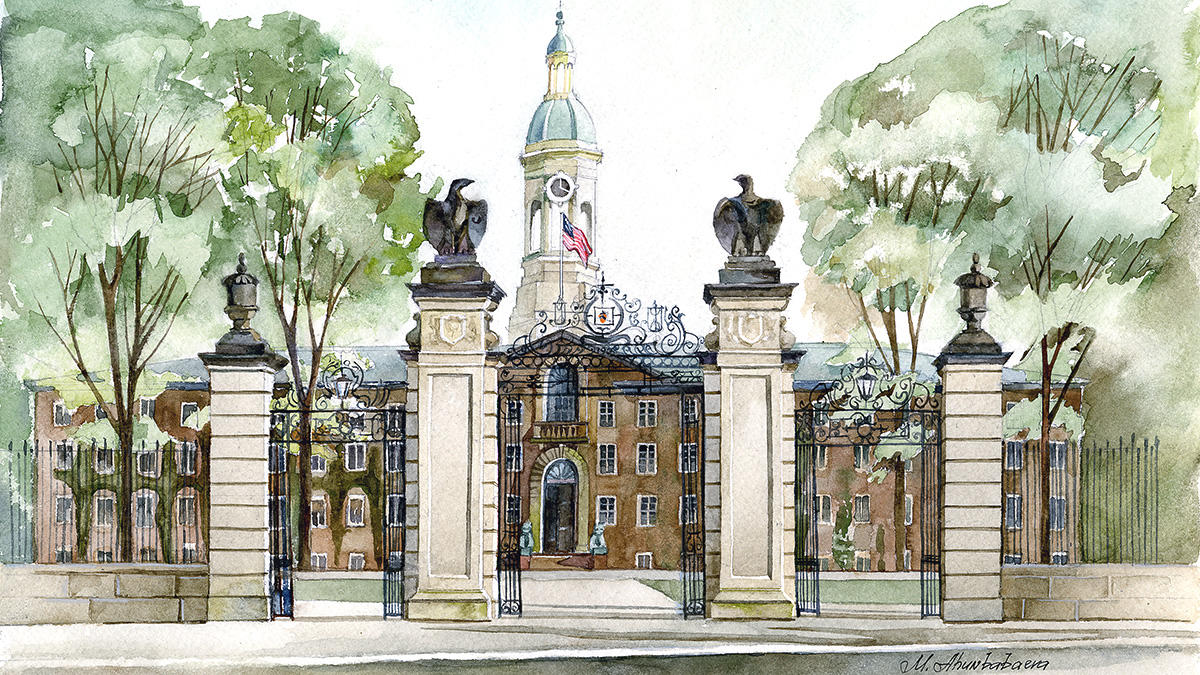
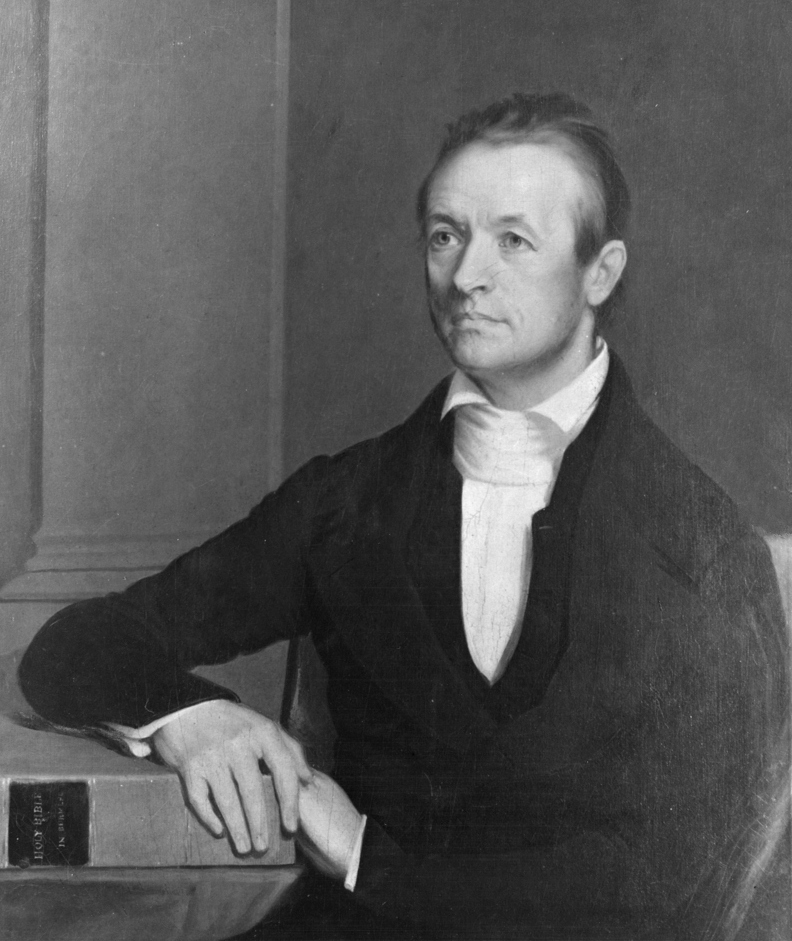
Adoniram Judson 1788-1856
a tour of Malden, Plymouth, and Providence, RI
The Christian life comes down to two simple things: trust and obedience. What does that mean exactly? We could hold a seminar and talk about it. Visual aids are better. Look at a life.
Elisabeth Elliot
Much has been written about America’s most famous missionary. His story is powerful in that it takes a willing man and through his suffering and endurance he sowed the seeds of the Gospel that changed thousands for eternity. All by God’s power through an “earthen vessel”. There are resources at the bottom of this post to learn the details of his story if you are unfamiliar. He grew up around Boston just after the Revolutionary War. His father was a pastor and after a time of rebellion, Christ saved him, and his story is one of the greatest missionary stories of history.
Let’s take a stroll through the places he lived and the artifacts that remain from his life here in America.
Malden 1788-1792
The foreword his biography by Courtney Anderson, To the Golden Shore states this summary of his life. It always moves me. It was quite a life.
“The house is still standing yet time has encroached upon its former state and memories of Judson are now sadly removed. And in truth, that was the trajectory of his life: in navigator’s language, from latitude 42 degrees 25.75’ North, longitude 71 degrees 04.4’ West, to 10 latitude 13 degrees North, longitude 93 degrees East. The great circles of his navigation on our globe had certain intersections:
at an unidentified inn in western Massachusetts;
in a grove behind the Academy at Andover;
in the front room of a commodious house in Bradford;
in the Death Prison at Ava on the Irrawaddy;
beside a long open grave in the tigerish jungle below Moulmein;
in the harbor of the island of St. Helena;
in the city of Philadelphia;
at the seaport of Amherst by the Gulf of Martaban.
And there is a final trajectory on a curve only on Navigator can draw, to an intersection only one Navigator can locate.
This One issues a command:
All power is given unto Me in Heaven and in earth. Go ye therefore, and teach all nations, baptizing them in the name of the Father, and of the Son, and of the Holy Ghost; teaching them to observe all things whatsoever I have commanded you: and lo, I am with you always, even unto the end of the earth.
He obeyed it.”
Circa 1724 Home at 145 Main St, Malden, MA
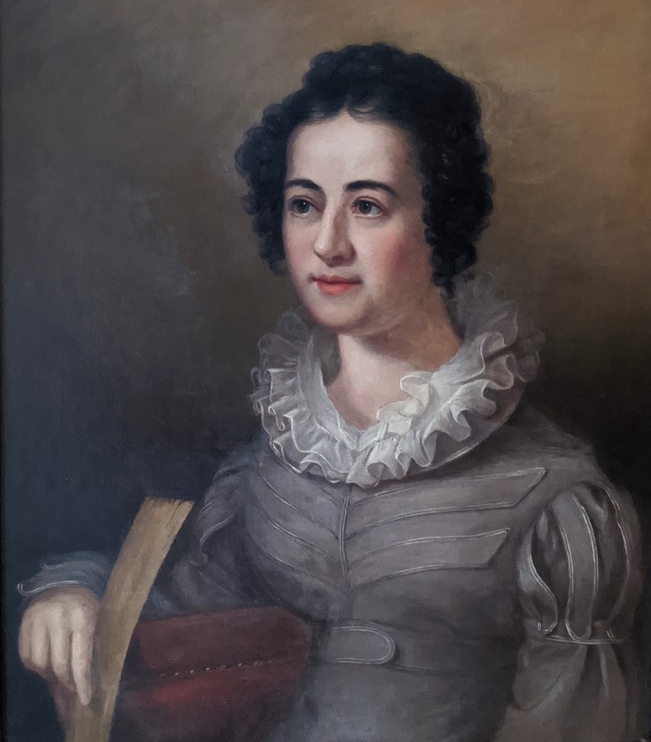
His story begins in Malden, MA. In 1786, Adoniram Judson Sr., a Congregational minister and took charge of the church in Malden just 5 miles north of Boston.
“The family lived in Malden until Adoniram was about four-and-a-half years old. During that time his sister, Abigail Brown Judson, was born, to become the companion of his childhood and his life-long confidante….She remembered hearing her parents relate that when her brother was only four years old, he used to gather together the children of the neighborhood to play church, he officiating as minister ; and that even then his favorite hymn was the one beginning, ” Go preach my gospel, saith the Lord.”
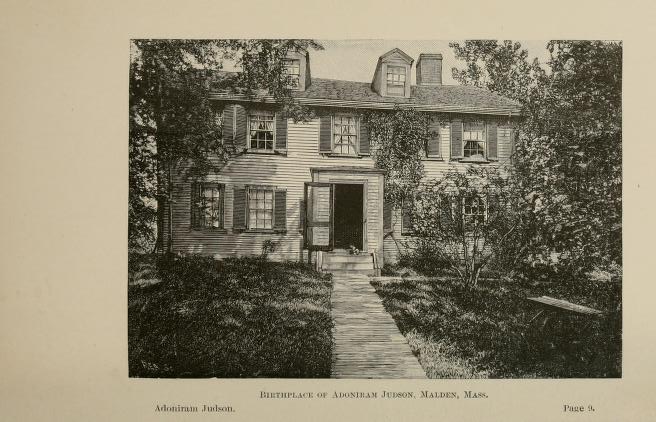
The yard is deep and wide and contains many large and smaller trees. There are huge elms and evergreens, which doubtless were growing at the time of Judson’s birth. The lawn is separated from the street by a substantial and rather ornamental, broken stone wall. It is said by the older inhabitants of the neighborhood that little or no change has been made in the century now past. The farm once connected with the house, however, is fast being cut up into house lots; and year by year the carpenter’s hammer is heard approaching nearer and nearer the quiet, restful spot…
1888 Judson Centennial service held at First Baptist Malden
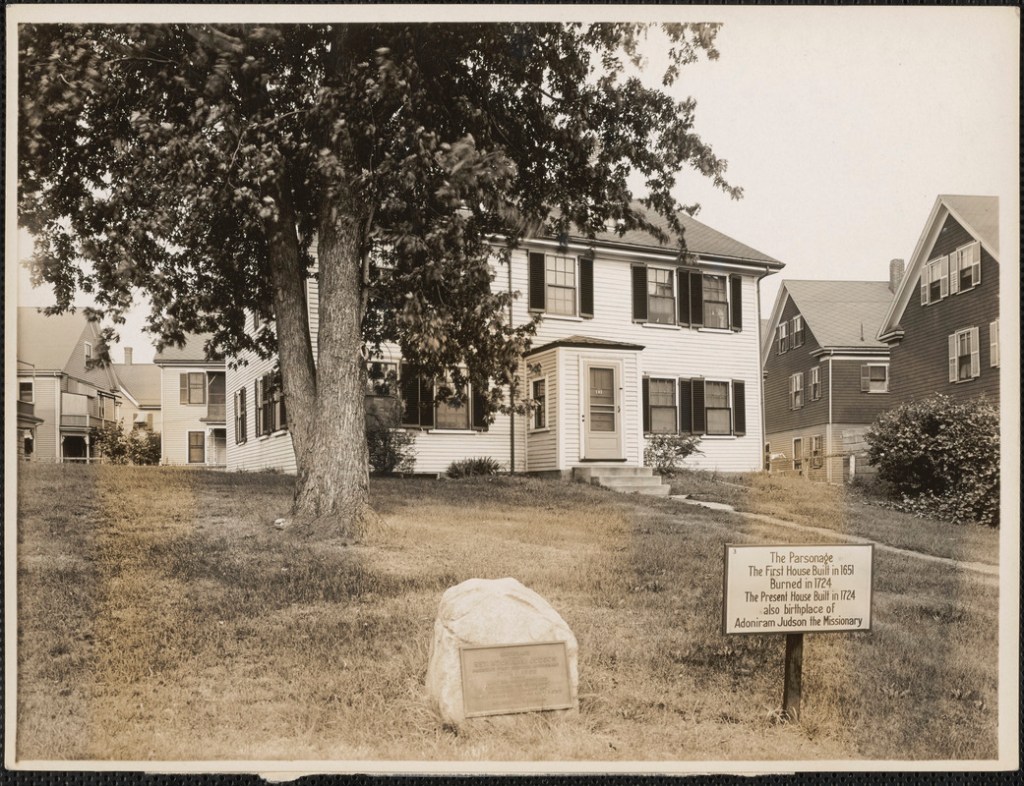
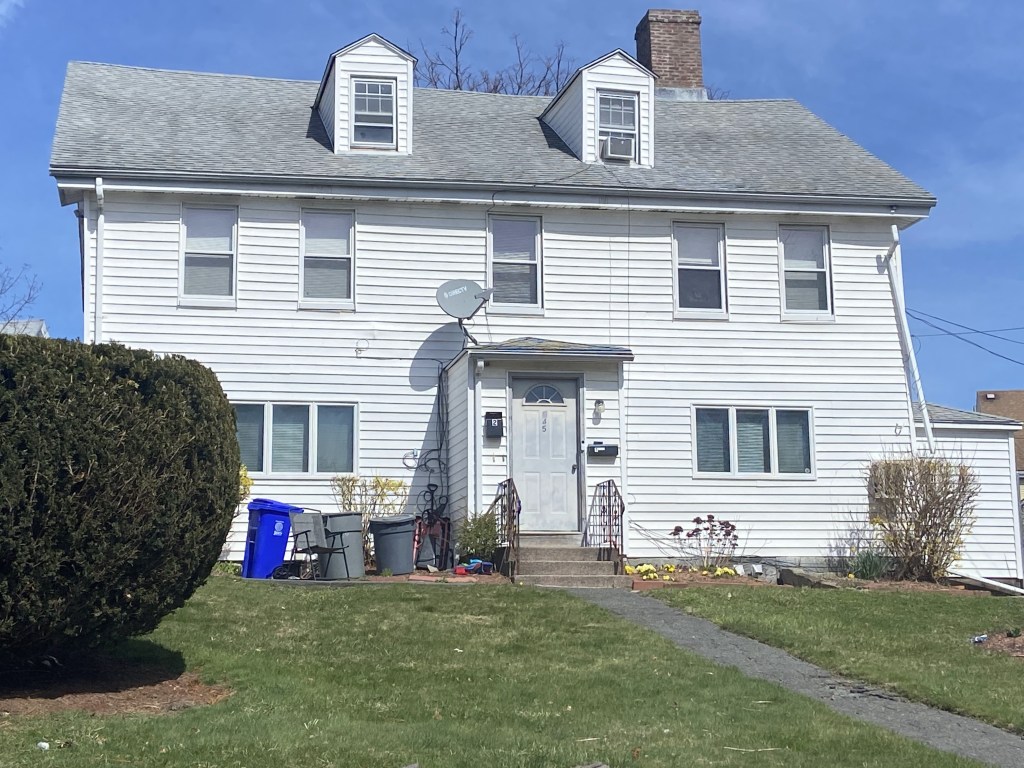
Church location was on Main St, Malden, MA
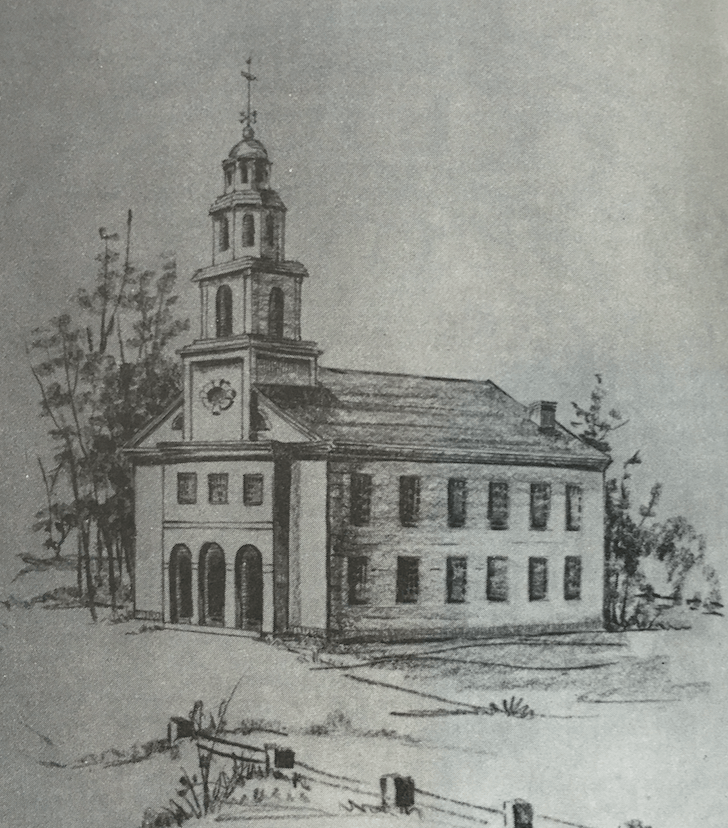
This building was occupied by the First Church of Malden from 1729-1828, located on Main Street. This Third Meeting House would be the church building the Judsons attended. source
Wenham 1793-1800 and Braintree 1800-1802
In January, 1793, the family removed to Wenham, Massachusetts, a village about twenty miles northeast of Boston, where Adoniram lived until he was twelve years old. Here his brother Elnathan, who became a surgeon in the United States Navy, was born May 28, 1794. Here too, when Adoniram was eight years old, his sister Mary was born, only to die six months later. source
(I believe this would have more accurately been his sister Polly, who was born and died in 1796)
According to town records, Adoniram’s father was invited November 1792 and offered 60 pounds annually and the use of the parsonage. This must not have been satisfactory because they increased it to 90 pounds. source
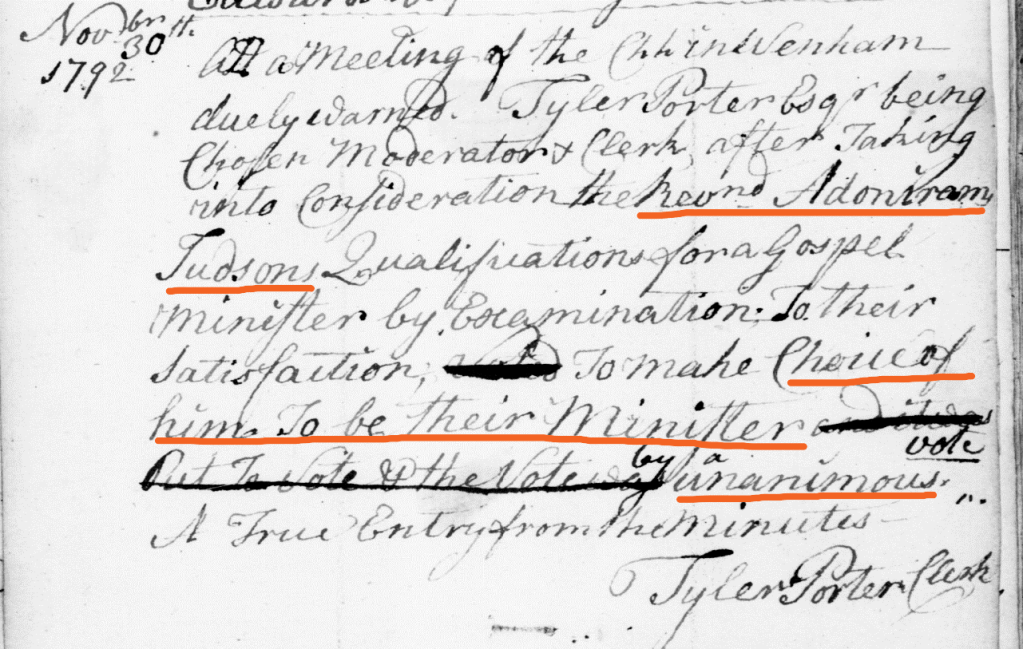
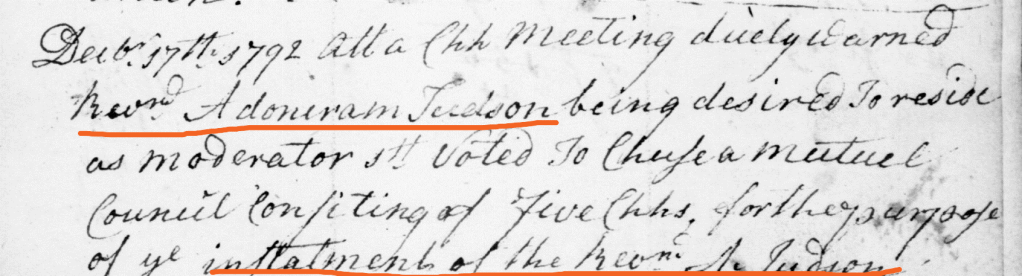
Due to health issues, Adoniram Sr. asked to be dismissed from the Wenham church. They moved to Braintree for 2 years and Adoniram Sr. worked for the Massachusetts Home Missionary Society which had recently formed in 1799. He traveled to Vermont for 3 months preaching.
A few (ministers) also came from Massachusetts, the Home Missionary Society there being formed a year later (1799) than the one in Connecticut. One of the men who was sent from Massachusetts was Rev. Adoniram Judson. The work done by these men was to go from town to town, spending one or more Sabbaths in a community where their services were needed. They preached on week-days as well as on Sundays when a congregation could be gathered in a church, school-house or private dwelling. They visited schools, administered the sacraments, admitted members to the Churches, called on the sick and officiated at funerals when occasion required. These men were looked up to with great respect, and their spiritual services were highly appreciated. They sowed the seed of the kingdom broadcast. The feeble churches were encouraged by their presence, and, as they were men of education and godly lives, religion in their persons was made reputable in the eyes of the people. An historical sketch of home missionary work in Vermont by the Congregational Churches
Interestingly, this was also the home of President John Adams. Adams was President from 1797-1801 and returned to Braintree in March 1801 while the Judson’s were living in town. John Adams’ father was a deacon in the First Congregational church. but died before the Judson’s moved to Braintree. Perhaps this is the church the Judson’s attended.
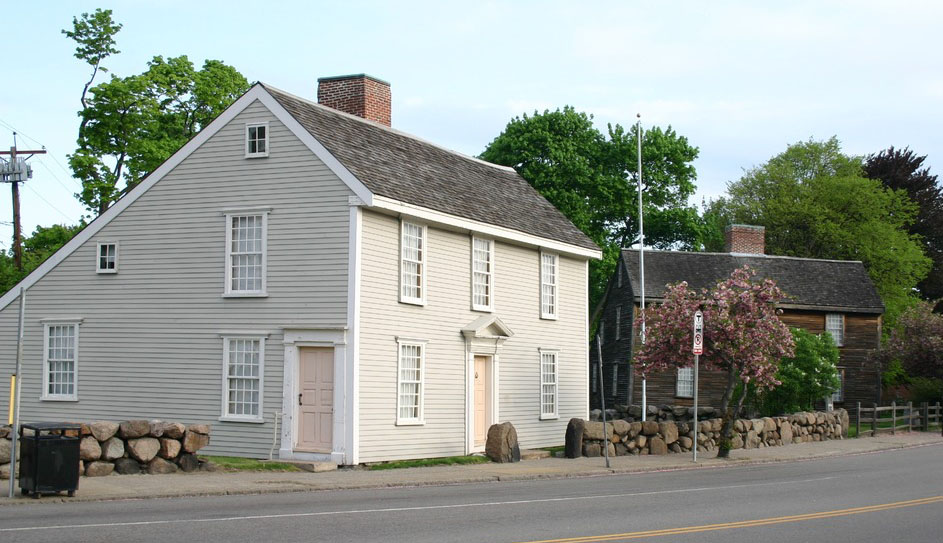
“The way from Braintree to Quincy led past the unpretentious house of John Adams – farmer, lawyer, diplomat, and now in 1800 President of the United States…Adoniram Judson the younger had just as much native ability as John Adams at the same age and just as good a start. He was capable of becoming as great a man. And he would.”
To the Golden Shore
Plymouth1802-1812
PLYMOUTH HOME
17 Pleasant Street Plymouth
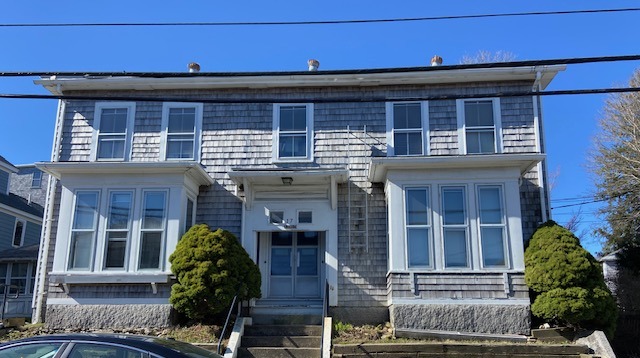
Adoniram was 14 when his family moved once more to Plymouth, MA. From here he went on to college at Brown University graduating as valedictorian. While in Plymouth he began a private academy and wrote two textbooks. After travels to NY and a shocking dose of the real world he entered Andover Academy as an unbeliever. However, while there he committed his life to Christ and joined his father’s church. The Third Congregational Church in Plymouth. Today it is known as The Church of the Pilgrimage. (no longer a faithful church)
In 1903 an article in the Baptist Missionary Magazine says this,
“In reply to a question about the Judson house in Plymouth, Mr. Davis said, “It is still in existence, but much changed. The frame remains, but the exterior is modernized. It is on Pleasant Street. formerly called Judson Street, and before that it was known as the Road to Jordan.”
In the house of Mrs. William S. Danforth are treasured several ancient pieces of furniture which came from the Judson home. Mrs. Danforth was well acquainted with Miss Abigail Judson, loved sister of the missionary, and who lived in the house until her death in 1884.
It is well known that she was very eccentric, and this characteristic was shown in her peculiar devotion to her brother. When he left the house for his last journey to Burma, his sister closed the room he slept in, and never allowed it to be opened or cared for. It was to remain untouched until Adoniram’s return. She also had the front door of the house boarded up; Adoniram was to be the first to enter there.
Miss Judson became a Baptist after her brother’s change of views. Mrs. Danforth describes her as a beautiful old lady with gray hair worn in curls, and these would wave about her face as she said, with tears in her eyes, “My brother and I had a good deal to contend with, but the Lord prospered us and took care of us, and my brother! Think what he became!” …
Down in Pilgrim Plymouth a man told me of a time when in Abigail Judson’s house he had, unseen by her, opened the door of Adoniram’s “sacred chamber.” Darkness was there, and everything was decaying and turning to dust. So must it be with all earthly memorials of that great missionary. But the work he did, the sufferings he endured, the souls he led to Jesus, the great missionary movement he inaugurated.” source
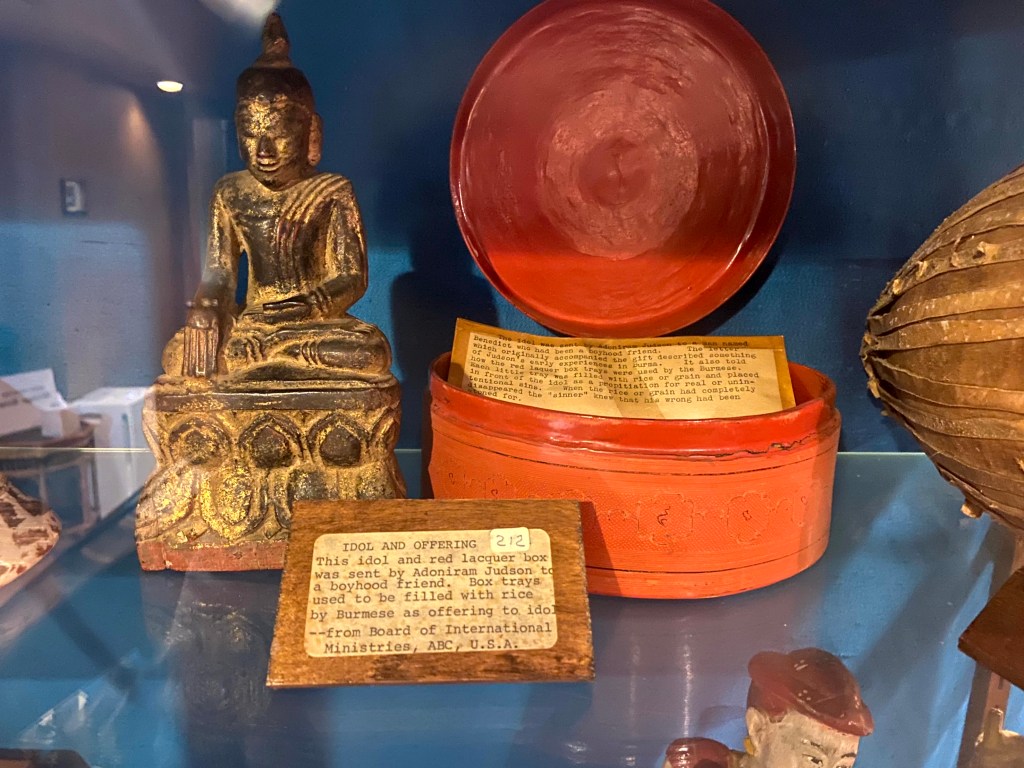
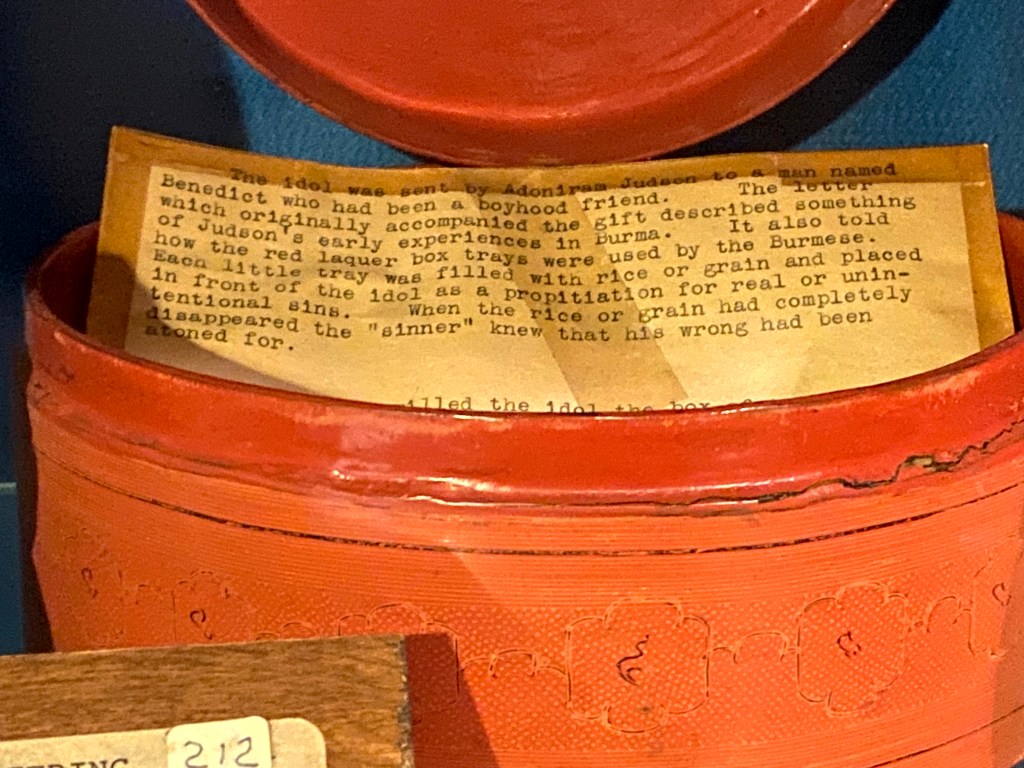
The article continues, “In search of further memorials I went to Plymouth’s Shop.” The proprietor had been well acquainted with Miss Abigail Judson, and after her death a number of interesting articles came into his possession, but they were soon disposed of. “The most interesting Judson relics that I had,” said Mr. Standish, “were three horrible idols which were among the many which Mr. Judson sent to his sister. I sold these one day to a lady who was an ardent Baptist and was said to be the wife of the governor of Vermont.”
While touring Judson University in Illinois we found these idols in their “Judson Room”. They are likely similar to what he would have sent his sister. The text in the images says, “This idol and red lacquer box was sent by Adoniram Judson to a boyhood friend (named Benedict). Box trays used to be filled with rice by Burmese as offering to idols.”
HIS FATHER’S PLYMOUTH CHURCH
65 Sandwich St, Plymouth
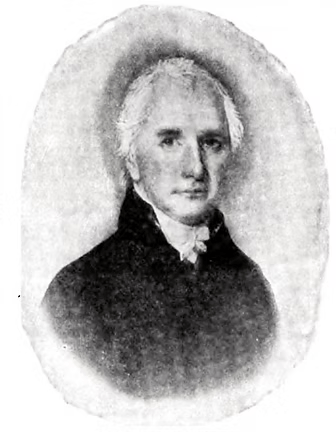
Adoniram Judson, Sr. 1751-1826
“Rev. Judson, a Congregationalist, served as Moderator at the 1801 Gathering which created the Third Church of Christ in Plymouth.” source
On May 12, 1802, Adoniram Judson, Sr. was installed as Pastor of the Third Church of Christ in Plymouth. In 1817 his ministry ended because his views on Baptism had changed, and he had become a Baptist.
The original Pilgrim church of Plymouth had a church split in 1801. The main reason was that the newly installed pastor leaned Arminian. The group that split called Calvinist Adoniram Judson Sr.
100 years (1667-1697) prior John Cotton Jr. was pastor of this church. Neither church is faithful today.
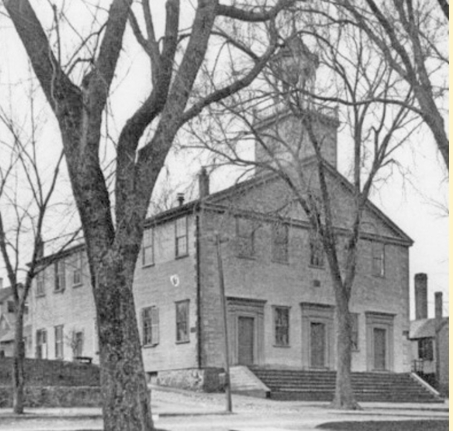
“Deacon John Bishop and others, at a cost of $233.58, bought land on Pleasant Street, just west of Plymouth’s Training Green, to build a new church on. That 60 X 52 foot church was built in 1801 and had a cupola. After 1840 that building served as a town high school. It was torn down in 1890 or later.” source
Burial Hill, Plymouth
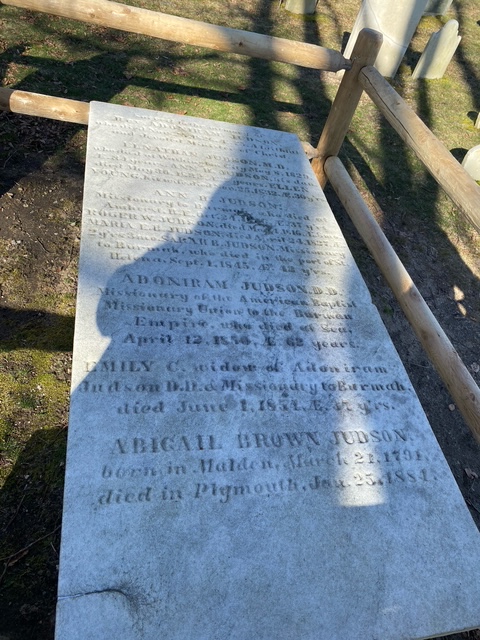
Adoniram Sr. died in Plymouth in November 1826 while Adoniram was serving in Burma. Adoniram’s first wife, Ann, had died only a few weeks before in October. He would not find out until the following July his father had died.
He is buried on Burial Hill in Plymouth along with daughter Abigail. Adoniram Jr. and his wives are also remembered here although buried elsewhere.
“His father, who was a Congregationalist pastor in Massachusetts, had studied with Jonathan Edwards’s student Joseph Bellamy, and Adoniram inherited a deep belief in the sovereignty of God. The great importance this has for my purpose here is to stress that this deep confidence in God’s overarching providence through all calamity and misery sustained him to the end. He said,
Giants of the Missionary Trail (Chicago: Scripture Press Foundation, 1954)
“If I had not felt certain that every additional trial was ordered by infinite love and mercy, I could not have survived my accumulated sufferings”
BROWN UNIVERSITY 1804-1807
University Hall, Providence, RI
Adoniram began attending Brown when he was 16. “Brown had less than a hundred and fifty students who lived, dined, studied and attended classes and chapel in the large four storied “college edifice” now known as University Hall…” It was here that he met Jacob Eames, a deist who had a pagan influence on the next few years and his rebellion from the faith of his father. source
What his godly parents did not know was that Adoniram was being lured away from the faith by a fellow student named Jacob Eames who was a Deist. By the time Judson’s college career was finished, he had no Christian faith. He kept this concealed from his parents until his twentieth birthday, August 9, 1808, when he broke their hearts with his announcement that he had no faith and that he wanted to write for the theater and intended to go to New York, which he did six days later on a horse his father gave him as part of his inheritance. . . .source
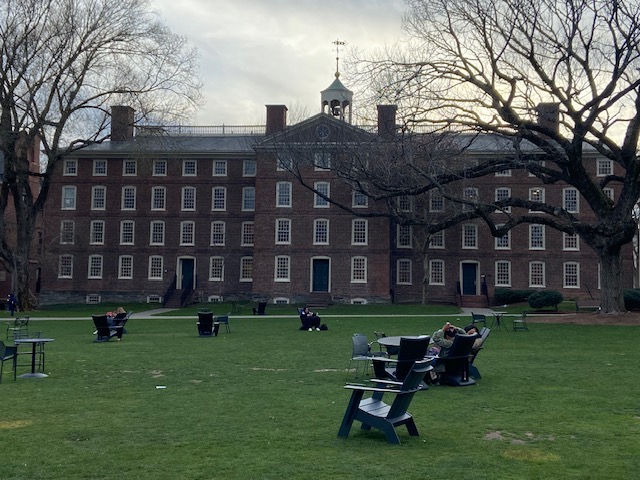
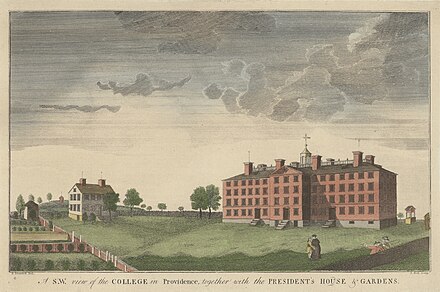
The (1795) print depicts the College Edifice (now University Hall), which was at the time the largest building in Rhode Island, as well as the President’s House (then located on today’s Front Green). source
For the first fifty years, the College Edifice was classroom, office, dining hall, library, chapel and dormitory. The building was likely designed by Joseph Brown, the Brown family’s “gentleman-architect” and was built on the crest of what would become known as College Hill in 1770. Embodying the hopes and dreams of the Baptists as well as the citizens of Rhode Island, it was the largest building in the state at the time. source
For the next few months Adoniram rebelled. But God was gracious to wake him up through the death of his very lost friend, Jacob Eames.
He entered Andover Theological Seminary in 1808, and then met Ann. This is where we will pick up in Part 2.
Resources
To the Golden Shore, Courney Anderson book
A Sketch of the Labors, Sufferings and Death of the Rev. Adoniram Judson, D.D. : A. D. Gillette online book
Adoniram Judson : a biography : Judson, Edward online book
Lessons from Church History: Adoniram Judson | Crossroads | Grace Community Church seminar
Collection: Adoniram Judson Papers and Collection | American Baptist Historical Society
A Life Not Wasted: Adoniram Judson blog
Adoniram Judson Story video
Adoniram and Ann Judson: Spent For God (2018) | Full Movie
Adoniram Judson | Precept Austin
Adoniram Judson Biographies – Missionary Biographies – Wholesome Words
 Beside Old Hearthstones - An American Evangelical Church History Tour
Leave a comment